
Last updated November 18, 2026
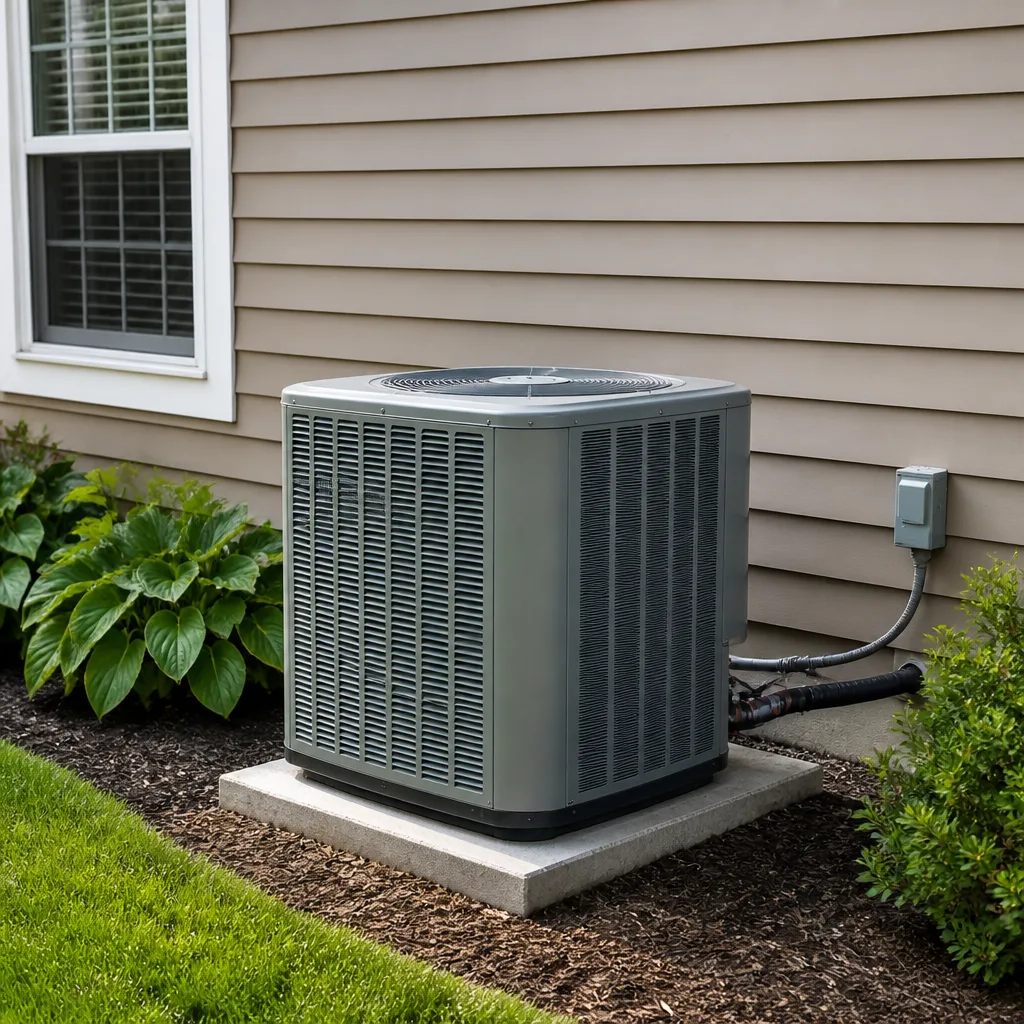 AC repair
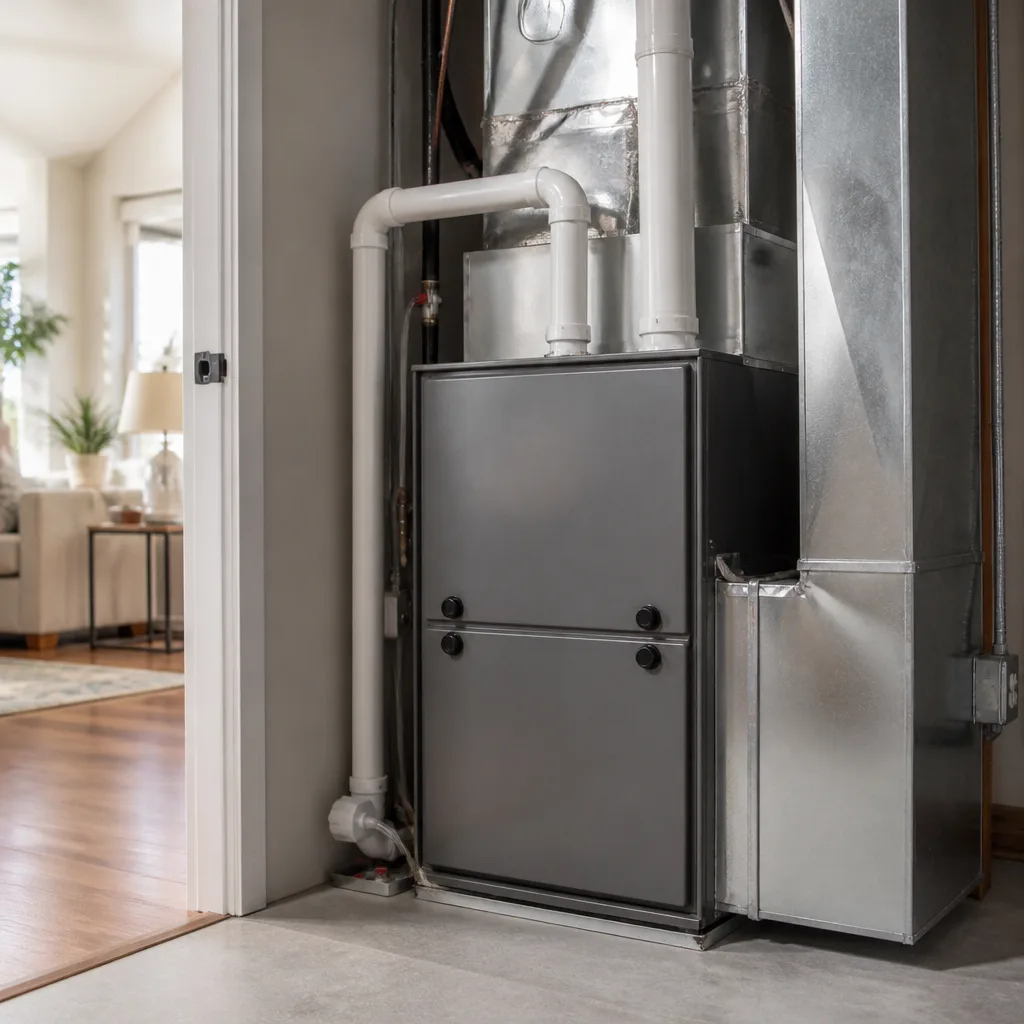 Furnace & heating
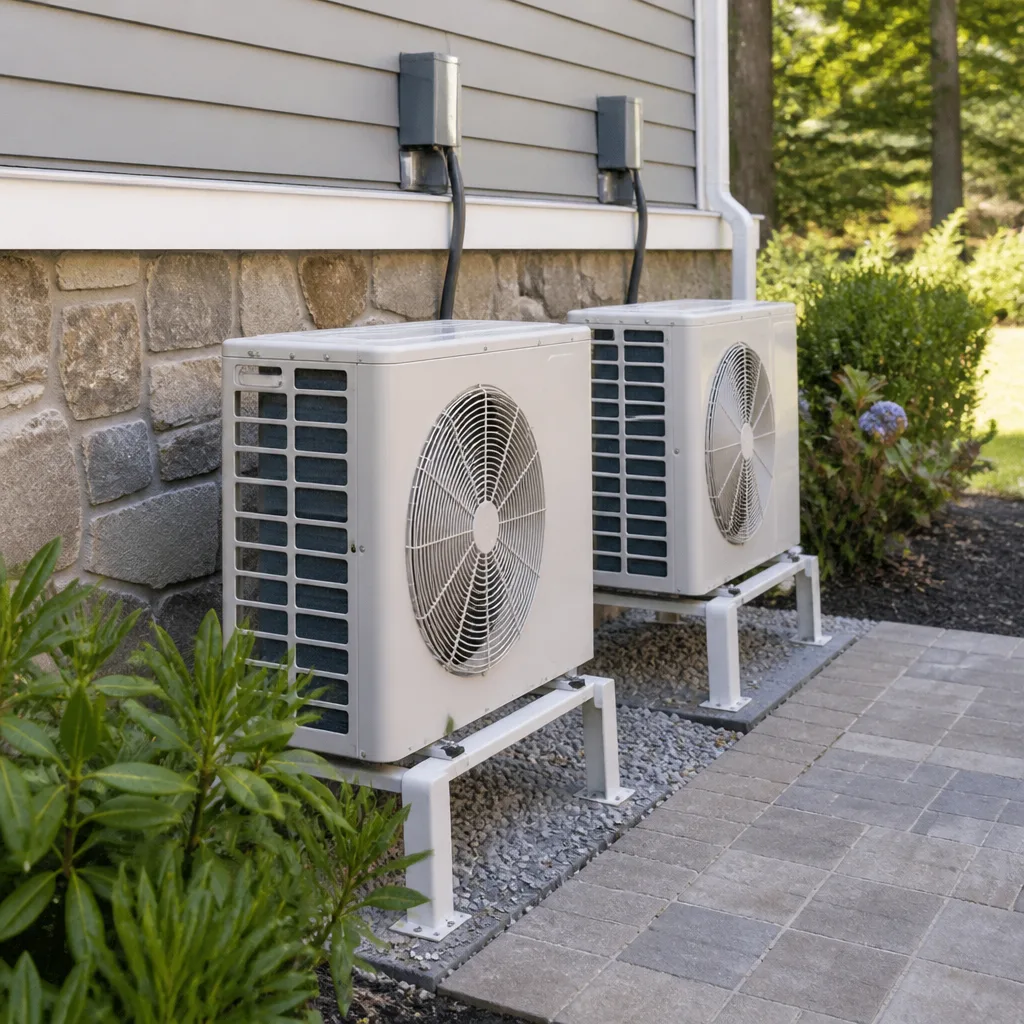 Heat pumps
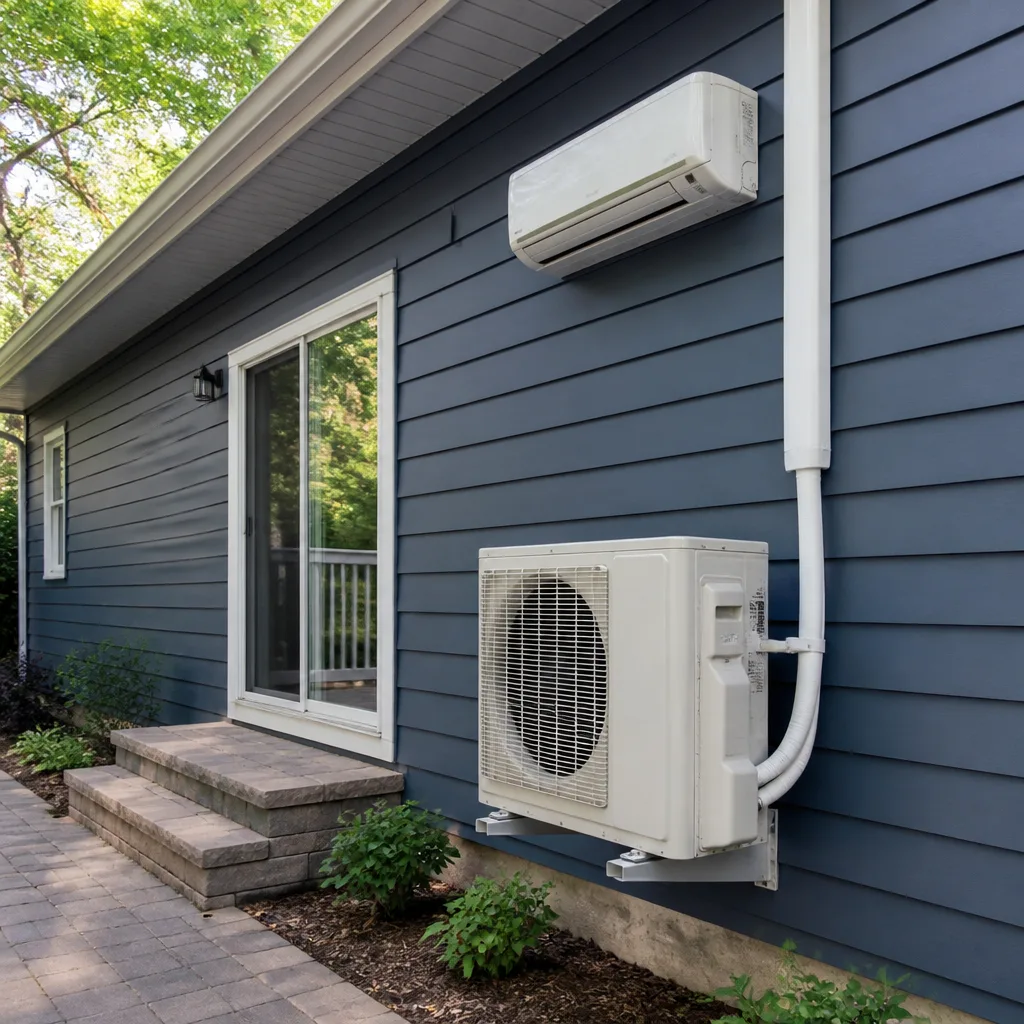 Ductless mini splits
 Carrier
 Trane
 Goodman
Seasonal tune-up and full diagnostic on your Carrier, Trane, or Goodman system - readings shown to you before any repair is proposed
Diagnosis first, numbers second - you approve the repair price before a single part goes in.
Get your free estimateThe Complete Furnace Repair Guide for North Las Vegas Homeowners
North Las Vegas recorded 25 nights below freezing in the winter of 2022 – 2023. On those nights, homeowners whose furnaces quit faced 48 to 72 hour service waits, because this region has fewer furnace technicians per capita than comparably cold markets. Demand spikes harder and faster here. That’s the strange truth about desert furnace care: cold feels distant for nine months, then arrives all at once, and a furnace that sat idle since February is the most failure-prone appliance in the house when October shows up. This guide covers why North Las Vegas furnaces fail differently, what repairs cost, how to decide between repair and replacement, and what a fair furnace job actually includes.
Quick Answer
Furnace repair in North Las Vegas typically runs $180 to $420 for common fixes like igniters and flame sensors, and $450 to $900 for larger repairs such as blower motors or draft inducers. A cracked heat exchanger usually pushes toward replacement rather than repair because of carbon monoxide risk. Most repairs can be done in a single visit, and any reputable company should give you a written price before touching the system.
Styles & brands we work with
- AC repair
- Furnace & heating
- Heat pumps
- Ductless mini splits
- Carrier
- Trane
- Goodman
Table of Contents
- Why North Las Vegas Furnaces Fail Differently
- What Furnace Repair Costs in North Las Vegas
- The Parts That Fail After a Long Desert Summer
- Furnace Brands Common in North Las Vegas New Construction
- What a Cracked Heat Exchanger Means for Your Indoor Air
- Repair or Replace? A Framework Using Nevada Gas Rates and Rebates
- What Annual Furnace Maintenance Should Include
- What the Cedarwell Care Promise Covers on Furnace Work
Why North Las Vegas Furnaces Fail Differently Than Cold-Climate Furnaces
In Minneapolis, a furnace runs from October through April. It stays warm, lubricated, and exercised. In North Las Vegas, that same furnace might run 30 nights a year. Nine months of dormancy is the problem. The dust that settles in the burn chamber through spring and summer dries on the igniter and flame sensor. Gas valve seals sit dry. Bearings in the blower motor stiffen. When the first cold snap hits and the thermostat finally calls for heat, all of those dormant parts have to wake up at once, and some won’t.
The North Las Vegas climate adds a second layer. Summer attic temperatures routinely climb past 150°F, and the furnace in many homes sits in or near that attic or a garage. Heat cycles that intense for months degrade wire insulation, plastic fittings, and control board capacitors. By the time you need the furnace, it’s been cooking in a 150°F room for four months.
We’ve seen a pattern repeat across North Las Vegas neighborhoods: homes in Aliante and Eldorado that get a maintenance visit in September almost never call us in January. Homes that skip it call during the first cold front, usually alongside everyone else on the block.
Here’s what this means practically: a North Las Vegas furnace doesn’t need more maintenance than a cold-climate furnace. It needs different maintenance, timed to the front end of the season rather than mid-winter. The whole point of a September tune-up is to catch dormancy damage before it becomes a no-heat call.
What Furnace Repair Costs in North Las Vegas
Furnace repair pricing here tracks close to national averages, with a few local quirks. Labor rates are somewhat lower than in cold-climate metro areas, but parts availability can stretch a job if your unit uses a brand the local suppliers don’t stock. Here’s a realistic breakdown for 2026.
| Repair | Typical Cost Range | Notes |
|---|---|---|
| Diagnostic visit | $79 – $129 | Often credited toward the repair |
| Igniter replacement | $180 – $320 | Most common North Las Vegas failure |
| Flame sensor cleaning or replacement | $150 – $280 | Usually the same visit as igniter |
| Blower motor replacement | $450 – $850 | Higher end for variable-speed motors |
| Draft inducer motor | $400 – $750 | Common after summer bearing dry-out |
| Gas valve replacement | $350 – $650 | Corrosion risk from dormancy |
| Control board | $400 – $700 | Capacitor failure from attic heat |
| Heat exchanger (repair or replace decision) | $900 – $2,400+ | Often costlier than a new furnace |
Those numbers are the shape of the market, not a quote. Every job is different, and a written price before any work starts is the only number that matters. If a company gives you a range on the phone and then changes it once the truck is in the driveway, that’s the moment to slow down. On a furnace repair, we hand you the price in writing before a wrench comes out.
One more local note: gas rates through Southwest Gas have risen steadily, so an inefficient furnace that’s struggling to heat a North Las Vegas home will cost you more per month than the same furnace in a market with cheaper gas. That changes the repair-versus-replace math, which we cover below.
The Parts That Fail First After a Long Desert Summer
If your furnace lives in a North Las Vegas home and hasn’t run since early spring, these are the components most likely to have aged out by the time you need heat. We see them in a fairly predictable order.
- Hot surface igniter. The single most common failure we handle. The ceramic element degrades from dust and thermal shock, then breaks the first time it heats. Replacing it is a small job, but it’s the reason most no-heat calls happen in the first cold week.
- Flame sensor. A tiny rod that tells the control board the burner lit. It oxidizes over the summer, and its signal gets weak. The furnace will fire, run a few seconds, then shut off. That’s almost always the sensor, not the furnace.
- Draft inducer motor. On a 90%+ efficiency furnace, this motor spins up first to clear the flue. Dry bearings seize after months idle, and the furnace will lock out before it even tries to ignite.
- Gas valve. Seals and internal mechanisms sit dry for months, and gas with trace moisture can leave deposits. A valve that doesn’t open cleanly means no heat and a code on the board.
- Blower motor. Attic heat and dust combine to dry out bearings and degrade capacitors. A blower that runs slow or hums without starting is usually a capacitor-first fix, then the motor.
- Control board. Not as common as the others, but capacitors on the board are sensitive to sustained high attic temperatures. This is the part that fails after a record July in North Las Vegas.
None of these are exotic. They’re predictable, and that’s the good news, because a September maintenance visit finds most of them before the first cold night. The furnace doesn’t fail in January because the part was tired. It fails because nobody looked in September.
Furnace Brands Common in North Las Vegas New Construction
North Las Vegas has seen enormous new construction through the 2000s, especially in Aliante, Tule Springs, and the northern reaches of the city. If your home was built in that wave, your furnace is likely one of a handful of brands the builders favored, and those brands have known failure patterns.
- Lennox and Carrier. Extremely common in North Las Vegas tract homes from the mid-2000s onward. Both have well-documented igniter and flame sensor failure patterns after long dormancy, and both require specific OEM parts that most shops keep stocked locally. Because they’re so common here, a repair on either brand is usually a same-visit fix.
- Ruud. Common in homes that used builder-grade packages. The draft inducer motor is the part we replace most on these after summer dry-out. Not a design flaw, just a predictable wear point in desert conditions.
- Goodman and Rheem. Frequently installed in North Las Vegas homes through the 2010s. The Goodman control boards have some known capacitor failures in high heat, and Rheem units tend to hold up well on the burn side but go through blower capacitors.
- Bryant and American Standard. Both come through the same factory networks as Carrier and Trane respectively, so parts cross-reference easily. If you have either, don’t let a company tell you the parts are hard to find; they aren’t.
We’re qualified on all nine major brands North Las Vegas homeowners actually have: Carrier, Trane, Lennox, Goodman, Rheem, York, Daikin, Bryant, and American Standard. If you’re not sure what you have, the model plate is inside the furnace door, and any tech can read it in thirty seconds. That’s all the info needed to know whether your North Las Vegas home falls into a known failure pattern.
What a Cracked Heat Exchanger Means for Your Indoor Air
A heat exchanger is the metal chamber that separates the burner flame from the air your family breathes. When it cracks, combustion gases, including carbon monoxide, can leak into the airstream that heats your home. That’s the plain version. It’s serious, but not cause for panic, because the failure is detectable long before it becomes dangerous if anyone is looking for it.
In North Las Vegas homes, heat exchangers tend to crack differently than in cold markets. Cold-climate furnaces run continuously and their exchangers crack from prolonged thermal cycling. Desert furnaces run in short bursts, and their exchangers are more prone to corrosion from condensation that forms inside the idle unit after a monsoon season. That pattern shows up as hairline cracks near the seams and around the flue collar, not the dramatic stress fractures you see in the north.
What you should watch for, without alarm:
- Headaches, nausea, or drowsiness in the house that improve when you leave, especially in winter.
- A yellow or orange burner flame instead of a steady blue.
- Soot streaking around the furnace cabinet or inside the burner compartment.
- A carbon monoxide alarm that’s triggered, even once.
If any of those show up, treat it as an urgent call, not a someday call. And here’s the part that matters on a repair quote: once a heat exchanger is confirmed cracked, the honest recommendation is almost always replacement, not repair. The part itself costs close to what a new furnace does, and no repair makes a cracked chamber safe again. A company that offers to patch it isn’t doing you a favor.
If you have a CO alarm in the house, good. If you don’t, that’s a $20 purchase worth making this week. It’s the single lowest-cost safeguard in the whole furnace conversation.
Repair or Replace? A Framework Using Nevada Gas Rates and Rebates
This is the most common question we get in North Las Vegas, and there’s a clear way to think about it instead of guessing. Run these three checks in order.
- Age of the furnace. If it’s over 15 years old, the math tilts toward replacement even on a small repair, because the next failure is close and repairs start stacking. Under 10 years old, almost always repair.
- Cost of the repair vs. cost of a new furnace. A common rule: if a single repair costs more than 40% of a new furnace, replace. With furnace installs in North Las Vegas running $3,800 to $7,500 for standard replacements, that puts the threshold around $1,500 to $3,000.
- Efficiency gap. If you’re replacing an 80% furnace with a 96%+ unit, the annual gas savings in North Las Vegas run $80 to $180 at current Southwest Gas rates for a typical family home. That won’t pay for the furnace on its own, but it changes the ten-year math.
Rebates and financing are the piece most homeowners don’t think to ask about. High-efficiency furnace installs often qualify for utility efficiency programs, and some of these have income-based tiers. When we quote a replacement, we walk through which rebate forms your install qualifies for and hand you the paperwork. That’s part of the job, not an extra.
A new furnace is not a same-day decision. It’s load-calculated, ordered, and scheduled on a set date. Any company that promises to install a furnace the same day is cutting steps that affect how the system performs for the next twenty years. For a full look at the install side, see our AC Installation in North Las Vegas page, which covers the same process on the cooling side.
What Annual Furnace Maintenance Should Include
A real furnace tune-up in North Las Vegas takes 60 to 90 minutes and produces a written report of what was actually found. If a company is in and out in 20 minutes, they cleaned a filter and left. Here’s what should happen, in order.
- Combustion analysis. A combustion meter reading on the flue tells you whether the furnace is burning cleanly. This is the check that catches a heat exchanger problem early. Ask for the numbers, not a thumbs-up.
- Igniter and flame sensor inspection. The two parts most likely to fail on a North Las Vegas furnace after dormancy. Cleaned or replaced on the spot if they’re marginal.
- Blower motor and capacitor test. Capacitor readings, bearing condition, amperage draw. This is where attic heat damage gets caught.
- Gas pressure verification. Manifold pressure checked against the data plate. Off-spec pressure accelerates wear on every other part.
- Flue and venting inspection. Blockages from birds, dust, or debris. All the more relevant after a monsoon season.
- Filter replacement and cabinet cleaning. A fresh filter and a clean burn chamber set you up for the next nine months of dormancy.
- Written report. What was found, what was fine, what needs watching. A company that doesn’t hand you something in writing didn’t really inspect.
On safety: furnace gas lines and heat exchangers are not DIY territory. A gas leak or a hairline crack in the exchanger can be life-threatening, and no amount of online video replaces a combustion meter and trained eyes. If you smell gas, leave the house and call from outside. If you suspect a cracked exchanger, stop using the furnace until a tech confirms. That’s not selling you on a service; it’s the responsible answer.
We charge a flat price for a tune-up and hand you the report before we leave. Our technicians aren’t paid a commission on parts they sell, so the report reflects what we actually found.
What the Cedarwell Care Promise Covers on Furnace Work
Every furnace repair and install we do in North Las Vegas falls under the Cedarwell Care Promise, and it’s worth spelling out exactly what that means on a furnace job, because “warranty” and “promise” get used loosely.
- A written price before any work starts. On every visit, every time. Not an estimate, a price. If the tech finds something else once they’re inside, they come back to you with the number in writing before proceeding.
- Background-checked, uniformed technicians. The people entering your home have been vetted, and they follow the C.A.R.E. values: clean up like it’s their own home, ask before moving anything, respect your family’s quiet hours and routine, explain the price before the work.
- Shoe covers and drop cloths on every visit. Furnaces are often in a closet, garage, or attic, and those areas are easy to leave a mess in. We don’t. You get a photo of the clean-up before the crew leaves, sent to your phone.
- The 365-Day Done Right Promise. If the repair isn’t right within a year, we make it right. No fine print, no runarounds. On a furnace repair, that covers the part we replaced and the labor we did. If the same problem comes back inside the year, it’s on us.
- A live person on the phone, 24/7. Nights, weekends, holidays. No voicemail, no callback queue. On a furnace no-heat call in January, that matters more than any marketing line.
We’re part of the Cedarwell family of HVAC companies, an independently owned and operated location, and our technicians have up to 22 years of experience on the brands North Las Vegas homeowners actually own. The promise is the standard every job has to meet, not a marketing layer on top of it.
Common Mistakes to Avoid
- Skipping the pre-season tune-up because “it doesn’t get that cold here.” It does, and it drops fast. 25 nights below freezing happened in a single recent winter, and the furnaces that failed those nights were almost all ones that hadn’t been looked at since the previous spring.
- Running a furnace with a yellow flame or soot streaking. Both suggest incomplete combustion and possible heat exchanger trouble. It’s the one furnace symptom that should never be left for the weekend.
- Taking a verbal quote over the phone as the final price. Any honest company quotes a range on the phone and gives you a written price once they’ve seen the unit. A company that locks a number down before looking is guessing or committing you to a change order.
- Replacing a heat exchanger instead of the furnace. The math almost never works in North Las Vegas. The part costs near a new furnace, and you still have an old system around it.
- Forgetting to ask about rebates on a high-efficiency replacement. Utility efficiency programs change yearly, and some installs qualify for funding homeowners don’t know exists. Ask before you sign, not after.
- Letting the furnace sit with a filter that hasn’t been changed since spring. A clogged filter at the start of the season is one of the easiest ways to stress a blower motor into early failure.
- Calling a general handyman for furnace gas work. Gas valves, combustion, and heat exchangers require training and instrumentation. The safety margin is too thin for a generalist.
See the difference
 Before
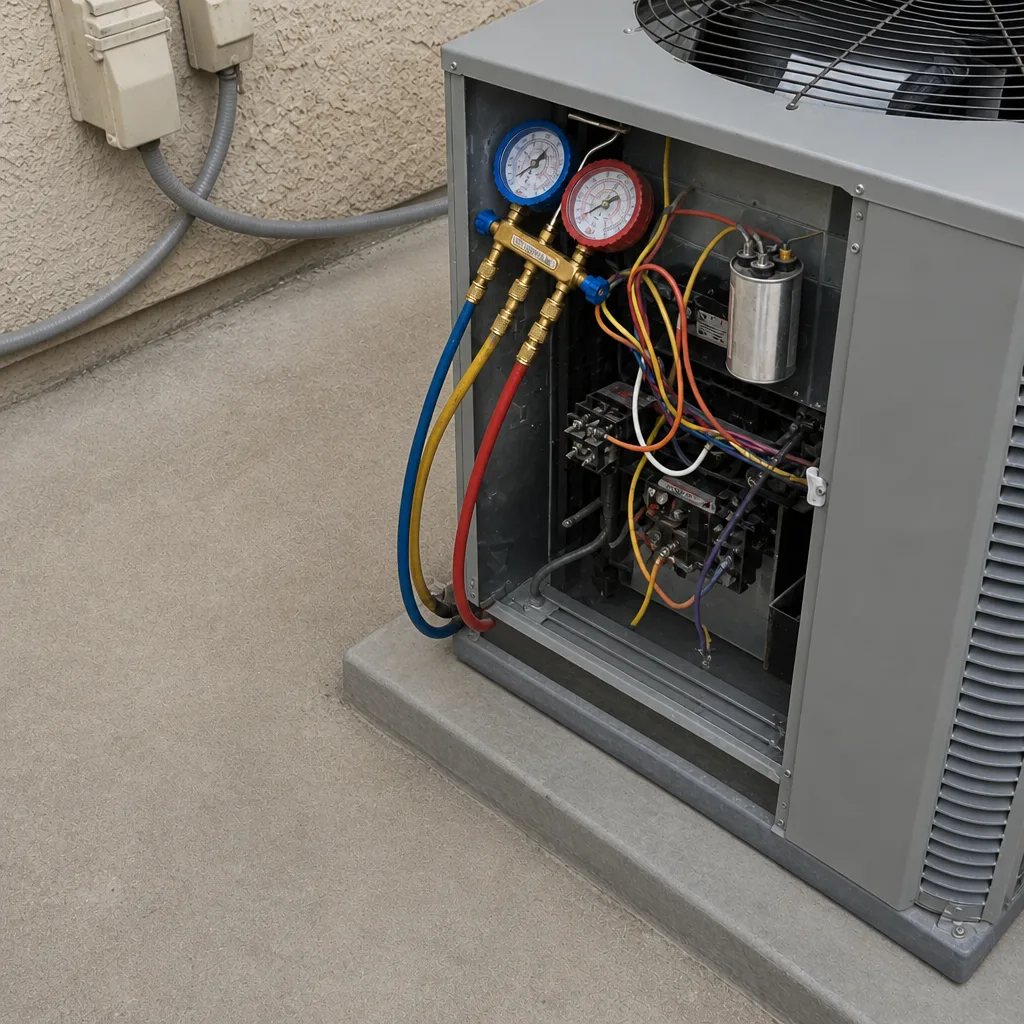 After
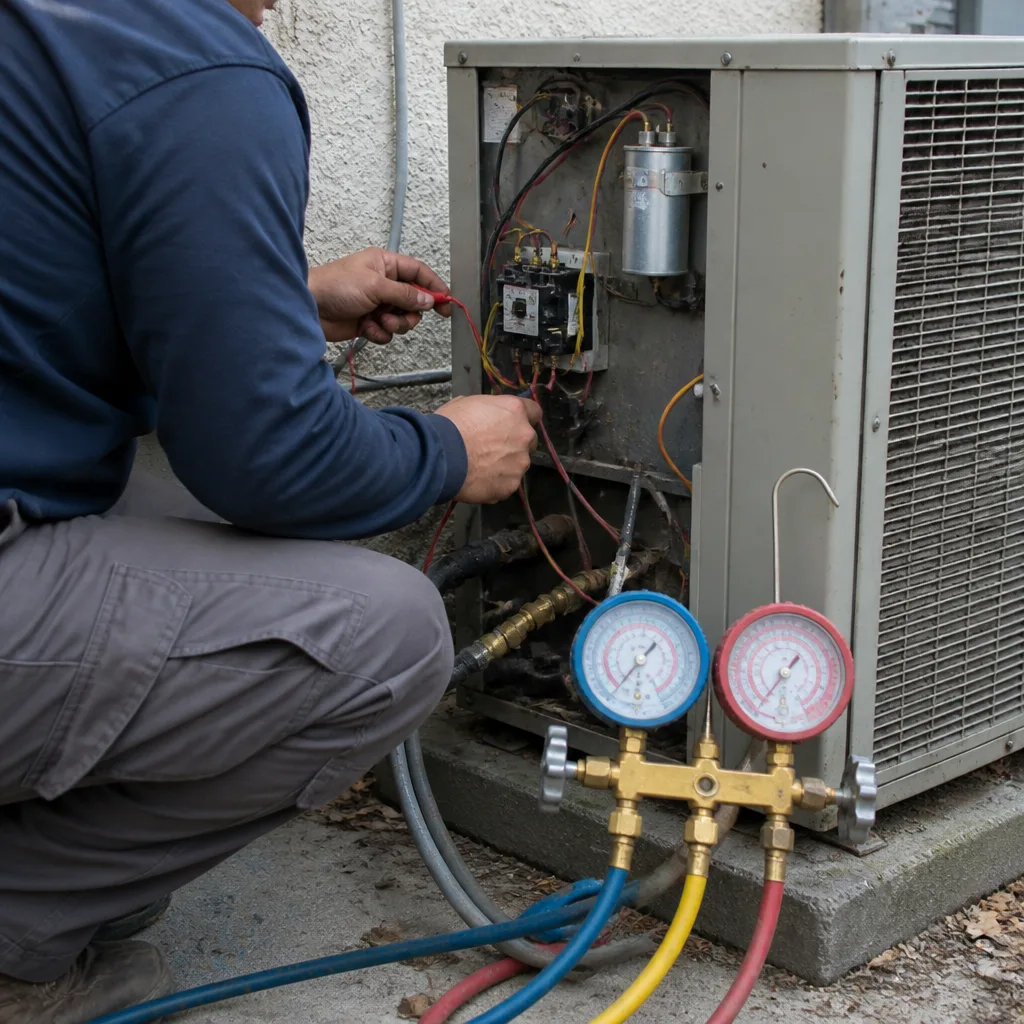 Before
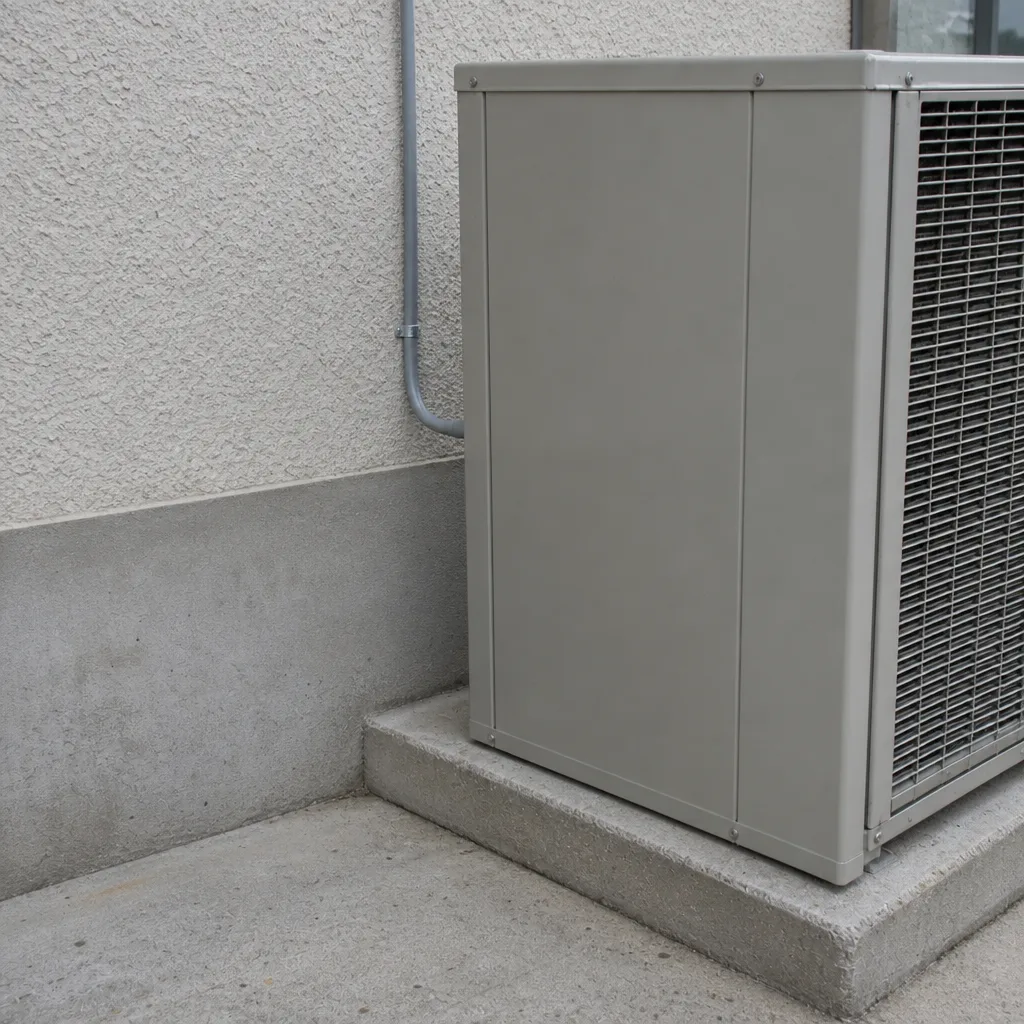 After
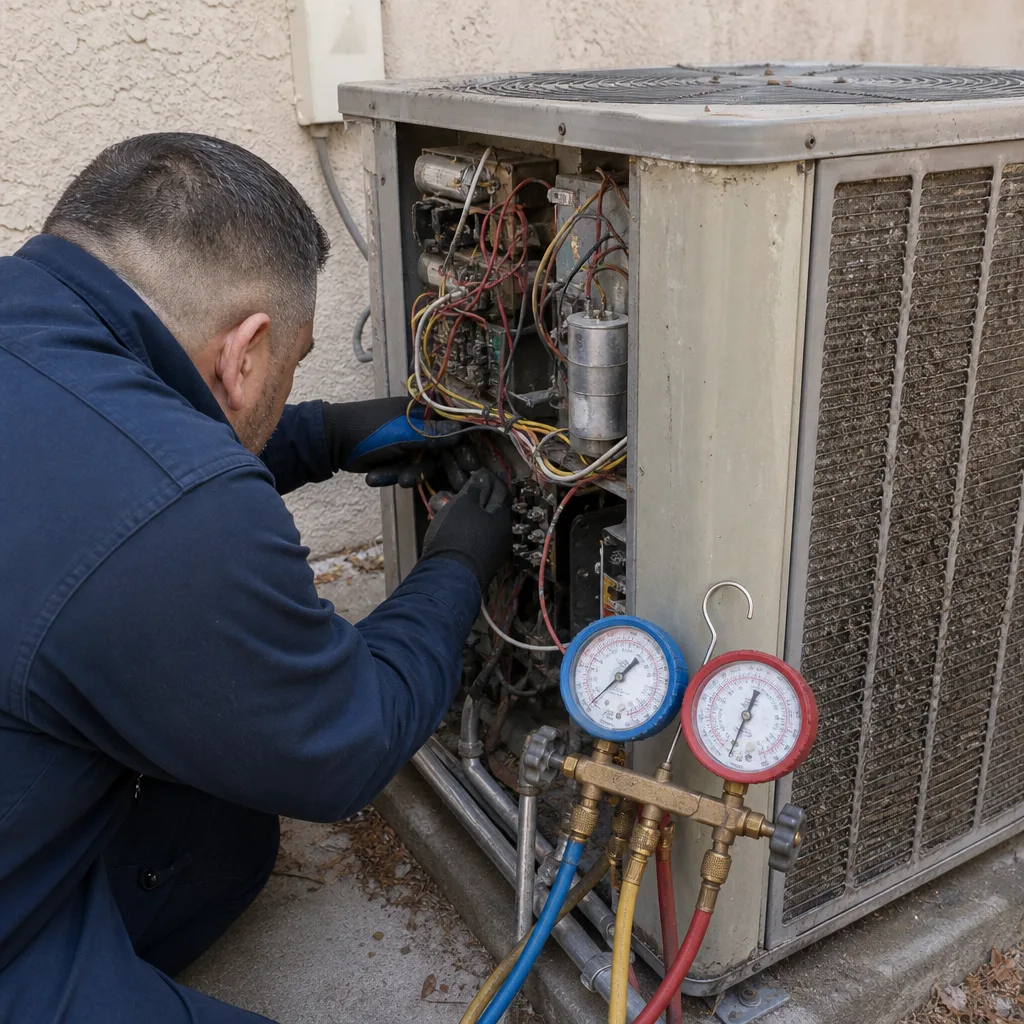 Before
 After
When to Call a Professional
Call a trained technician if you smell gas at all, if a carbon monoxide alarm has triggered even once, if the burner flame is yellow or orange instead of blue, if the furnace runs a few seconds then shuts off repeatedly, or if you see soot around the cabinet. That’s a short list on purpose. Gas and combustion are the two parts of furnace work where a mistake can be dangerous, and the safety margin isn’t worth testing. On the electrical side, igniters, control boards, and blower motors live behind high-voltage connections that trip breakers and bite hard, so those aren’t a homeowner’s job either. For the repair and diagnostic side, Meadowsweet Heating & Air North Las Vegas offers free estimates in North Las Vegas; call (844) 320-2997 and a live person will answer. You’ll get a written price before any work starts, and the crew will follow the C.A.R.E. values on every visit. For related services, our Furnace Repair in North Las Vegas page has the same standards in short form, and our AC Repair in North Las Vegas page covers the cooling side of the year.
Frequently Asked Questions
Most furnace repairs in North Las Vegas run $180 to $420, with igniter and flame sensor jobs at the low end and blower motors or draft inducers at the higher end. A diagnostic visit is typically $79 to $129 and often credits toward the repair. Larger repairs like gas valves or control boards run $350 to $700, and any confirmed heat exchanger problem usually points toward replacement rather than repair. Call (844) 320-2997 for an exact quote; estimates are free and always in writing.
Yes, we prioritize no-heat calls, and we answer the phone 24/7 with a live person. Demand spikes hard in North Las Vegas on the first cold night of the season, and wait times across the region can stretch to 48 – 72 hours during those windows, which is exactly when the fastest call wins. We can’t promise a time on a call, but we can promise you’ll get a real human when you dial. Call (844) 320-2997 the moment the heat goes out.
Replace the filter, clear the area around the unit, and confirm the thermostat is set to heat with fresh batteries. Then turn it on and listen for ignition within a minute. If you hear clicking but no ignition, or the burner fires and shuts off within seconds, that’s the classic dormancy failure pattern we see in North Las Vegas and worth a professional diagnostic rather than a second attempt. Turn it off and call (844) 320-2997.
It’s worth it, and it’s the cheapest thing you can do for a furnace in this climate. Dormancy causes most North Las Vegas furnace failures, and a September tune-up catches the igniter, sensor, and blower issues before the first cold night. A flat-price tune-up with a written report is the standard. Call (844) 320-2997 to schedule one before October.
Repair if the unit is under 10 years old and the repair costs less than 40% of a new install. Replace if it’s over 15 years old, if you’re facing a heat exchanger problem, or if repairs are stacking up. High-efficiency replacements in North Las Vegas often qualify for utility rebates, and we walk you through the paperwork as part of the quote. Call (844) 320-2997 for a written install price with rebate guidance included.
Often, yes. High-efficiency furnace installs commonly qualify for utility efficiency programs, and some programs are income-tiered, so the actual rebate depends on your home and the equipment. We confirm eligibility during the quote and hand you the completed paperwork. It’s not same-day work; new furnaces are load-calculated and scheduled on a set date, which is the right way to do it. Call (844) 320-2997 for a free estimate and a rebate check.
The Bottom Line
Furnace care in North Las Vegas isn’t a cold-climate habit, it’s a desert-home one. Nine months of dormancy plus 150°F attic heat quietly take apart an igniter, sensor, or blower motor, and the failure almost always lands on the first cold night of the year, when service wait times triple. Get the tune-up in September. Learn the warning signs for a bad heat exchanger. Use age, repair cost, and rebate eligibility to decide repair versus replace, and don’t take a verbal number as a final price. Call (844) 320-2997 for a free estimate; a live person answers 24/7, you’ll get a written price before any work starts, and every job is covered by the 365-Day Done Right Promise. Start back at the Meadowsweet Heating & Air North Las Vegas home page if you want to see the full picture of what we do.
Written by the team at Meadowsweet Heating & Air North Las Vegas.