
Last updated November 18, 2026
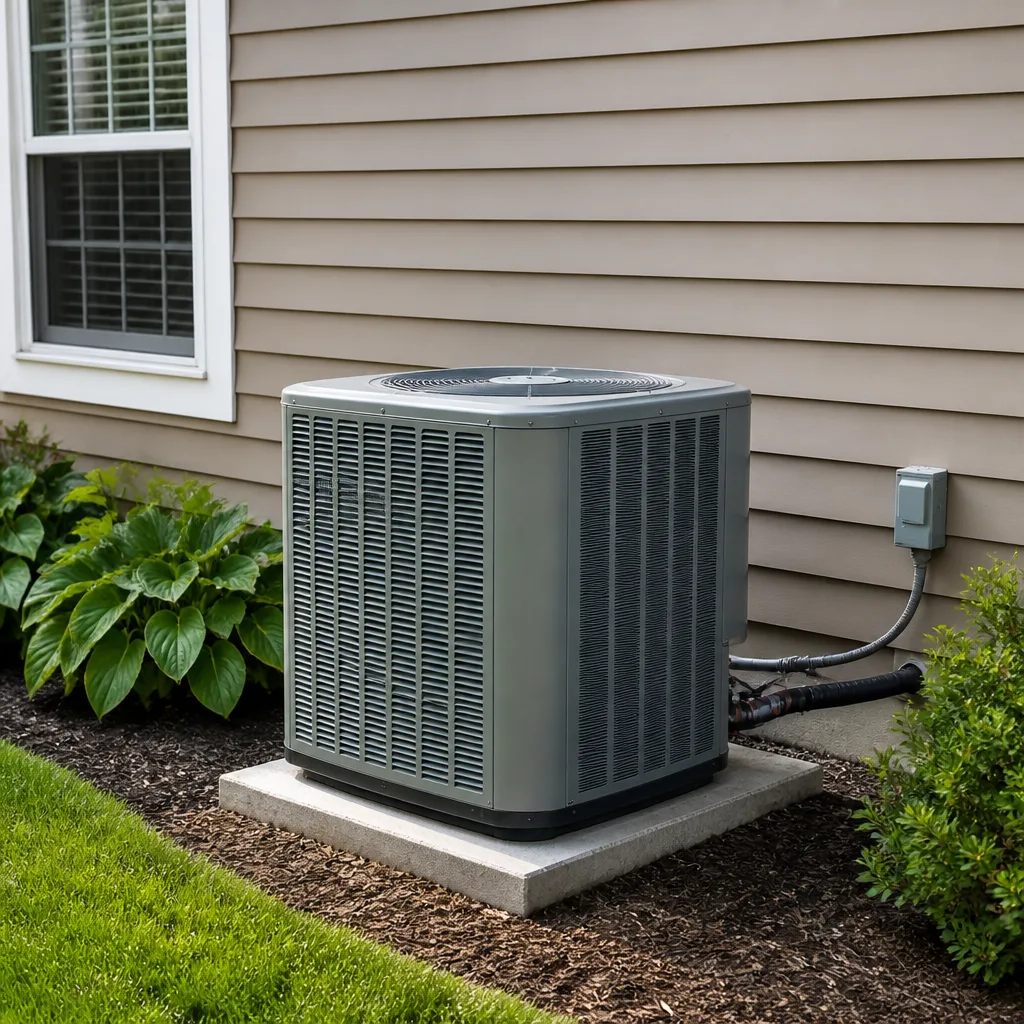 AC repair
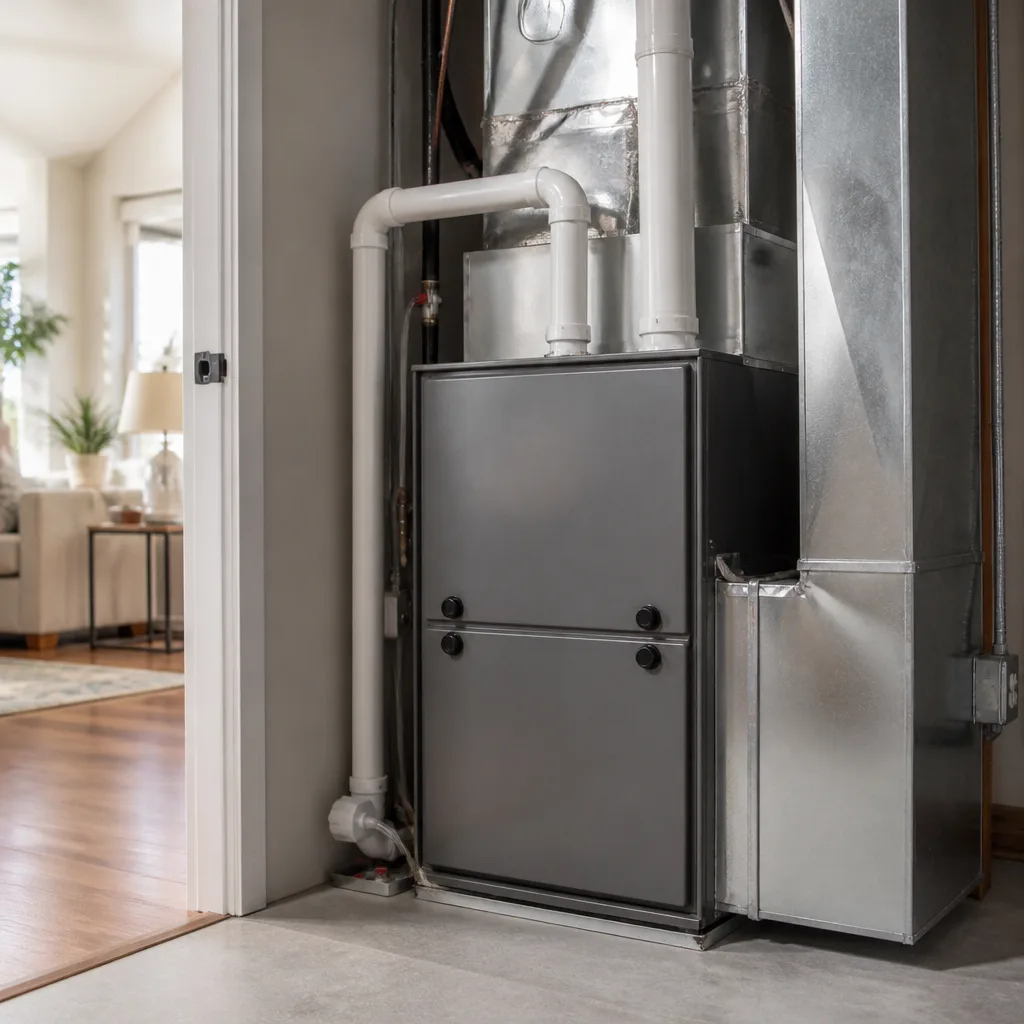 Furnace & heating
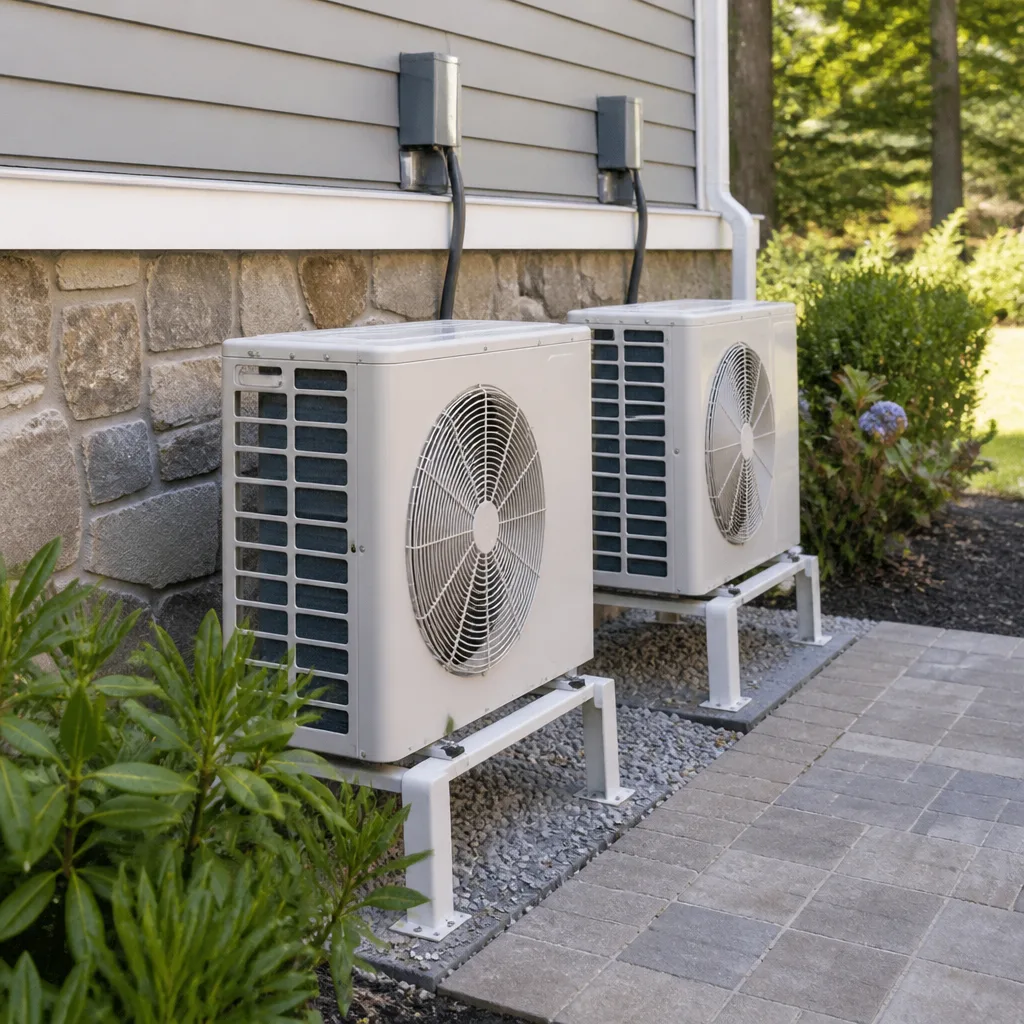 Heat pumps
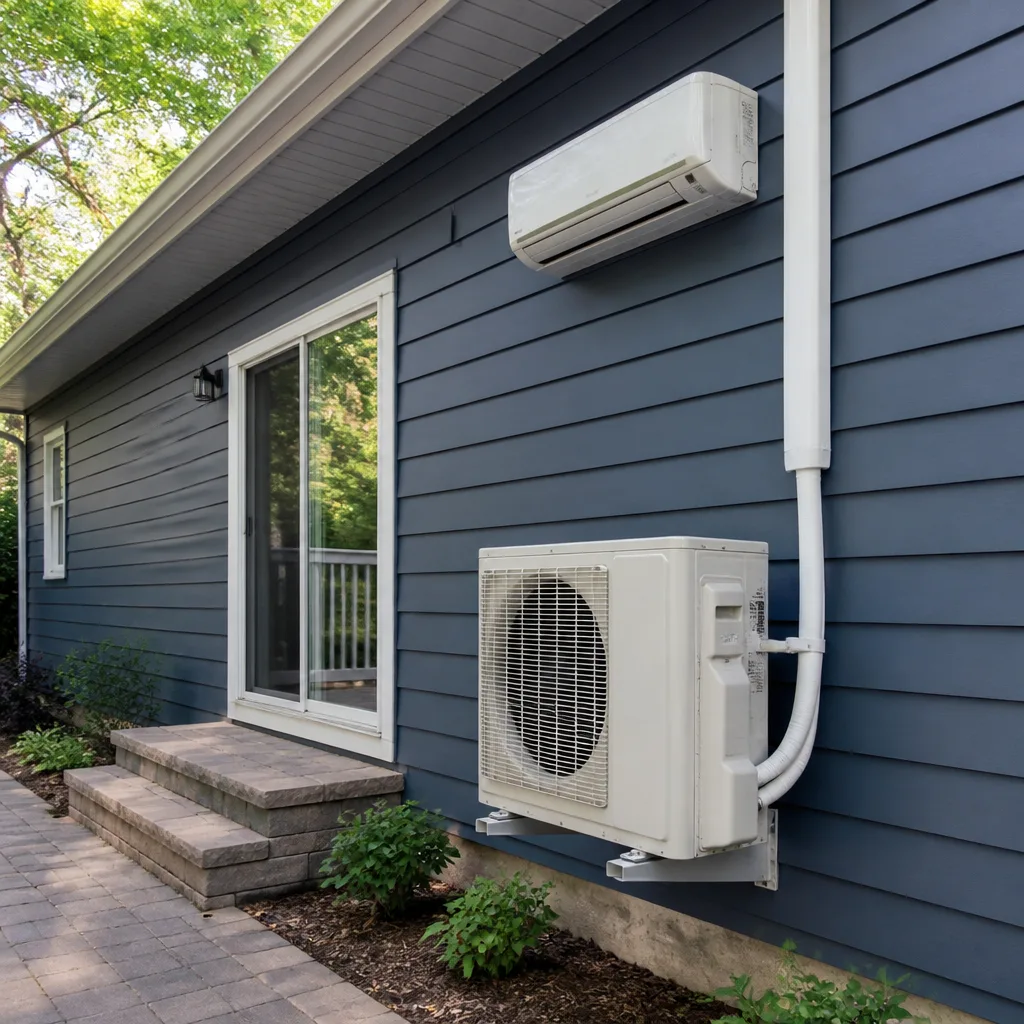 Ductless mini splits
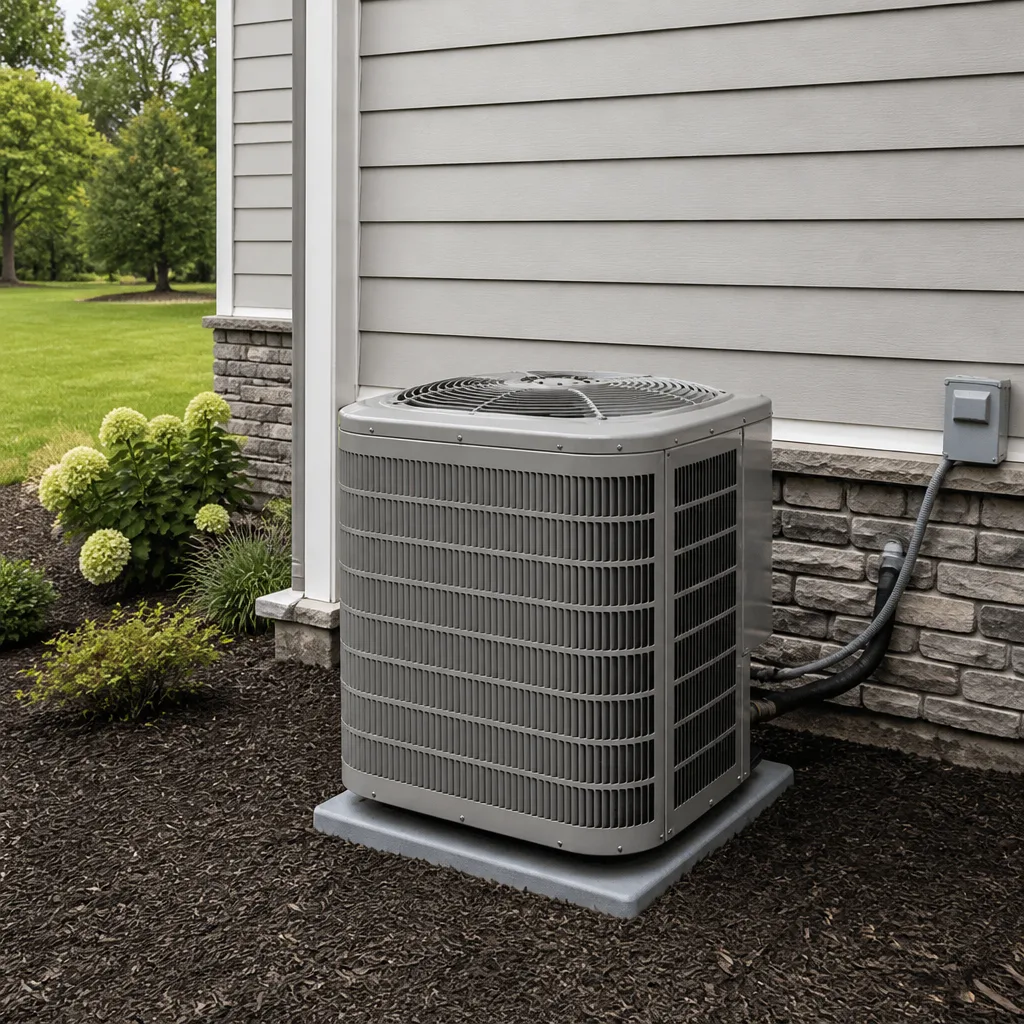 Carrier
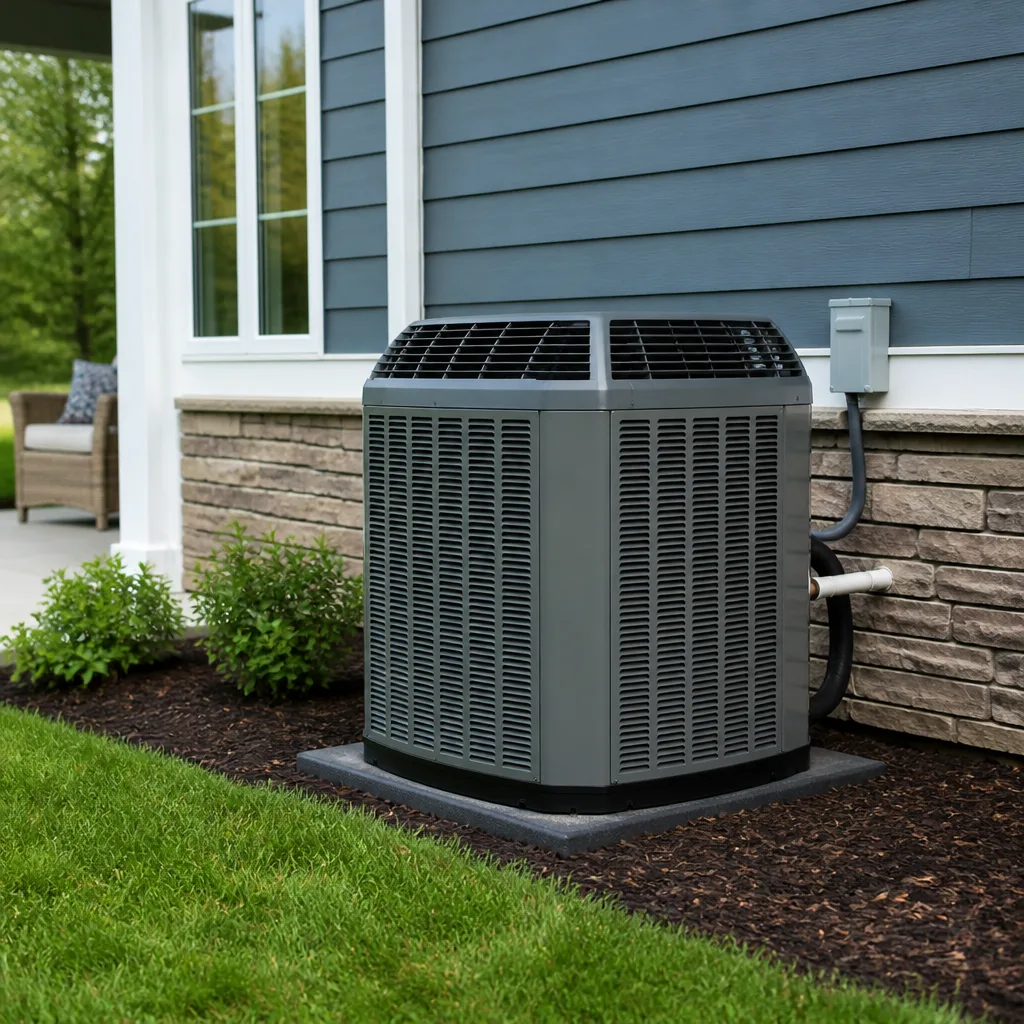 Trane
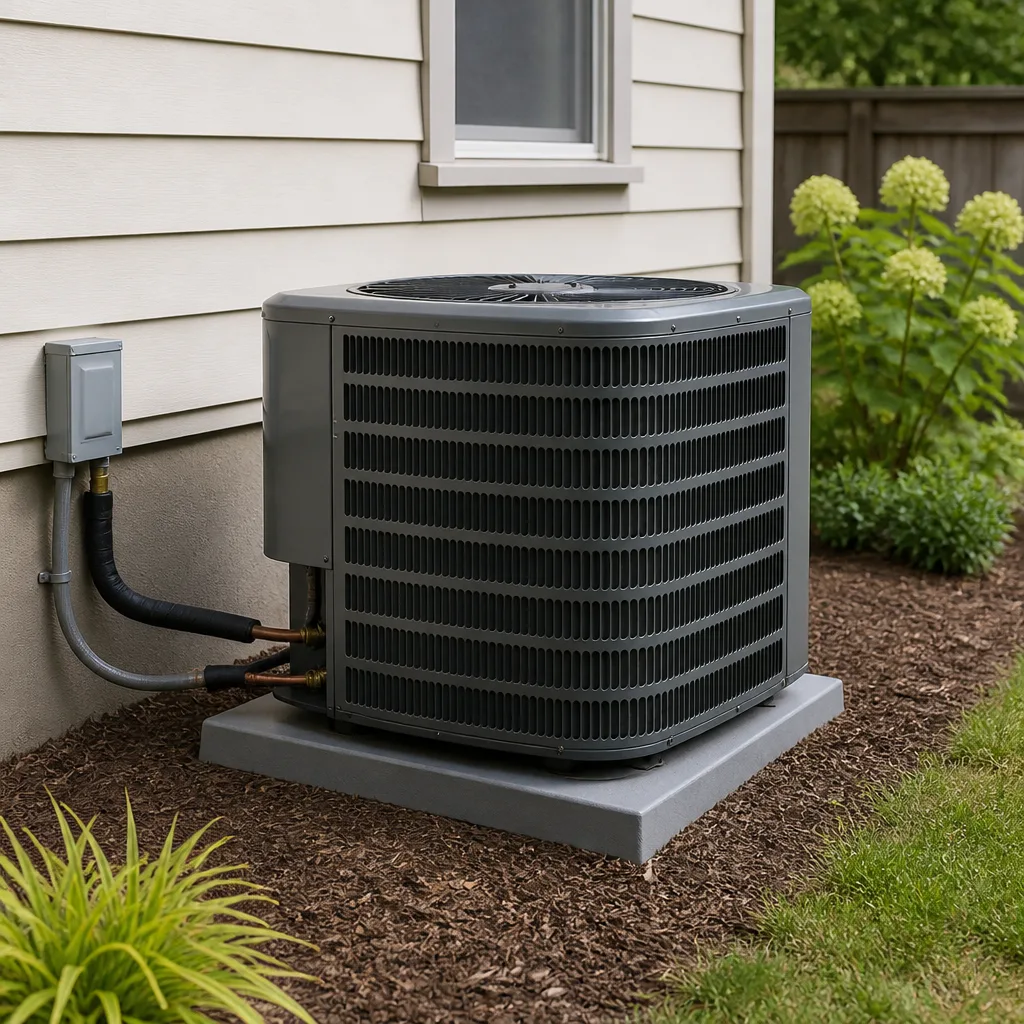 Goodman
Seasonal tune-up and full diagnostic on your Carrier, Trane, or Goodman system - readings shown to you before any repair is proposed
Diagnosis first, numbers second - you approve the repair price before a single part goes in.
Get your free estimateThe Complete Guide to HVAC in North Las Vegas
North Las Vegas logged 147 days above 100°F in 2023. But the peak heat isn’t the biggest threat to your system. It’s the 60°F overnight swings in spring and fall, which push refrigerant pressure into unpredictable territory and confuse thermostats calibrated for stable climates. Add windier corridors, newer tract homes ducted for builder-grade equipment, and a grid growing faster than its infrastructure, and you get HVAC demands that generic Southern Nevada advice gets wrong. This guide maps those North Las Vegas specifics to every major decision you’ll face: runtime costs, duct sizing, caliche soil, filtration, brand selection, and permits.
Quick Answer
HVAC in North Las Vegas means managing extreme daytime heat, sharp overnight temperature swings, and wind-driven dust across a mix of newer tract homes and older neighborhoods. The practical answer for most homeowners: keep equipment sized to a fresh load calculation (not the builder’s original 14 SEER baseline), understand your NV Energy rate tiers before you set a schedule, and filter aggressively because caliche dust and windblown particulate load filters fast. Repair usually beats replacement until a system passes 12 to 15 years or needs a compressor.
Styles & brands we work with
- AC repair
- Furnace & heating
- Heat pumps
- Ductless mini splits
- Carrier
- Trane
- Goodman
Table of Contents
- How North Las Vegas Climate Shapes HVAC Decisions
- Why Newer North Las Vegas Subdivisions Have Duct Sizing Problems
- NV Energy Rate Tiers and What HVAC Runtime Actually Costs
- Caliche Soil, Air Intake, and Filtration
- The Nine Brands We Service and What Each Does Best in Desert Heat
- What the Clark County HVAC Permit Process Actually Requires
- The Maintenance Schedule That Fits North Las Vegas
- Myths About Desert HVAC That Cost Homeowners Money
- Common Mistakes to Avoid
- When to Call a Professional
- Frequently Asked Questions
How North Las Vegas Climate Shapes HVAC Decisions
North Las Vegas sits on the northern valley floor, which makes it windier and marginally cooler at night than the southern valley. That combination is harder on equipment than straight heat. A compressor that runs at 105°F all afternoon and then needs to cycle off in 65°F air by 2 a.m. experiences pressure swings its design tolerances handle, but not gracefully over fifteen summers.
What this means in practice:
- Spring and fall are the dangerous seasons for compressors, not July. Short-cycling during swing months wears contactors and capacitors faster than steady summer runtime.
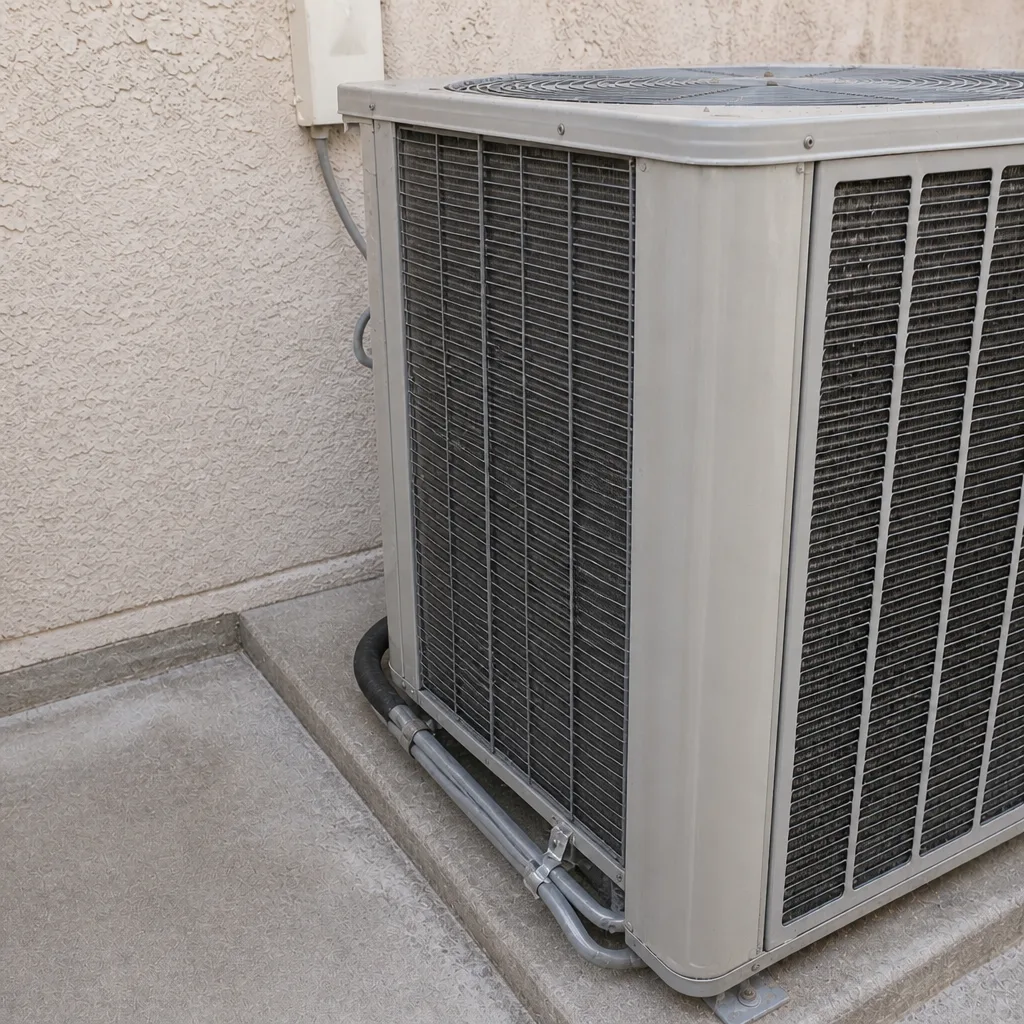
- Windblown dust from the open desert north and east of the city loads outdoor coils and filters more heavily than in sheltered parts of the valley.
- Older neighborhoods near downtown North Las Vegas and newer master-planned communities like Aliante and Tule Springs face different problems: aging equipment versus poorly sized ducts and undersized returns.
- Monsoon season (roughly July through September) brings humidity spikes that expose drainage and condensate problems hidden the rest of the year.
If you’re trying to sort a cooling problem right now, our team handles AC Repair in North Las Vegas with same-day scheduling and a written price before any work starts.
Why Newer North Las Vegas Subdivisions Have Duct Sizing Problems
Much of North Las Vegas’s housing stock was built between 2000 and 2020. During that stretch, builder-grade 14 SEER equipment was standard, and duct systems were designed to the minimums of the code cycle in force at the time. The problem: those ducts were sized for the equipment’s nominal tonnage, not for a modern Manual J load calculation that accounts for the actual window area, attic insulation, and orientation of the house.
What we regularly find in these homes:
- Returns that are one size too small, which starves the system and drives up static pressure
- Flex duct runs crushed or kinked at attic penetrations, cutting airflow to far bedrooms
- Supply registers that push 40% less air than the room needs, so the thermostat satisfies at the hallway sensor while the back bedroom stays warm
- Attic ductwork with degraded insulation after a decade of 140°F attic temperatures
Here’s the diagnostic sequence we use:
- Measure static pressure at the air handler and at the filter grille.
- Map airflow at every supply register with a flow hood.
- Compare measured airflow against a room-by-room load calculation.
- Look for crushed flex runs, disconnected boots, and unsealed plenum joints.
- Recommend duct corrections first when the equipment itself is healthy.
When undersized ducts have been fighting a system for years and the equipment is at end of life, replacement is the honest answer. Our AC Installation in North Las Vegas page walks through how load calculation and duct evaluation fit together before a single piece of equipment is ordered.
NV Energy Rate Tiers and What HVAC Runtime Actually Costs
NV Energy’s residential rate structure rewards you for shifting load, and a North Las Vegas homeowner who ignores it leaves real money on the table every summer. Peak pricing hits hardest between roughly 2 p.m. and 8 p.m. on weekday afternoons. A 3-ton air conditioner draws roughly 3,500 watts while running, which translates to a meaningful per-hour difference between peak and off-peak windows.
A rough planning framework:
- A 3-ton unit running flat out at peak rate can cost noticeably more per hour than the same unit running during off-peak hours
- Pre-cooling the house to 72°F before 2 p.m. and then coasting on thermal mass during peak avoids the worst of the rate tier
- A smart thermostat with rate-aware scheduling pays for itself faster in North Las Vegas than in a flat-rate utility territory
- Pool pumps, EV chargers, and laundry all compete for the same peak window; HVAC is usually the largest single load
Schedule the deep setback carefully, though. Setting your thermostat to 85°F every weekday afternoon and back to 74°F at 6 p.m. makes the compressor work harder to recover than it would have working steadily. A milder setback of 78°F to 80°F during the peak window is gentler on the equipment and, in our experience, usually cheaper overall.
Caliche Soil, Air Intake, and Filtration
Much of the ground under North Las Vegas is caliche: a cemented calcium carbonate layer that resists water infiltration and pushes fine dust into the air during grading, landscaping, and wind events. For HVAC systems, that dust is the enemy of every filter, evaporator coil, and return grille in the house.
What caliche dust does to a system:
- Clogs standard 1-inch filters in three to four weeks during windy months, driving static pressure up and airflow down
- Coats the evaporator coil, reducing heat transfer and forcing longer runtimes
- Accumulates in ground-level return plenums where ductwork is poorly sealed
- Shortens the life of blower motors running against high resistance
A few practical responses we recommend for North Las Vegas homes:
- Upgrade to a media filter cabinet (4 to 5 inches thick) so you change filters every three months instead of every three weeks.
- Seal return plenums and any duct connections in the garage or crawlspace. Dust finds the smallest gaps.
- Rinse outdoor coils after major wind events, not on a schedule.
- Have the evaporator coil cleaned during spring maintenance, before the heavy cooling season.
- Keep landscaping base material away from ground-level intake grilles if the home has them.
The Nine Brands We Service and What Each Does Best in Desert Heat
We service Carrier, Trane, Lennox, Goodman, Rheem, York, Daikin, Bryant, and American Standard. In a desert climate, brand matters less than the specific model’s coil design, refrigerant charge tolerance, and parts availability, but there are still meaningful differences worth knowing.
- Daikin builds inverter-driven systems with strong performance in partial-load conditions, which suits the North Las Vegas shoulder seasons extremely well.
- Bryant shares engineering lineage with Carrier, so parts and service knowledge overlap. Good long-term serviceability in our experience.
- York and American Standard both offer reliable single-stage equipment with widely available replacement parts, which helps when you need a fix fast in July.
- Goodman equipment tends to be cost-effective for builder-grade replacements and rental properties where budget matters more than premium features.
- Carrier, Trane, and Lennox each have premium lines with variable-speed compressors that handle the swing seasons better but cost more upfront.
For most North Las Vegas homeowners, the honest recommendation is to match the equipment to the load calculation and the duct system, not to chase a brand name. A properly sized Goodman outperforms an oversized Trane every time.
What the Clark County HVAC Permit Process Actually Requires
HVAC replacements and new installations in North Las Vegas require a permit through Clark County or the City of North Las Vegas building department, depending on the property’s jurisdiction. Homeowners can technically pull the permit themselves, but the liability and inspection requirements make that rarely worth it.
Here’s what actually happens on a permitted job:
- The contractor submits the permit application with equipment specs, load calculation, and site address.
- The building department reviews and issues the permit (typically a few business days for a standard residential replacement).
- The installation is performed to the approved specs.
- An inspection verifies equipment match, electrical connections, condensate handling, and duct sealing.
- The permit is closed out, which protects you at resale.
What homeowners get wrong: skipping the permit to save time. Unpermitted work becomes a disclosure issue at sale, and buyer’s inspectors catch it. The other common mistake is pulling the permit yourself and then discovering the contractor hasn’t insured the work, which leaves you holding the liability if something goes wrong. We handle the permit submission and inspection scheduling as part of every installation, so you’re not chasing paperwork.
The Maintenance Schedule That Fits North Las Vegas
Maintenance in North Las Vegas runs on a different calendar than the rest of the country. The heavy cooling season starts in April and doesn’t fully let go until October, which means spring tune-ups need to happen by March and fall tune-ups should target the heat pump or furnace before the first cold snap. Furnace work on a gas system should always go to a trained technician, not a weekend project; if you’re seeing ignition problems, Furnace Repair in North Las Vegas covers what’s safe to check and what isn’t.
A sensible yearly rhythm:
- February or March: Cooling tune-up, coil cleaning, refrigerant charge verification
- April through October: Filter changes every 4 to 8 weeks; more often if you have pets or live near new construction
- October or November: Heating tune-up, gas pressure check, heat exchanger inspection
- Any month: Visual check of outdoor unit clearance and coil condition after wind events
Our technicians walk through what they found with a written report at every visit. They don’t sell on commission. If something isn’t broken, we’ll tell you.
Myths About Desert HVAC That Cost Homeowners Money
Some persistent advice floating around North Las Vegas does more harm than good. Here are the ones we correct most often.
- “Bigger is better.” Oversized equipment short-cycles, which means less dehumidification during monsoon season and faster wear. Manual J load calculation exists for a reason.
- “You don’t need a tune-up if it’s cooling fine.” A system running at 90% of rated capacity feels normal until the day it doesn’t. Coil cleaning and charge verification catch slow degradation.
- “Just hose down the outdoor unit when it’s hot.” Spraying water on a running condenser can crack a hot compressor. And if the unit is struggling because of low refrigerant, water doesn’t fix that.
- “Closing vents saves money.” Closing registers raises static pressure and can freeze the coil. It almost always costs more than it saves.
- “Swamp coolers work fine here.” Evaporative cooling is workable in the driest weeks but fails hard during monsoon humidity, which makes it a gamble in North Las Vegas.
Common Mistakes to Avoid
- Replacing equipment without evaluating ducts. North Las Vegas homes built between 2000 and 2020 often have undersized returns that will starve a new system from day one.
- Ignoring rate tiers during peak hours. Running a 3-ton unit at peak every weekday afternoon adds up to a meaningful utility bill difference that a smart thermostat can cut.
- Using 1-inch filters year-round in windy months. Caliche dust loads standard filters in three weeks and drives static pressure up. A media cabinet pays for itself in a single spring.
- Skipping the fall tune-up because the summer went fine. Furnace ignition, gas pressure, and heat exchanger issues surface in November, not July.
- Setback swings that are too aggressive. Dropping the thermostat 15 degrees at 6 p.m. after a hot day makes the compressor recover 10+ degrees of heat, which is harder than holding a steady 78°F.
- Unpermitted installations. A missing permit becomes a resale disclosure issue in North Las Vegas and often means the installation was never inspected for equipment match or duct sealing.
- Calling for a replacement quote before a diagnostic. A failing capacitor looks similar to a failing compressor to an untrained eye. Diagnostic first, quote second.
When to Call a Professional
Some problems are genuinely dangerous and belong in a trained technician’s hands, not a weekend to-do list. Gas furnace work is the obvious one: ignition failures, a smell of gas, or a questionable heat exchanger all call for a licensed professional, not a YouTube tutorial. Electrical panel work and refrigerant handling are in the same category. Beyond the safety line, call a pro if you see ice on the indoor coil, hear repeated compressor short-cycling, notice the breaker tripping, or smell burning insulation from the air handler. Also call if the system is more than 12 years old and needs a repair over the cost of a filter and a capacitor. Meadowsweet Heating & Air North Las Vegas offers free estimates in North Las Vegas – call (844) 320-2997.
Frequently Asked Questions
Most North Las Vegas HVAC repairs fall between $180 and $650 depending on the component, with compressor or coil replacements running higher. Common jobs like capacitors, contactors, and blower motor replacements usually land in the $200 to $400 range. Call (844) 320-2997 for an exact quote – estimates are free, and we’ll put the price in writing before any work starts.
A 14 SEER system meets minimum code and will cool a house, but it runs longer and harder than higher-efficiency equipment in North Las Vegas summers, which drives up utility bills over the equipment’s life. If your unit was installed during the 2000 to 2020 tract-home boom, a load calculation will show whether the real problem is equipment efficiency or undersized ducts. Call (844) 320-2997 to schedule a diagnostic.
Every 4 to 8 weeks during the cooling season for standard 1-inch filters, and every 3 months if you have a media cabinet. North Las Vegas caliche dust and spring winds load filters much faster than homeowners expect, and a clogged filter drives up static pressure and shortens blower motor life. If you notice your filter is gray within three weeks, it’s time to upgrade to a media cabinet.
Repair is usually the better call until equipment passes 12 to 15 years or needs a compressor or evaporator coil replacement, at which point replacement often costs less over the next five years. The deciding factor is usually the state of the ducts: a 14-year-old system with healthy ducts is worth repairing, while a 14-year-old system with crushed flex runs and an undersized return is often cheaper to replace as a package. Call (844) 320-2997 for a written comparison.
Yes. Residential HVAC replacements in North Las Vegas require a permit through the City of North Las Vegas or Clark County depending on jurisdiction, and the installation gets inspected for equipment match, electrical connections, and duct sealing. We handle the permit submission and inspection scheduling on every installation. If you’re comparing quotes, ask each contractor who pulls the permit.
Same-day AC and furnace repair is available for most North Las Vegas calls, and we answer the phone with a live person 24 hours a day, 7 days a week – including nights and weekends. Call (844) 320-2997 and we’ll either schedule you a same-day window or give you an honest timeline. Installations are load-calculated and scheduled, not same-day, because getting equipment and duct sizing right takes planned work.
The Bottom Line
North Las Vegas HVAC decisions reward homeowners who understand the local specifics: sharper seasonal temperature swings than peak heat, builder-era ducts that run undersized, caliche dust that punishes cheap filters, NV Energy rate tiers that change the economics of runtime, and a permit process that protects you at resale. Get a load calculation before replacing equipment. Upgrade to a media filter cabinet. Understand your rate tiers and stop running the compressor flat-out at peak. And when something involves gas, high voltage, or refrigerant, call a professional. The rest is maintenance rhythm and honest diagnostics. If you want a second opinion on a quote or a same-day diagnostic on a system that’s failing, our Meadowsweet Heating & Air North Las Vegas home page has the full list of services.
Ready to schedule a diagnostic or an installation consultation? Call (844) 320-2997 for a free estimate in North Las Vegas. We answer with a live person any hour, day or night. You’ll get a written price before any work starts, shoe covers and drop cloths on every visit, and the 365-Day Done Right Promise on every job. If it’s not done right, we make it right.
Written by the team at Meadowsweet Heating & Air North Las Vegas.
See the difference
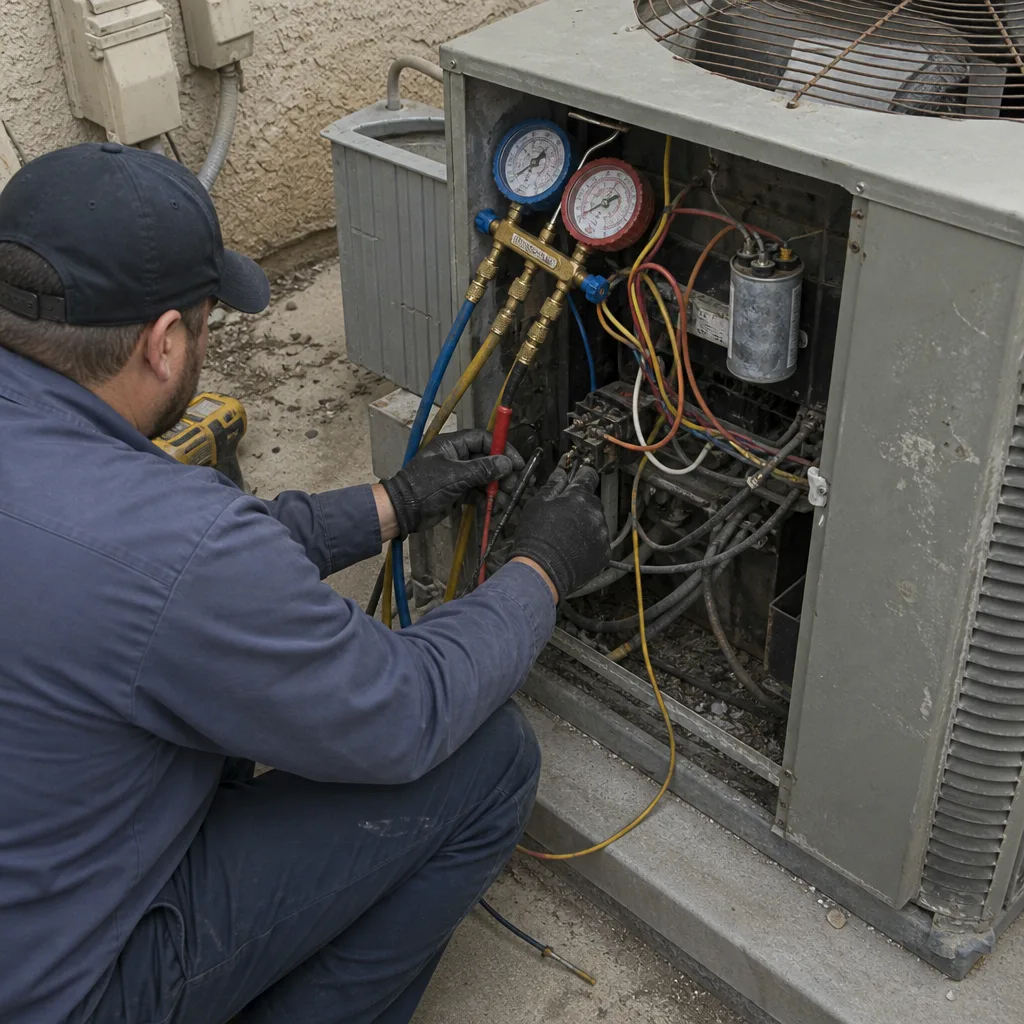 Before
 After
 Before
 After
 Before
 After