
Last updated November 18, 2026
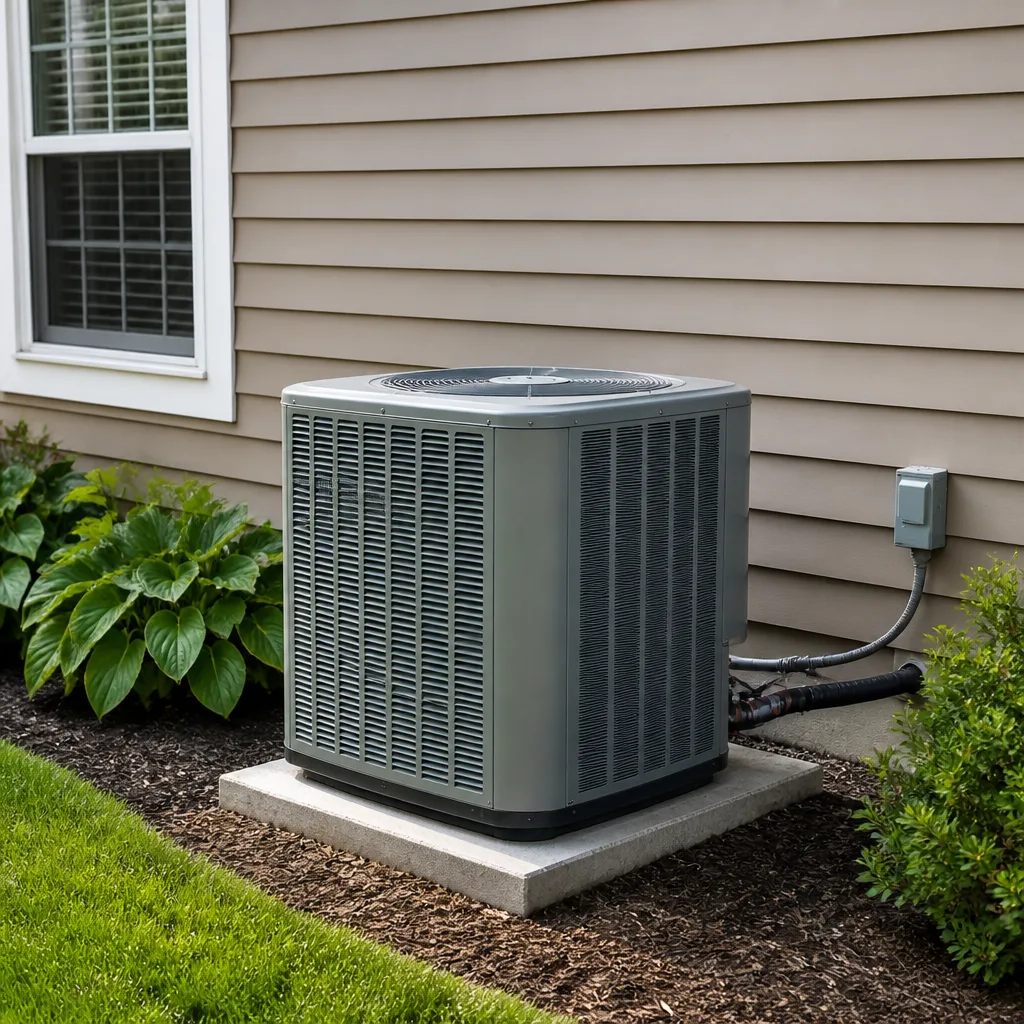 AC repair
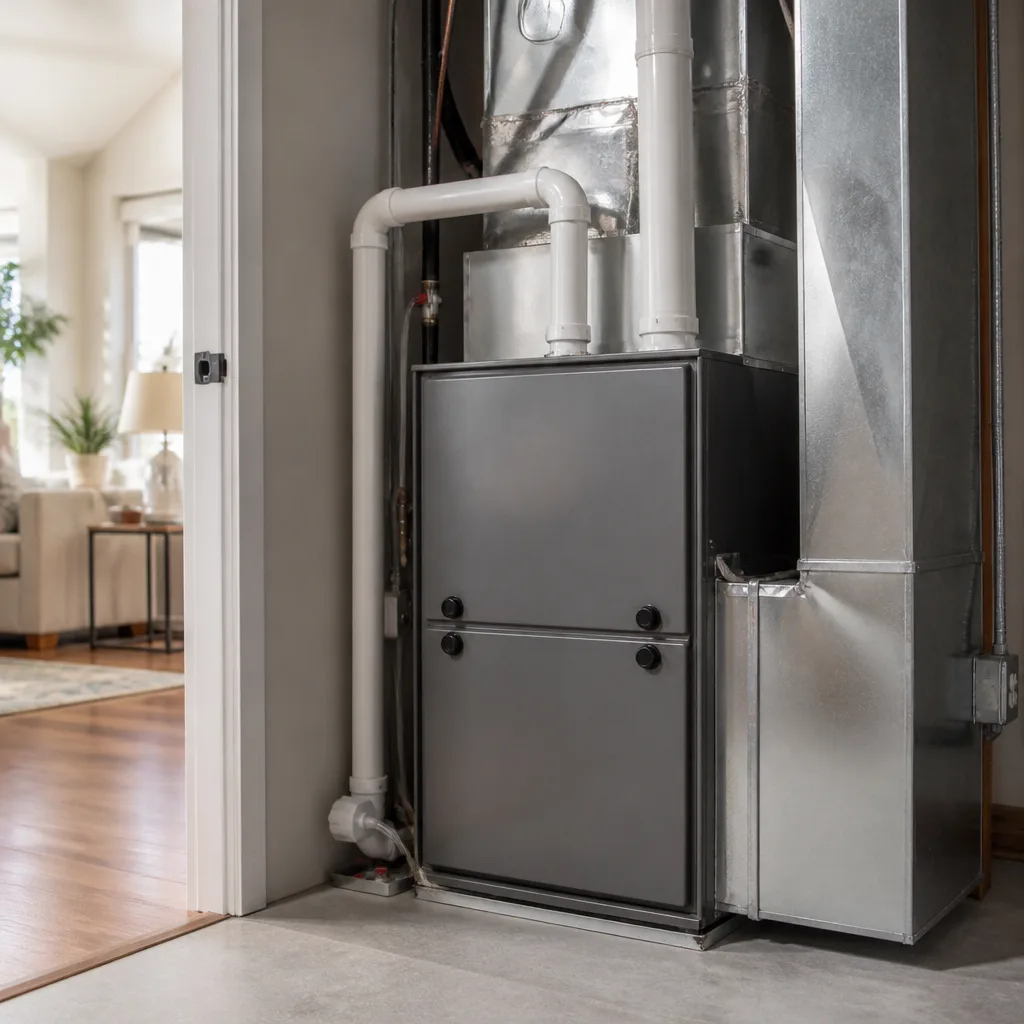 Furnace & heating
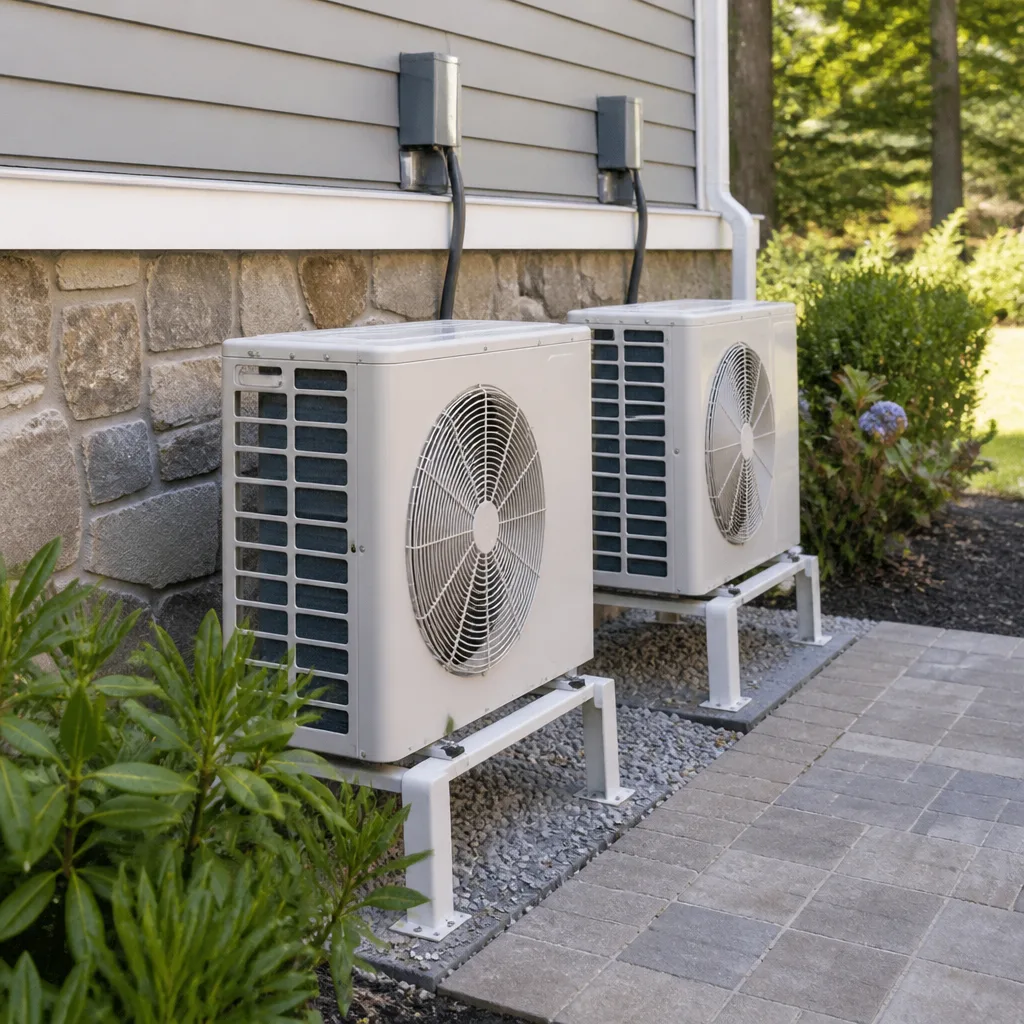 Heat pumps
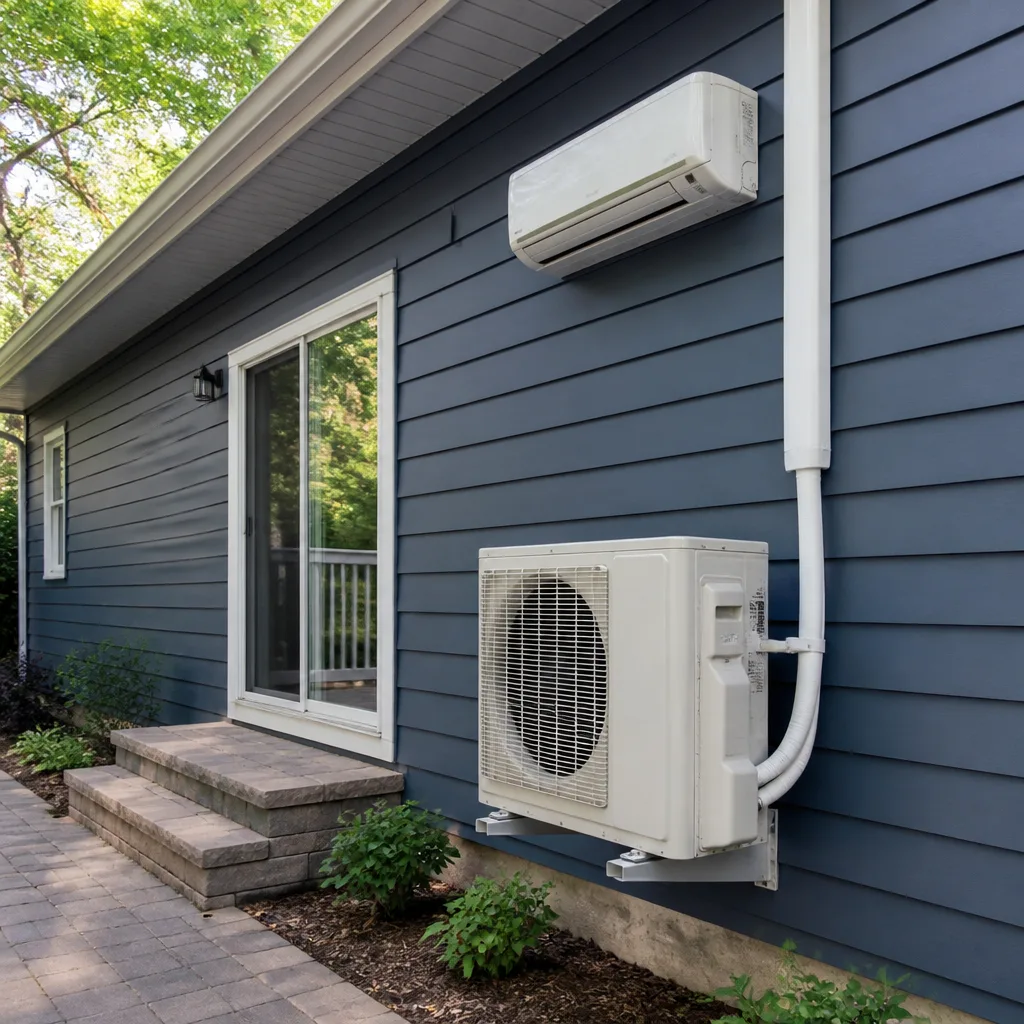 Ductless mini splits
 Carrier
 Trane
 Goodman
Seasonal tune-up and full diagnostic on your Carrier, Trane, or Goodman system - readings shown to you before any repair is proposed
Diagnosis first, numbers second - you approve the repair price before a single part goes in.
Get your free estimateDIY vs Professional AC Repair: What’s Safe to Do Yourself
Handling refrigerant without an EPA Section 608 certification is a federal violation, and the EPA can fine violators up to $44,539 per day. Yet a large share of the “DIY AC recharge” tutorials pulling millions of views on YouTube never mention that a single line. That gap matters more here than almost anywhere: North Las Vegas summers push past 110°F, and a home AC that fails in July isn’t a comfort problem, it’s a health risk. This guide draws the line by task type, not by difficulty, because several AC jobs that look easy are illegal or warranty-voiding for anyone without the right license. You’ll leave knowing exactly what’s safe to do yourself and what to hand off.
Quick Answer
Safe DIY AC tasks are limited to the low-risk perimeter: replacing air filters, clearing the outdoor condenser of debris, rinsing the exterior coils with a garden hose, and checking your thermostat batteries and settings. Anything involving refrigerant, electrical components, capacitors, or sealed-system parts is either illegal without an EPA 608 certification or warranty-voiding without a licensed technician in Nevada. If your AC is blowing warm, tripping breakers, or making unusual noise, that’s a professional job.
Styles & brands we work with
- AC repair
- Furnace & heating
- Heat pumps
- Ductless mini splits
- Carrier
- Trane
- Goodman
Table of Contents
- The Three-Tier DIY Breakdown: What’s Safe, What’s Risky, What’s Off-Limits
- Why Refrigerant Work Is Illegal Without EPA 608
- What Carrier, Lennox, and Trane Actually Say About DIY Work
- What “Licensed” Means in Nevada: C-21 vs. EPA 608
- Five DIY Jobs That Go Bad in North Las Vegas
- How to Get a Written Price Before Work Starts
- Comparing DIY and Professional Costs Honestly
The Three-Tier DIY Breakdown: What’s Safe, What’s Risky, What’s Off-Limits
Forget “easy” versus “hard.” The only useful question in North Las Vegas is whether a task is legal and warranty-safe for you to attempt. Here’s how the tasks split.
Tier 1 – Safe for any homeowner:
- Replacing or cleaning the air filter every 30 to 90 days (monthly during peak summer here, given the dust)
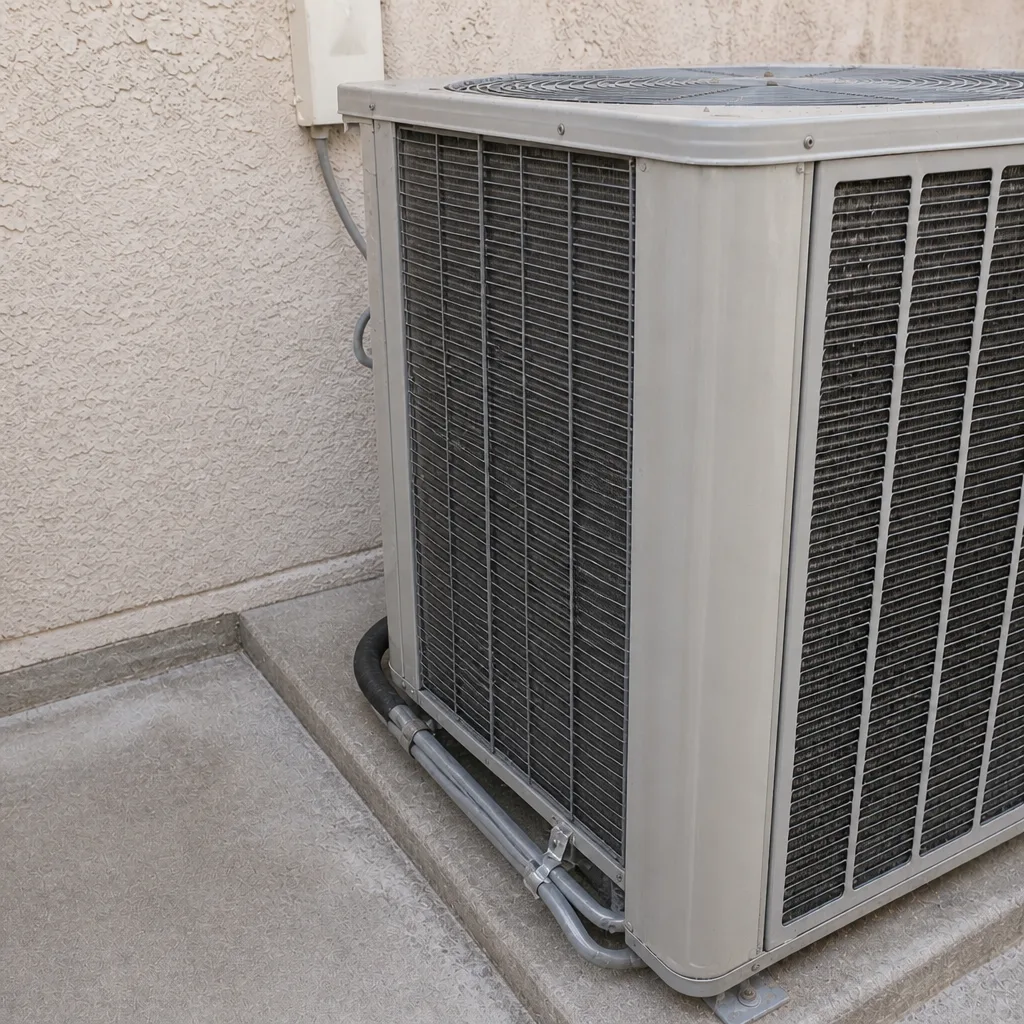
- Clearing leaves, dirt, and cottonwood fluff from around the outdoor condenser unit
- Rinsing the exterior coil fins with a garden hose on a gentle spray
- Checking thermostat batteries and confirming the set point is correct
- Vacuuming supply registers and return grilles
- Keeping two feet of clearance around the condenser
Tier 2 – For handy homeowners with the right tools (and some risk):
- Replacing a thermostat (low-voltage wiring, but one crossed wire can blow a fuse or short the control board)
- Cleaning the condensation drain line with a wet-dry vacuum
- Straightening bent coil fins with a fin comb
- Replacing a contactor or blower motor on some older units, if you’re comfortable shutting off power at the disconnect first
We’ve seen Tier 2 tasks done well. We’ve also seen a North Las Vegas homeowner fry a $400 control board by swapping a thermostat without killing the breaker. That risk is real.
Tier 3 – Illegal or warranty-voiding without a license:
- Adding, recovering, or handling refrigerant in any way (EPA Section 608)
- Working on the sealed refrigerant circuit
- Any diagnosis that requires opening the electrical panel of the unit beyond a visual check
- Gas line work related to a furnace/AC combo
- Most work that requires a permit or inspection in North Las Vegas
If a task lands in Tier 3, stop. The consequences go well past a repair bill.
Why Refrigerant Work Is Illegal Without EPA 608
Refrigerant isn’t like oil or coolant in a car. It’s regulated under the Clean Air Act, and Section 608 of that law specifically prohibits anyone without EPA certification from buying, handling, or releasing ozone-depleting refrigerants and their substitutes. Modern refrigerants like R-410A and R-32 aren’t ozone-depleting, but they’re still regulated under the same rules because of their global warming potential. As of 2026 the EPA is phasing down high-GWP refrigerants, and R-410A is being replaced by R-454B and R-32 in new equipment. That transition makes unauthorized DIY even more risky, because a homeowner without certification can’t legally buy most of these refrigerants anyway.
The fine for knowingly violating Section 608 runs up to $44,539 per day, per violation. That’s the federal figure cited in EPA enforcement guidance. It’s not the kind of number that shows up on a YouTube thumbnail.
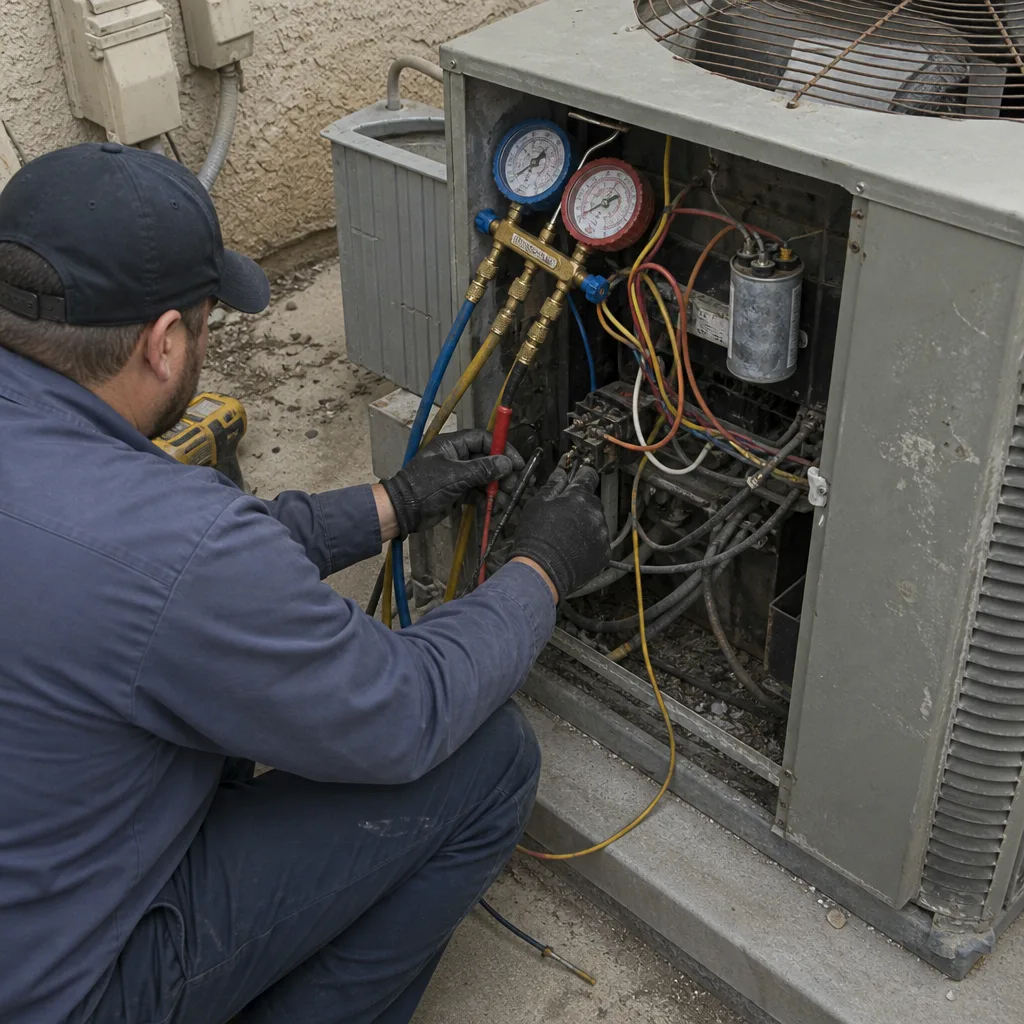
There’s a practical angle, too. “Topping off” refrigerant treats a symptom. Refrigerant doesn’t get used up like fuel, so a low charge means there’s a leak somewhere in the sealed system. Finding that leak requires a licensed technician with gauges, a leak detector, and the certification to recover what’s left before repairing. Call us at (844) 320-2997 if you suspect a charge issue – we’ll tell you honestly whether a leak search is warranted. For the full repair picture, see our AC Repair in North Las Vegas page.
What Carrier, Lennox, and Trane Actually Say About DIY Work
Every major manufacturer writes warranty language that requires licensed, qualified installation and service. Here’s the pattern to watch for.
Carrier warranties state that the warranty is void if the equipment is not installed and serviced by a licensed contractor, or if the failure is caused by improper installation or service. The exact wording varies by model, but the theme is consistent: unlicensed work can void coverage.
Lennox requires installation by a licensed professional contractor for its limited warranty to apply. Improper installation, including work that doesn’t follow local codes, can void parts coverage. Lennox is specific that alterations or repairs done by unqualified persons fall outside the warranty.
Trane similarly requires installation and service by licensed professionals and excludes damage caused by improper installation, misapplication, or unauthorized service. Most Trane units carry a 10-year limited compressor warranty and 5-year parts warranty when registered on time – but only if the work was done correctly.
The pattern is nearly universal. So is the practical reality: when a technician opens your unit and finds a non-OEM capacitor, a thermostat wired with lamp cord, or evidence of a DIY refrigerant tap, the manufacturer can deny the claim for any subsequent failure, even one that wasn’t caused by the DIY work. That’s how a $30 capacitor swap turns into a lost $1,200 parts warranty. Goodman and Rheem follow the same basic structure.
Our technicians have up to 22 years of experience working within these warranty terms across nine brands – Carrier, Trane, Lennox, Goodman, Rheem, York, Daikin, Bryant, and American Standard. Keeping your coverage intact is part of the job.
What “Licensed” Means in Nevada: C-21 vs. EPA 608
Nevada HVAC contractors must hold a state contractor’s license from the Nevada State Contractors Board. Air conditioning and refrigeration work falls under the C-21 classification (or a related specialty license), and that license is what permits a business to contract for HVAC work in this state. It’s a business-level credential tied to a qualifying individual, insurance, bond, and continuing education requirements.
EPA Section 608 certification is entirely separate. It’s a federal credential that any individual technician must earn to legally purchase, handle, and recover refrigerant. Neither one substitutes for the other. A C-21 license without 608 doesn’t let the business touch refrigerant lawfully; EPA 608 alone doesn’t authorize the business to contract for HVAC work.
In North Las Vegas, there’s a third layer: local permits. New installations, duct changes, and gas line work often require a Clark County permit and inspection. Pulling one without a license is itself a violation, and it can complicate a home sale later because the work stays on record as unpermitted.
When you hire a pro, ask two questions: “What’s your license number?” and “Is the technician EPA 608 certified?” A qualified company answers both without hesitation. Our team fields those questions daily at (844) 320-2997. For the full company picture, visit our Meadowsweet Heating & Air North Las Vegas home.
Five DIY Jobs That Go Bad in North Las Vegas
Some tasks that work fine in a mild climate fail spectacularly in North Las Vegas. Here are the five we see fail most often, ranked roughly by frequency.
- Thermostat replacement during peak heat. A homeowner kills the breaker, wires the new thermostat, flips the breaker back on, and the compressor doesn’t start. The likely cause: a short in the low-voltage wiring blew the 3-amp fuse, or a mis-wired terminal sent 24V through the wrong circuit. In 110°F July heat with no cooling in the house, the diagnosis now costs more than the thermostat did.
- Rinsing the outdoor condenser with a pressure washer. Most homeowners know not to hit the fins with a pressure washer. Some still do. Bent fins cut airflow in a climate where the condenser needs every bit of it to shed 115°F ambient heat, and a clogged condenser translates to high head pressure and a compressor that works itself to failure.
- Duct tape on the refrigerant line insulation. UV here destroys duct tape in a single summer. Once the line insulation is compromised, sunlight degrades the copper, and the line develops a pinhole leak that requires a certified tech, recovery, and brazing to fix.
- Replacing a capacitor with a mismatched spec. The label on the capacitor matters. A 35/5 uF capacitor swapped for a 40/5 “close enough” unit can kill a compressor over a single Vegas summer. And the sticker shows it wasn’t OEM.
- Adding refrigerant “until it feels cold.” Without gauges and a superheat/subcooling calculation, overcharging is common – and it damages the compressor. That’s the felony version of Tier 3, because it’s also a federal violation.
North Las Vegas homes in the Aliante and Eldorado communities often have slightly different airflow configurations than the older 89030 neighborhoods near downtown, and the right fix depends on knowing which system you have. In our experience, the wrong DIY fix on a Vegas roof gets expensive fast – and the roof itself adds a heat load that makes hurry-up work fail sooner. Our AC Installation in North Las Vegas team sees the results of spring DIY attempts every June and July.
How to Get a Written Price Before Work Starts
The reason DIY looks cheaper is that homeowners compare an unknown professional price against a known parts cost. Fix that by getting a written price before accepting the job. Here’s the exact process.
- Call and describe the symptom in one sentence: “The house won’t cool below 85,” or “The unit is tripping the breaker.”
- Ask for a diagnostic visit with a written estimate of the diagnostic fee before the technician is dispatched.
- When the technician arrives, they diagnose, then hand you a written price for the repair – before any tools are opened on the unit.
- Read the price line by line. It should list parts and labor separately, with the warranty terms spelled out.
- If the price is more than you expected, ask what the repair-only option costs versus what a larger fix would buy you. This is where honest companies (and honest DIY math) diverge.
- Get the price in writing before work starts, and only then decide.
At Meadowsweet Heating & Air North Las Vegas, a written price before any work starts is non-negotiable, on every visit. We’ll also send a photo of the clean-up before we leave – shoe covers and drop cloths are included, not upsell items. Compare that to a Saturday afternoon spent guessing at a refrigerant charge and hoping the warranty holds. Call (844) 320-2997 for a free estimate and a written price.
Comparing DIY and Professional Costs Honestly
Here’s the line-item comparison most DIY guides skip. These are realistic North Las Vegas ranges for the repair side of the work, including the cost of getting it wrong.
| Task | DIY parts cost | Pro cost (North Las Vegas) | DIY failure cost |
|---|---|---|---|
| Air filter change | $15 – $40 | $0 (you already own this task) | $0 if done monthly |
| Outdoor coil rinse | $0 | $0 (still DIY-friendly) | $0 if hose only |
| Thermostat replace | $80 – $220 | $200 – $400 installed | $150 – $500 (control board or fuse) |
| Capacitor replace | $15 – $40 | $150 – $280 installed | $500 – $1,800 (compressor damage) |
| Refrigerant recharge | Illegal without EPA 608 | $220 – $450 depending on charge and leak repair | Up to $44,539 per day federal fine + warranty void |
| Compressor diagnosis | Not DIY-safe | $120 – $250 diagnostic, repair quoted separately | Full compressor replacement: $1,600 – $2,800 |
Read it like this: the DIY savings on the small items are real, and we want you to take them – filters and coil rinses keep a system alive longer in Vegas heat. The DIY savings on the middle items are illusory the moment something goes wrong, and on the bottom items they’re not savings at all. They’re a bet on not getting caught, and the odds aren’t in your favor when the sticker, the diagnosis, and the manufacturer’s inspection all point at the DIY work.
For the winter side of the same decisions, our Furnace Repair in North Las Vegas page covers the equivalent furnace tasks. If you’re weighing a repair against a full system replacement, the honest comparison usually lives in the 5- and 10-year math, not the sticker price.
Common Mistakes to Avoid
- Trusting a YouTube recharge video. Most walk through releasing or adding refrigerant without mentioning Section 608. Watching the video is fine; following it is a federal violation and a warranty void, full stop.
- Rinsing coils with a pressure washer. The fins on a North Las Vegas condenser bend at about 20 PSI. A pressure washer turns a cheap maintenance task into a $600 – $1,200 coil replacement.
- Replacing a thermostat without shutting off the air handler breaker. Low-voltage wiring sends 24V through the control board. One crossed wire shorts it, and the diagnosis now costs more than the thermostat. We’ve seen this in Eldorado homes more than any other single mistake.
- Using duct tape to seal ducts or line insulation. UV here destroys duct tape by September. Use foil HVAC tape or call a pro to reintroduce the right material – and if the underlying duct is failing, that’s a pro job anyway.
- Mismatching a capacitor. A motor-run capacitor has a specific microfarad rating on its label for a reason. Swapping for “close enough” puts the compressor at risk over a single summer.
- Ignoring a tripping breaker. A breaker trip in a Vegas summer is almost always a real fault (compressor drawing high amps, a shorted contactor, a failing capacitor). Tape-holding the breaker on is how a $250 fix becomes a $1,800 compressor.
- DIYing around pets and kids without precautions. Refrigerant and coil cleaners are not pet-safe in their raw form. If you’re sticking to Tier 1 and Tier 2 tasks, keep pets indoors, use plain water for coil rinses, and skip the chemical sprays until you’ve read the label.
See the difference
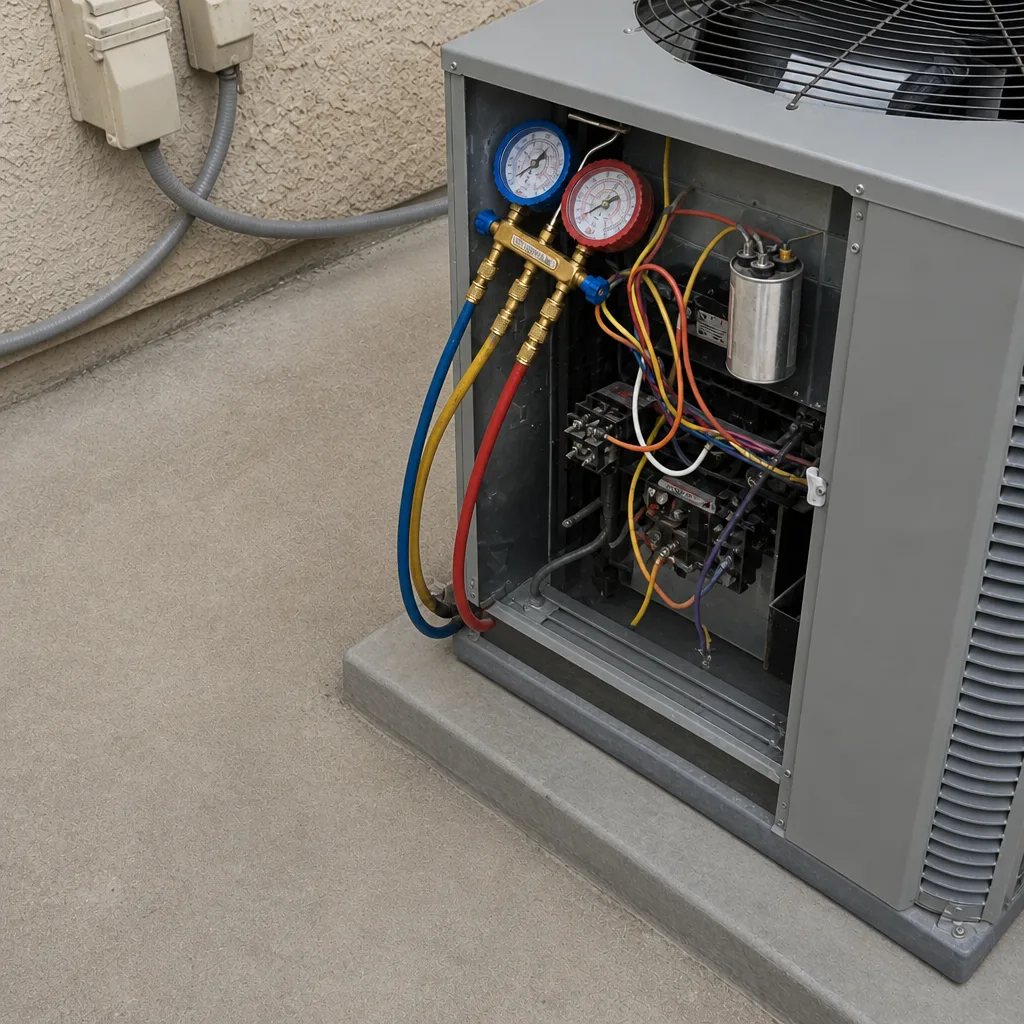
 Before
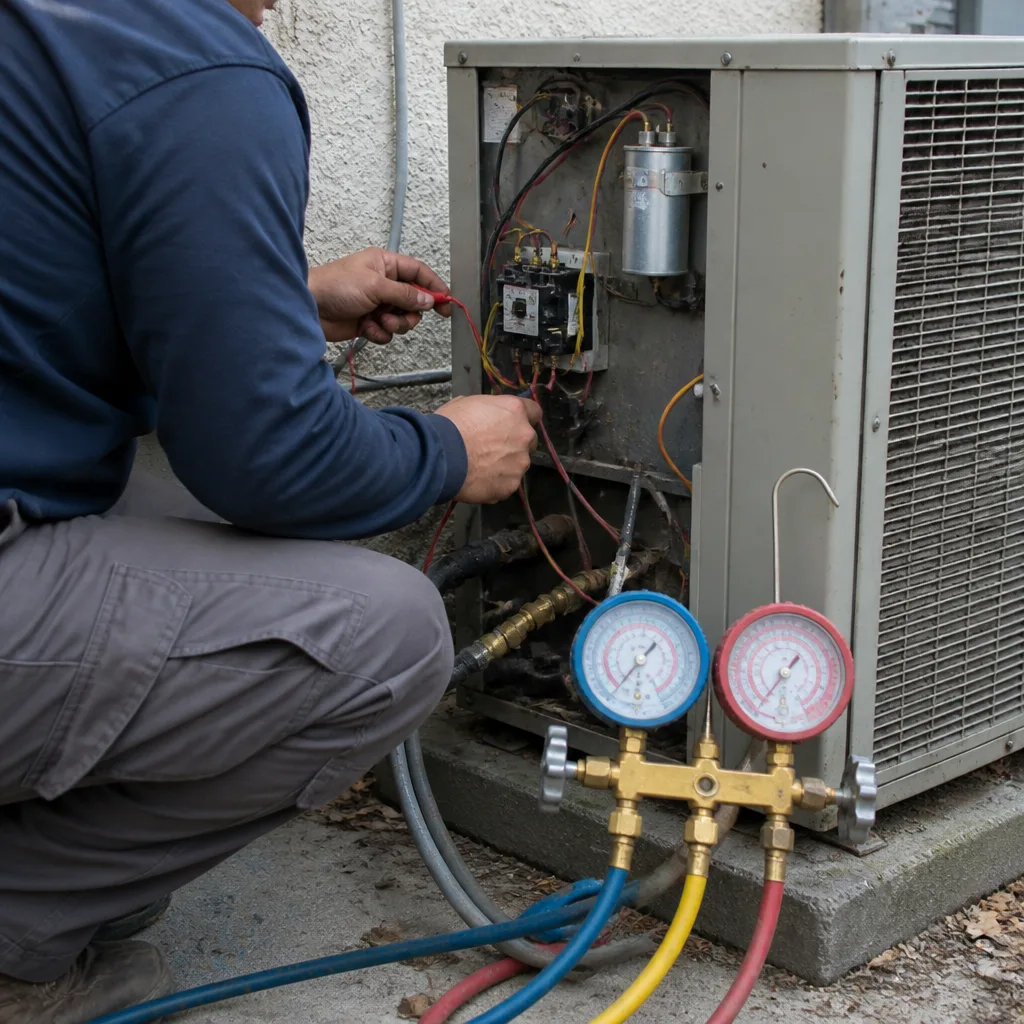
 After
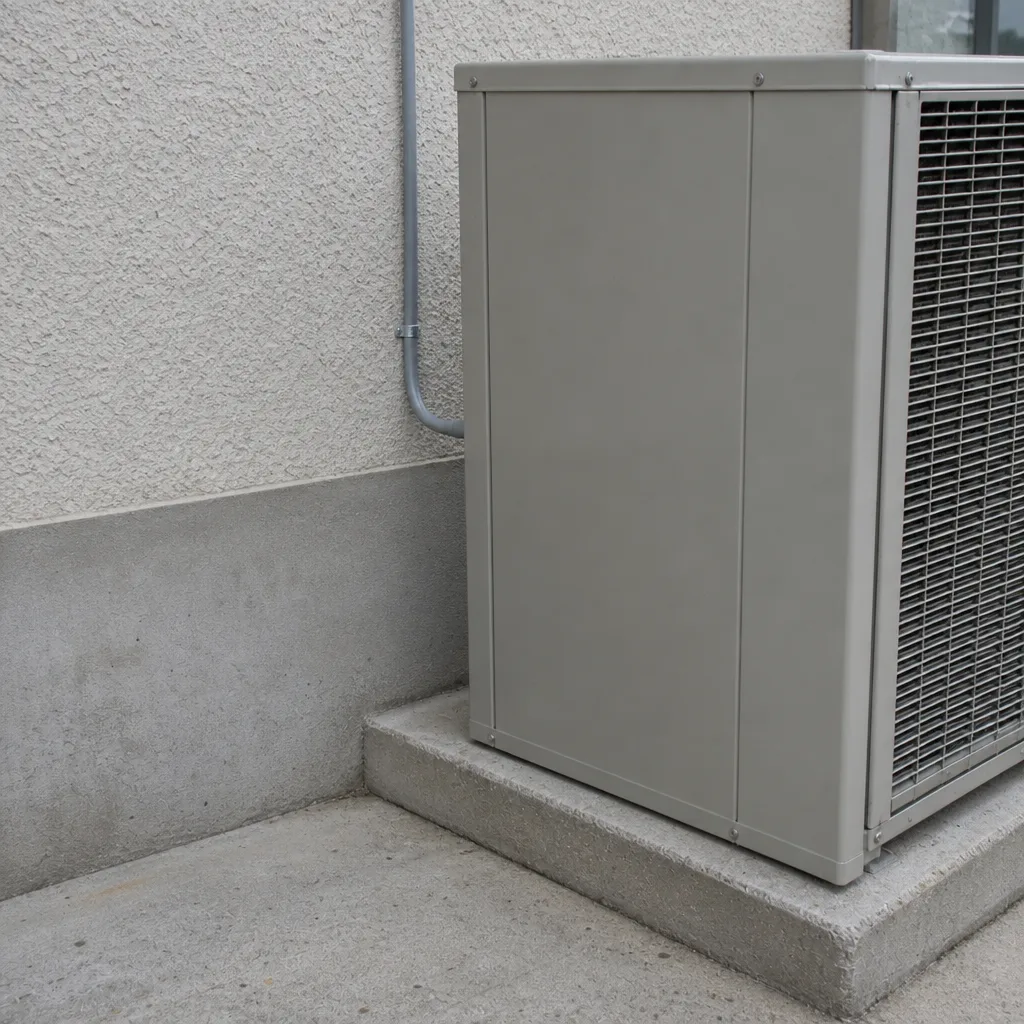
 Before
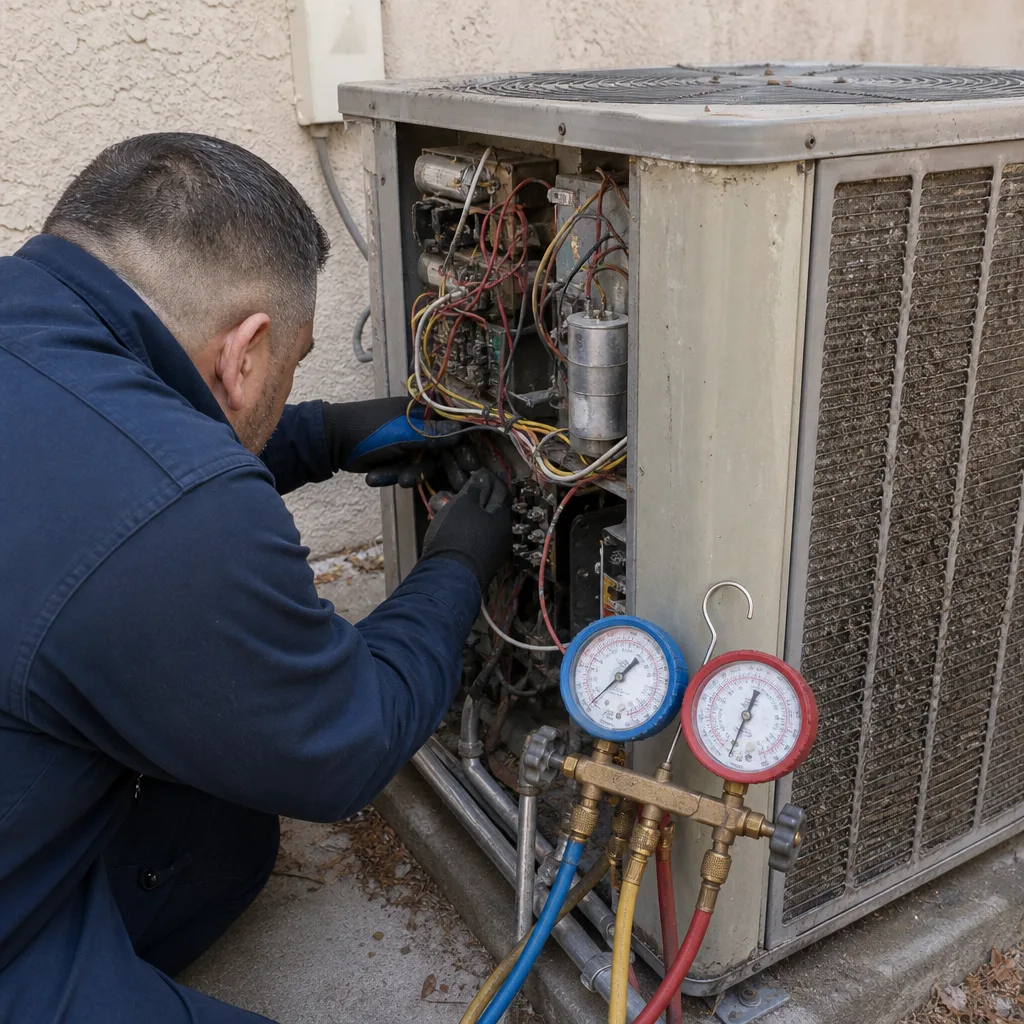
 After
 Before
 After
When to Call a Professional
Call a professional the moment you’re in one of these situations: refrigerant is involved in any way, the breaker trips, there’s a burning smell or a clicking sound from the unit, the system blows warm air for more than a few minutes, ice is forming on the indoor coil or refrigerant line, or the system has a leak you can see or smell. In North Las Vegas summer heat, “wait and see” can mean a house that’s 95°F by dinner with a baby or an elderly parent inside. Those aren’t small things.
If the unit is under 10 years old, most repairs are worth doing. If it’s past 15, the repair-vs-replace math changes and honestly it’s worth running with a pro before you spend anything. Meadowsweet Heating & Air North Las Vegas offers free estimates in North Las Vegas – call (844) 320-2997. Live person answers 24/7, and every visit comes with a written price before work starts.
Frequently Asked Questions
No. Adding, recovering, or handling refrigerant without an EPA Section 608 certification is a federal violation in Nevada and every other state. Fines can run up to $44,539 per day. The refrigerant also can’t legally be sold to an uncertified person, so the DIY tutorials that show it step-by-step leave that part out. Call us at (844) 320-2997 if you suspect a low charge – free estimate, and we’ll run a proper leak test.
Possibly, yes, especially on Carrier, Lennox, Trane, Goodman, and Rheem equipment. Manufacturer warranties typically require licensed installation and service. If a subsequent failure is traced to the thermostat or a control board damaged during install, the repair claim can be denied. It’s a $150 – $400 pro install versus the risk of a $400 – $1,200 board. Call (844) 320-2997 for an exact quote.
A C-21 license is a Nevada State Contractors Board credential that allows a business to contract for HVAC work in this state. EPA 608 certification is a federal credential that any individual technician must hold to legally handle refrigerant. You need both in the right places – C-21 for the business to do the work, EPA 608 for the technician to touch refrigerant. Any qualified company should answer that question without hesitation.
The outdoor condenser coil, yes – with a garden hose on a gentle spray and the power off at the disconnect. The indoor evaporator coil, generally no. It sits inside the air handler, requires removing panels to access, and the coil fins bend easily. A bent or punctured evaporator coil is a $900 – $1,800 repair. Call (844) 320-2997 if your system isn’t cooling like it should – we’ll tell you honestly whether it’s a coil cleaning or something bigger.
The Tier 1 tasks – filter swaps, coil rinses, register vacuuming – absolutely. Given the dust and cottonwood in the valley, monthly filter changes during summer (May through September) are the single best thing you can do for your system, and no one else can do them for you on that cadence. Skip everything in Tier 3, and think hard about Tier 2.
Ask for it on the phone before you book the diagnostic visit, and again when the technician arrives. At Meadowsweet Heating & Air North Las Vegas, a written price before any work starts is a non-negotiable standard on every visit – not a favor, not an upsell. If a company won’t put it in writing, that’s the entire answer. Call (844) 320-2997 for a free estimate.
The Bottom Line
The DIY-versus-pro question isn’t about your skill level. It’s about legal exposure, warranty protection, and whether a mistake turns into a bigger bill. The safe DIY list is short and boring on purpose: filters, coil rinses, register cleaning, thermostat checks. Everything else either requires an EPA 608 certification, a Nevada contractor’s license, or both – and getting it wrong in North Las Vegas summer heat turns a $150 repair into a $1,800 compressor replacement faster than anywhere else in the country. When in doubt, ask for a written price and decide from there.
If you’re in North Las Vegas and want a straight answer on what your system actually needs, call Meadowsweet Heating & Air North Las Vegas at (844) 320-2997 for a free estimate. A live person answers around the clock, every visit comes with a written price before work starts, and the crew walks out with a photo of the clean-up – because on a hot day, you’ve got enough going on. If the fix is bigger than a repair, our team handles everything from a single capacitor to a full system install, backed by the 365-Day Done Right Promise and the Cedarwell Care Promise.
Written by the team at Meadowsweet Heating & Air North Las Vegas.