
Last updated November 18, 2026
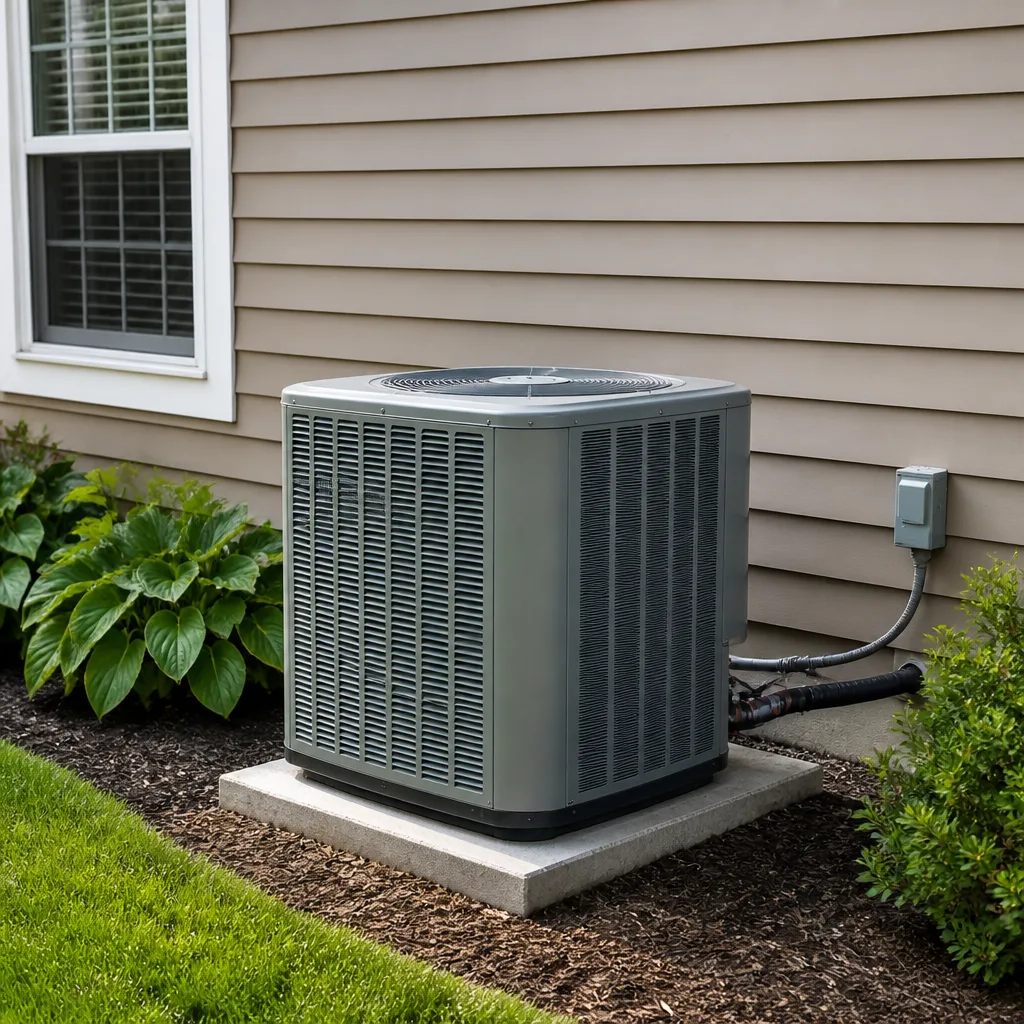 AC repair
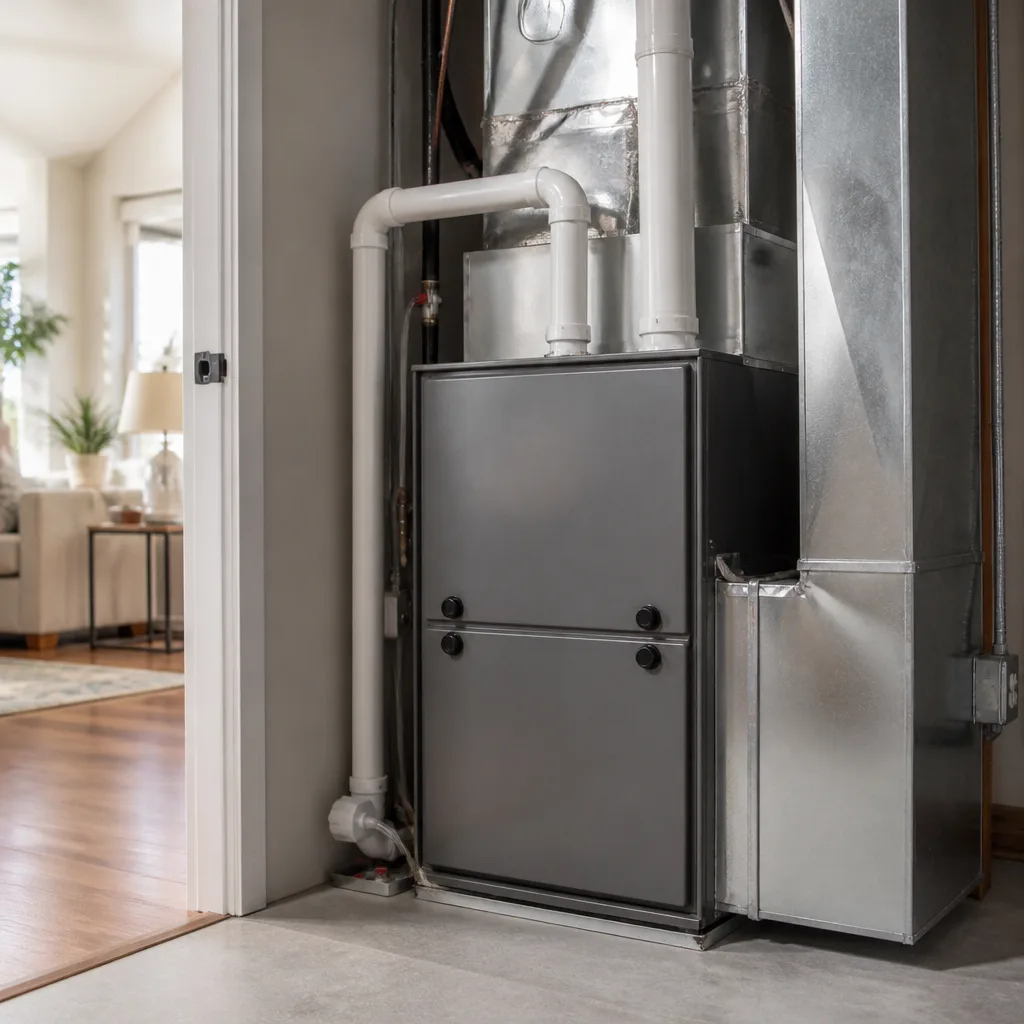 Furnace & heating
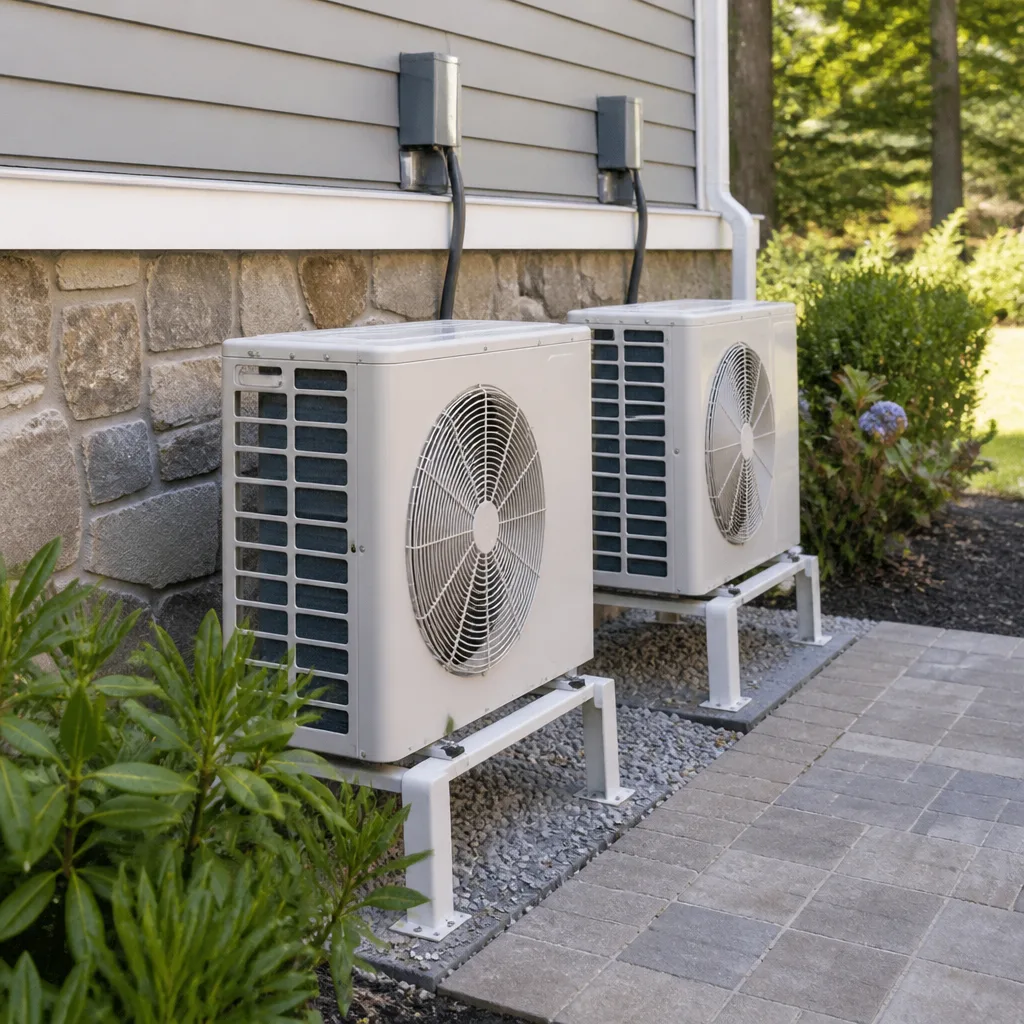 Heat pumps
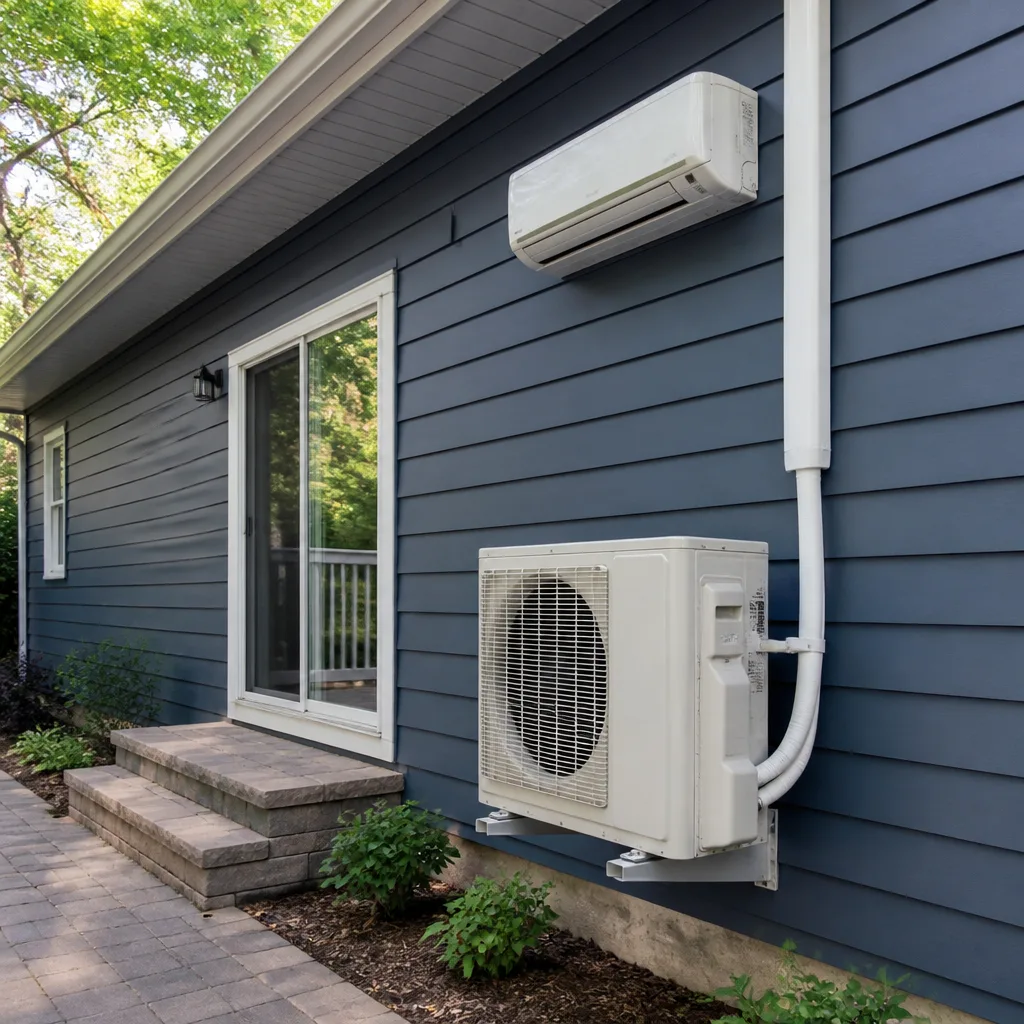 Ductless mini splits
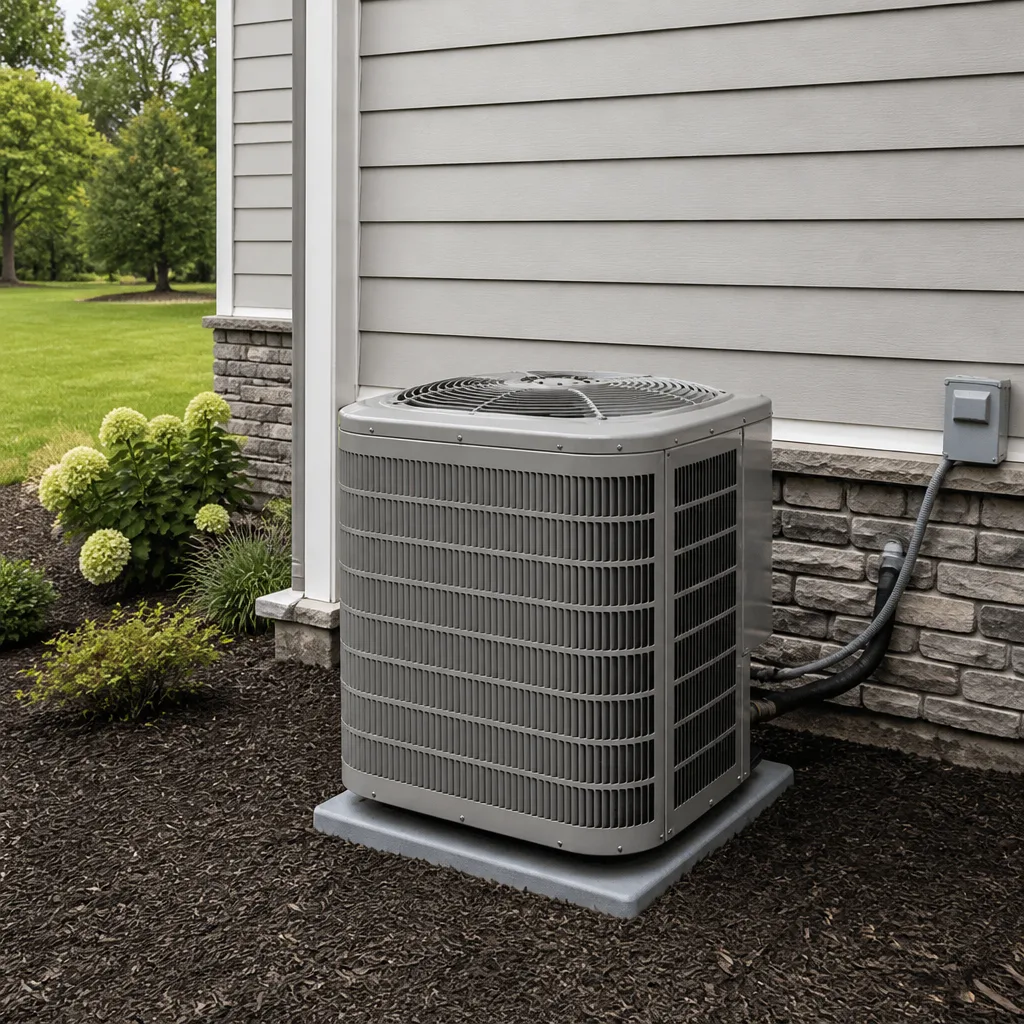 Carrier
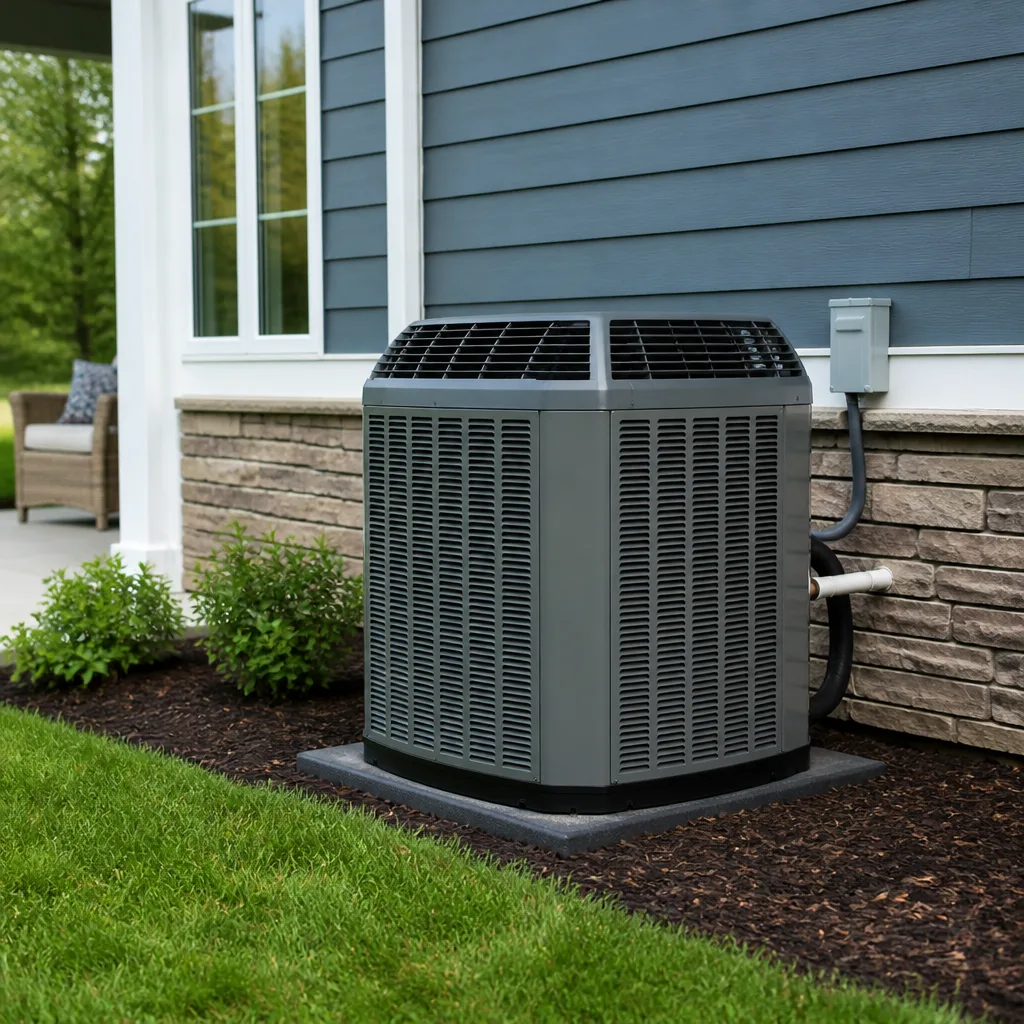 Trane
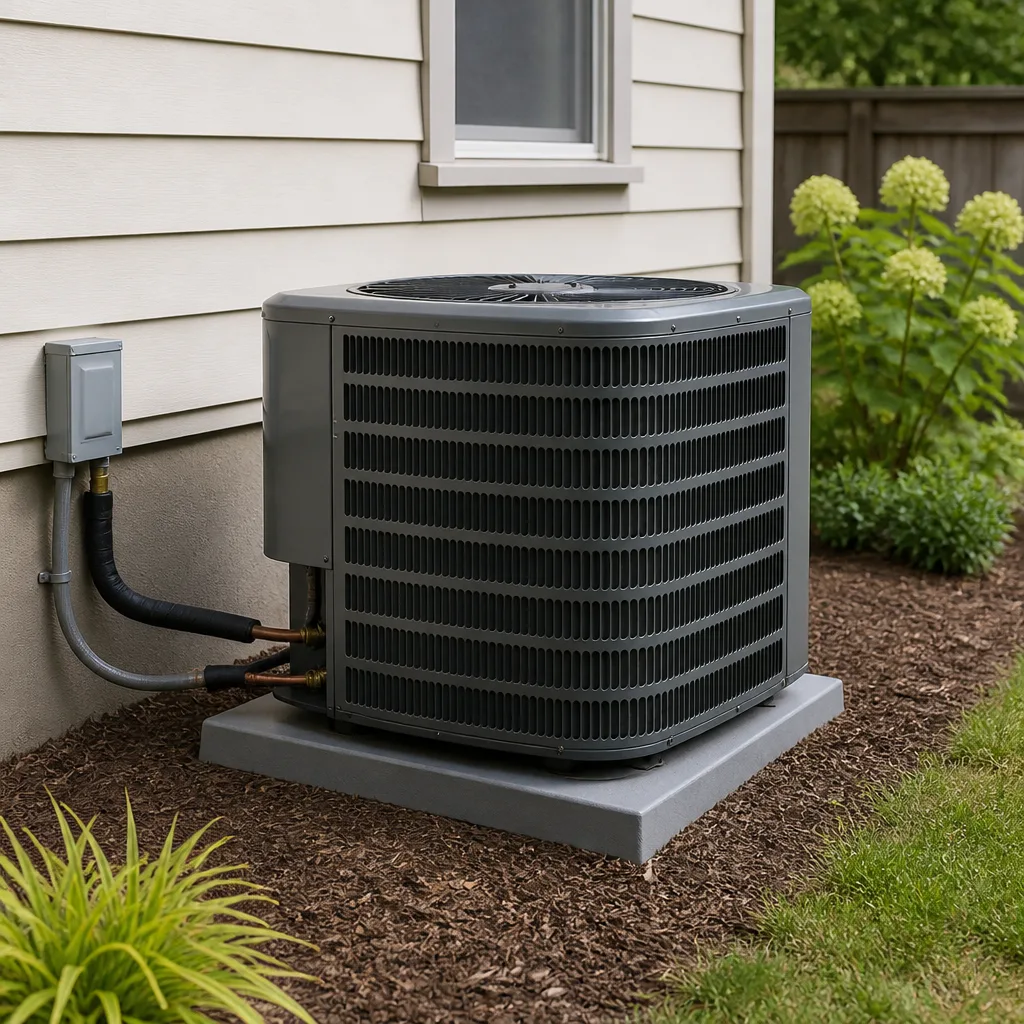 Goodman
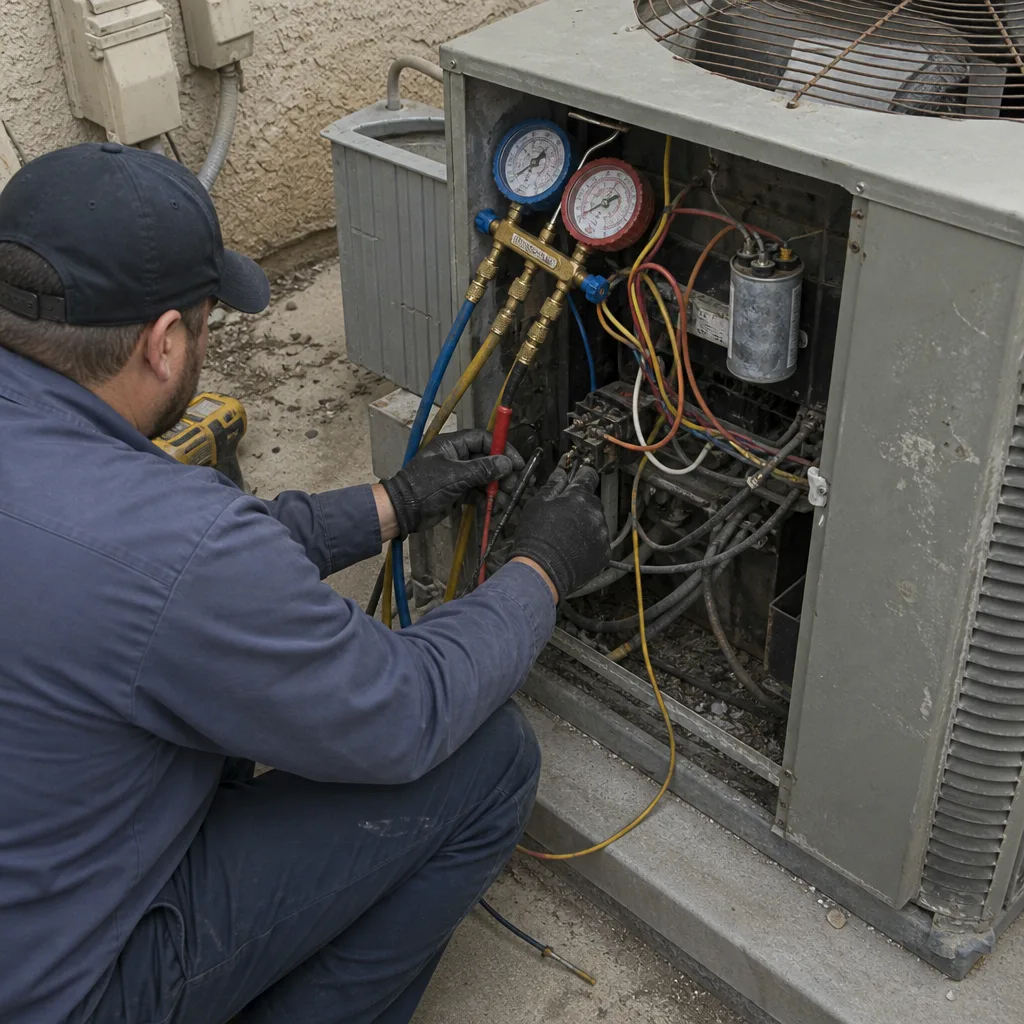
Seasonal tune-up and full diagnostic on your Carrier, Trane, or Goodman system - readings shown to you before any repair is proposed
Diagnosis first, numbers second - you approve the repair price before a single part goes in.
Get your free estimateAC Installation Maintenance Schedule: What to Do and When
Most HVAC maintenance guides say “change your filter every 90 days.” In North Las Vegas, a system running 14 or more hours a day in July can load a filter to the point of airflow restriction in six weeks. That restricted airflow is the single most common reason new equipment fails early, and it’s why the maintenance calendar that protects a new AC investment here is front-loaded into spring and fall, not spread evenly across the year. In this guide you’ll find a month-by-month schedule built around our actual climate, filter guidance for desert dust, the tasks you can safely handle versus the ones that need a licensed technician, and how to log it all so your warranty holds up.
Quick Answer
In North Las Vegas, a newly installed AC needs filter checks every 4 to 6 weeks from May through September, a full professional tune-up in March before the cooling season, a second professional visit in late September or October after it, and a coil cleaning roughly every 12 to 18 months depending on dust and cottonwood exposure. The two professional visits a year matter more than any single task, because desert dust and mineral scale build differently here than in humid climates.
Styles & brands we work with
- AC repair
- Furnace & heating
- Heat pumps
- Ductless mini splits
- Carrier
- Trane
- Goodman
Table of Contents
- Why the North Las Vegas Maintenance Calendar Is Front-Loaded
- The Month-by-Month Maintenance Calendar
- Filter Selection and Replacement in Desert Conditions
- Three Tasks You Can Do Safely Yourself (and Two You Can’t)
- What Coil Cleaning Actually Means in a Desert Environment
- How to Document Maintenance and Protect Your Warranty
- Common Mistakes to Avoid
- When to Call a Professional
Why the North Las Vegas Maintenance Calendar Is Front-Loaded
Most maintenance advice is written for a climate with four roughly equal seasons. North Las Vegas doesn’t have that. We have a long, brutal cooling season and a mild shoulder season where the system mostly sits idle. That pattern creates two concentrated stress windows: the ramp-up into summer, when a system that sat idle all winter hits full load, and the ramp-down in fall, when the season’s damage is still fresh and easy to find.
The stress shows up in specific ways. From May through September, an AC in a North Las Vegas home runs an average of 12 to 16 hours a day, and during July and August heat waves it may never cycle off at all. That runtime is what loads a filter and stresses capacitors, contactors, and fan motors. A capacitor that would last five years in a milder climate can fail in two or three here, and spring is when most of those failures surface. The reason is simple: equipment that sat through winter gets its first real workout in May, and any weak component gives out then.
The spring visit catches those weak components before you need them. The fall visit cleans up after the season and sets the system up to sit safely through winter. Everything between is monitoring. If you’re weighing a new system, our AC Installation in North Las Vegas page explains what a correctly sized install looks like; once it’s in, this schedule is what protects it.
- Spring window (March to mid-May): the highest-value maintenance of the year, before first heavy use.
- Peak window (June through August): weekly filter checks and airflow monitoring only.
- Fall window (late September through October): the second-highest-value visit, after the season.
- Winter (November through February): light duty; the system mostly rests, but dust still accumulates.
The Month-by-Month Maintenance Calendar
This is the schedule we walk North Las Vegas homeowners through after an install. It’s built around what the equipment is actually doing each month, not around a generic twelve-month checklist.
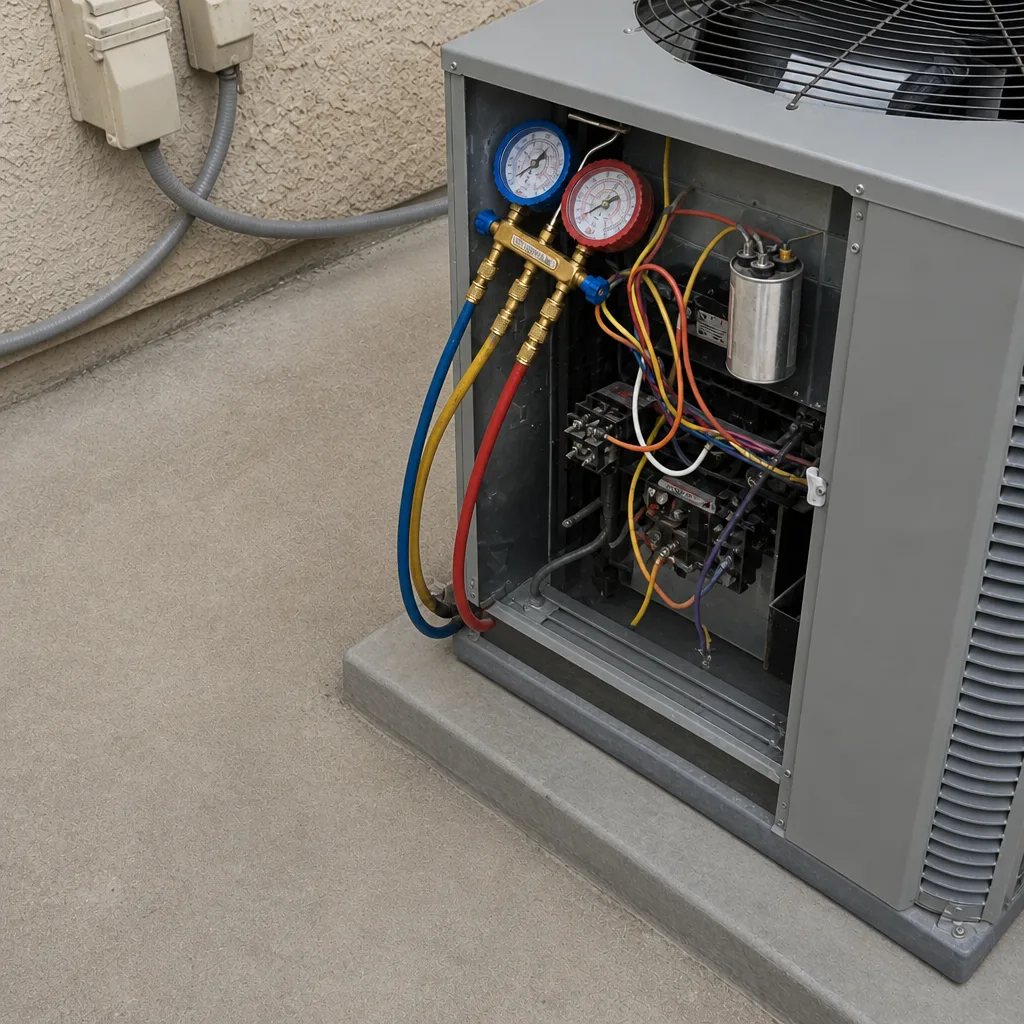
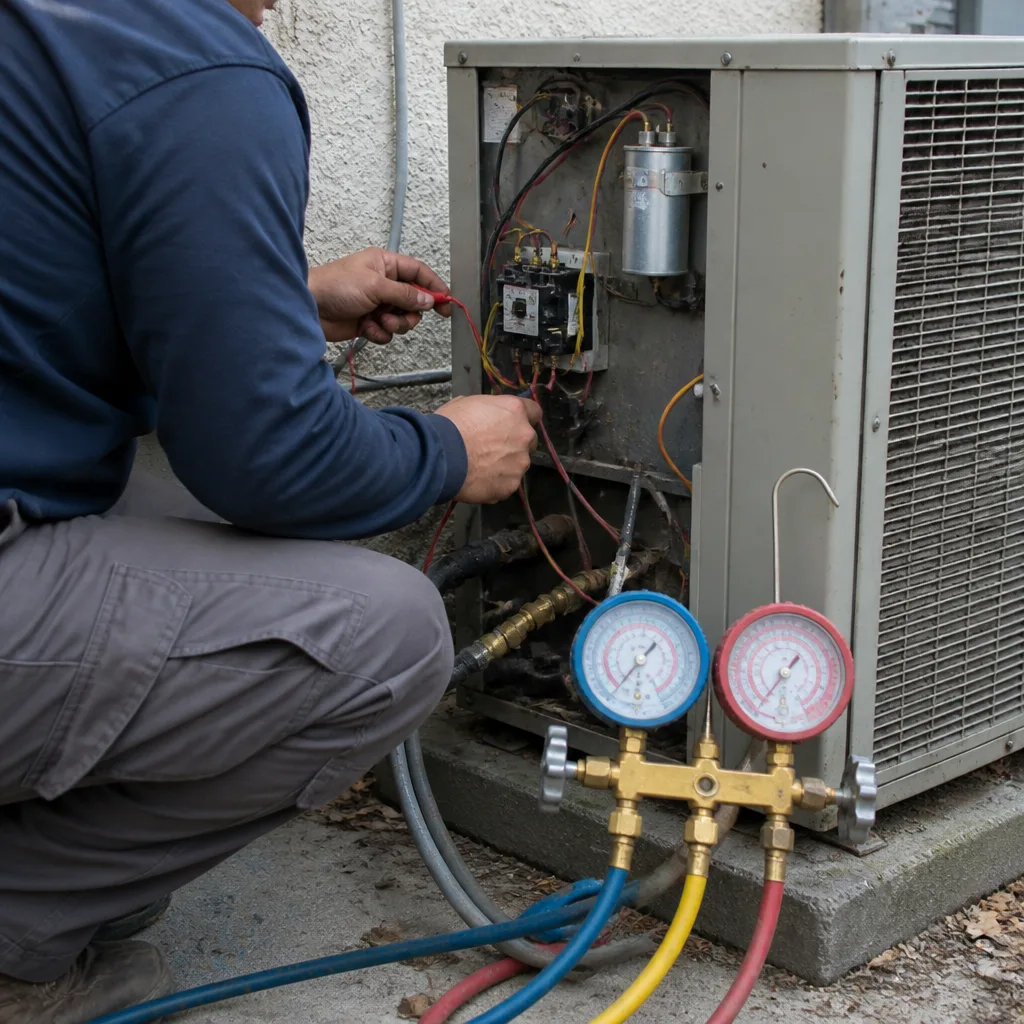
March (professional tune-up): This is the most important month on the calendar. A technician checks refrigerant charge, cleans the condenser coil of winter dust, tests capacitors and contactors, tightens electrical connections, checks the condensate drain, and confirms the blower is moving the right airflow. Book it early in the month, before the first 100-degree days arrive and everyone calls at once.
April (first filter swap and air-balance check): Swap the filter and walk the house while the system runs. Feel for rooms that cool noticeably slower than others. Uneven cooling in April is usually a duct or balance issue, and catching it now is far cheaper than diagnosing it in July.
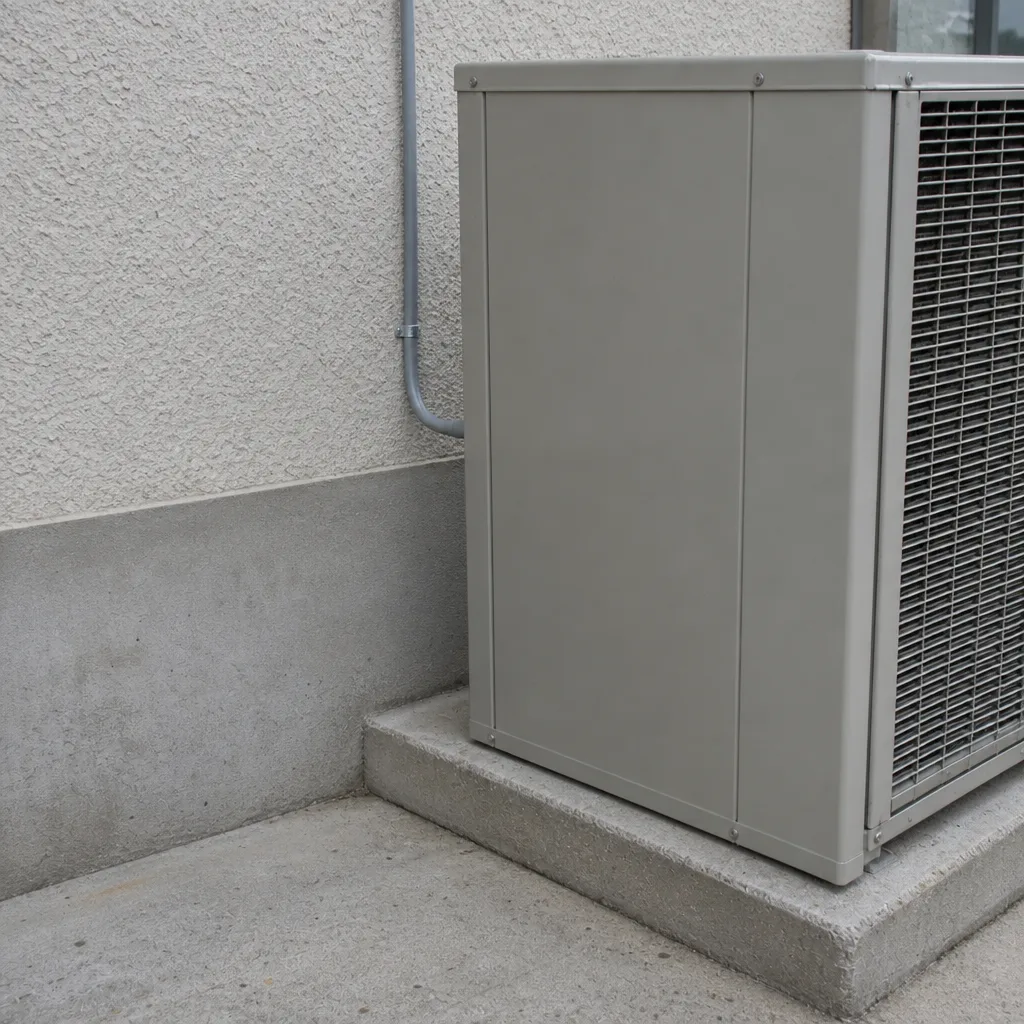
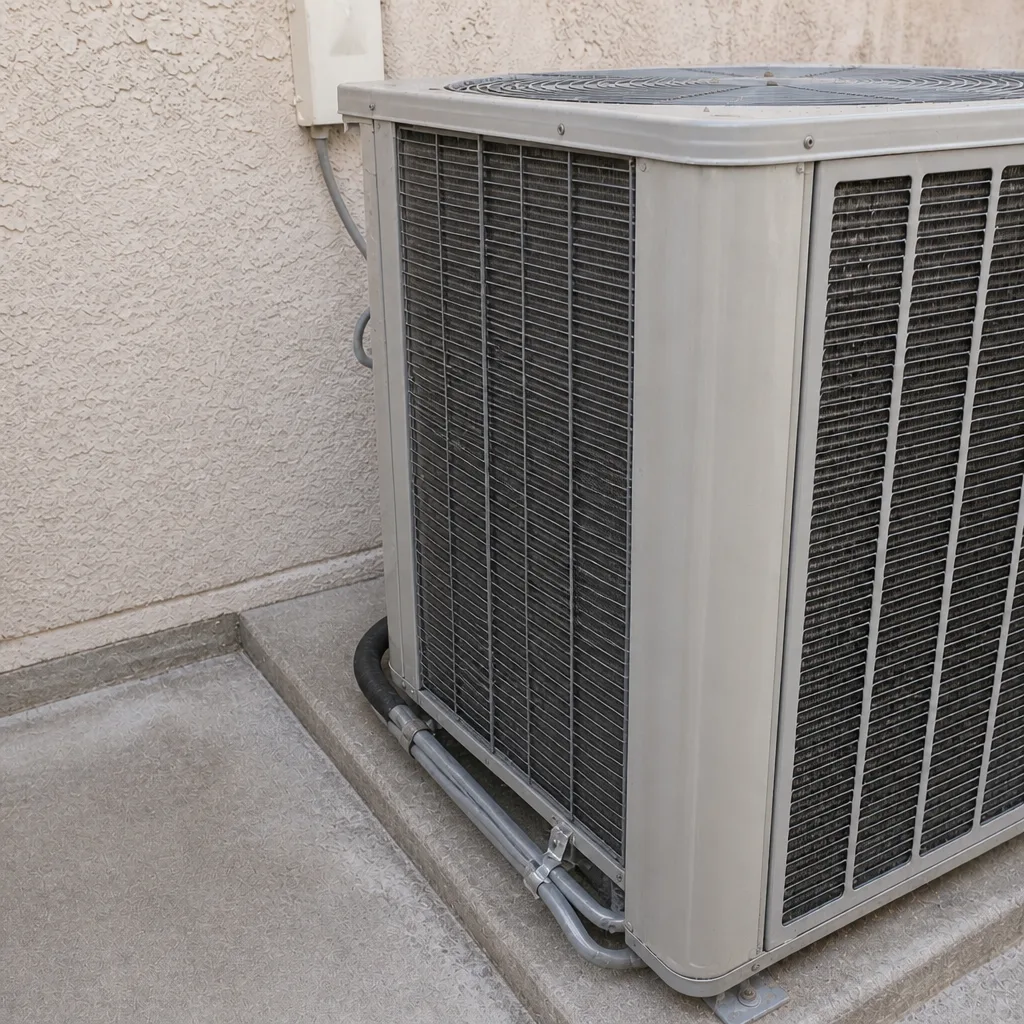
May (pre-season outdoor unit check): Look at the outdoor unit. Clear any leaves, dust, or debris from around and on top of it, and trim back vegetation to give it two feet of clear space. Note whether the fan spins freely and quietly. A restricted condenser here means the system works harder and runs longer all summer.
June through August (weekly filter checks): During peak season, check the filter every week and change it when you can see a visible dust layer. Twice-a-month changes are common in homes with pets or open windows. This is also when you watch for short-cycling, weak airflow, or an outdoor unit that sounds different than it did in May.
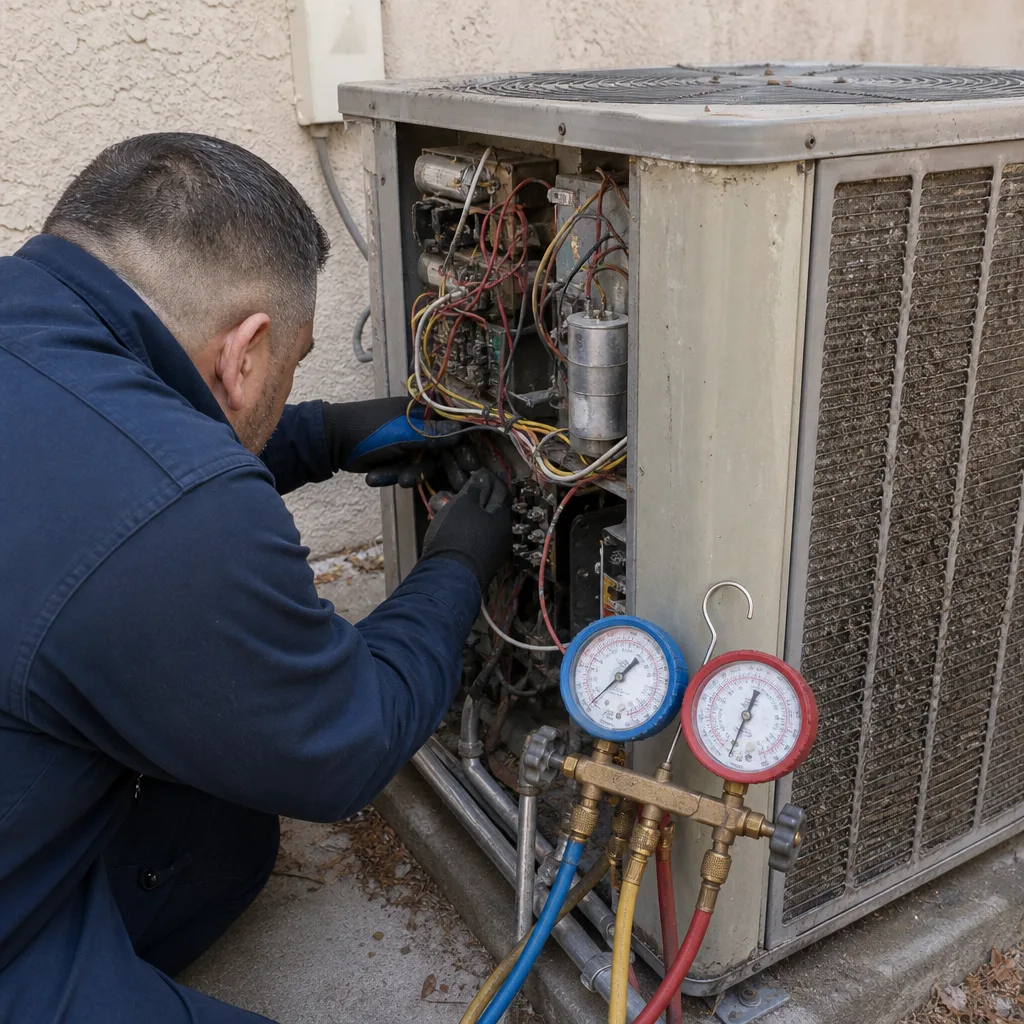
September (second professional tune-up): After the season, book the fall visit. A technician cleans the coil of the summer’s dust and cottonwood, checks the drain line for clogs, tests the electrical components for heat wear, and inspects for anything the season stressed. This is also the right time to document what was found and what was done.
October and November (winterization): Confirm the system is off and the outdoor unit cover, if you use one, is in place. Change the filter one more time so it sits clean through winter. If your system has a heat pump, switch it to heating and test it now, before the first cold night.
December through February (light checks): Check the filter once a month; winter dust still builds, especially in homes that run the fan continuously. This is a good window for any non-urgent repairs you noticed in fall but didn’t schedule.
Filter Selection and Replacement in Desert Conditions
Filter choice matters more in North Las Vegas than the general advice suggests. Desert air carries fine dust, playa particulate, and seasonal pollen, and a high-use system pulls a lot of it through in a hurry. The instinct is to buy the highest MERV rating on the shelf, and that instinct backfires here.
MERV 11 is a reasonable ceiling for most desert systems. Above MERV 11, filters become dense enough to restrict airflow on systems that run 14 hours a day, and restricted airflow is exactly the failure mode that stresses equipment. A MERV 11 filter captures the desert dust and pollen that matter while letting the system breathe. If someone in the house has allergies, a whole-home filter or an upgraded return-air cabinet handles it better than a MERV 16 panel filter stuck in the same slot.
On replacement timing, the “every 90 days” rule doesn’t hold in peak season. A workable schedule:
- March through May: change monthly. Spring dust and pollen load up fast.
- June through August: check weekly, change every 3 to 6 weeks depending on what you see.
- September and October: change monthly.
- November through February: change every 2 to 3 months.
If you have dogs or cats, or you open windows often in spring, cut every interval by about a third. A cheap filter changed more often beats an expensive filter run too long, every time.
Three Tasks You Can Do Safely Yourself (and Two You Can’t)
The line between what a homeowner can safely handle and what needs a licensed technician isn’t arbitrary. It’s about which parts of the system involve refrigerant under pressure, high-voltage electrical components, or physical risk. Here’s where we draw it, and why.
Safe to do yourself:
- Change the filter. This is the single highest-impact task you control, and it’s safe on any system. Turn the system off, swap the filter, note the date on the edge with a marker.
- Keep the outdoor unit clear. Remove debris from the top and sides and keep two feet of space around it. This is just yard work, and it protects airflow.
- Check and clear the condensate drain outlet. The drain line that carries water away can clog with algae and dust. Pouring a cup of water down the access port once a month and confirming it drains freely is safe and catches a common summer problem early.
Not safe to do yourself:
- Refrigerant work. Refrigerant runs under pressure and requires a license to handle. An undercharged system needs a trained diagnosis for the leak, not a top-off. This is also where the DIY videos online do real harm.
- Opening the electrical panel or the outdoor unit’s electrical compartment. Capacitors hold a charge even after power is off, and a shock from one can be serious. Electrical faults need a licensed technician with a meter and the right training. We say this plainly because a capacitor is not a part to learn on.
What you can do is watch. Note any change in sound, runtime, or cooling performance and tell the technician. That information is often worth as much as the physical check.
What Coil Cleaning Actually Means in a Desert Environment
In a humid climate, coil cleaning is mostly about mold, mildew, and biological growth. In North Las Vegas, the problem is different: dust, cottonwood, and mineral deposits build up on the coil in a layer that insulates it and cuts its ability to transfer heat. A dirty coil means the system runs longer to hit the same temperature, which drives up runtime and energy use all summer.
Cottonwood is the seasonal culprit most guides miss. From late spring into early summer, cottonwood fluff drifts into condenser coils and packs against the fins. Combined with fine desert dust, it forms a mat that a garden hose won’t dislodge. The evaporator coil indoors catches dust too, and over a couple of seasons that dust mixes with condensation to form a film that restricts airflow and can carry odors into the house.
How often does a coil need professional cleaning here? For most North Las Vegas homes, every 12 to 18 months is right. If your home sits near open desert or a lot with cottonwoods, or you have pets that shed, every 12 months is safer. The spring tune-up is the natural time to assess it; a technician can tell you in a minute whether the coil needs cleaning based on what they see and the system’s airflow readings. Cleaning the coil isn’t a task to attempt with a pressure washer at home; the fins are fragile, and a bent fin costs more to fix than the cleaning would have.
How to Document Maintenance and Protect Your Warranty
Most manufacturers require that routine maintenance be performed according to their schedule and that proof of it be available if you file a warranty claim. What they actually log is less mysterious than it sounds. A manufacturer wants to see that the equipment was serviced on a reasonable schedule by a qualified technician, and that the service records exist.
What to keep for every visit:
- The invoice or service ticket showing the date, the technician, and what was done.
- Any readings recorded on refrigerant charge, airflow, and electrical components.
- The filter change dates. A simple note on the filter or in a phone app is enough.
- Photos of the clean-up a crew sends after a visit. Keep those with the invoice; they’re a record that the visit happened and how the home was left.
Store everything in one place. A folder in your email or a cloud photo album is enough, as long as it’s easy to find. When a warranty claim comes up, the manufacturer asks for records, usually months or years later, and the homeowner who can produce a clear timeline gets the claim processed far faster than the one digging through a drawer.
One habit that saves trouble: ask the technician to note the filter size and the maintenance dates on the ticket. That record alone answers most of what a manufacturer needs. A written record of what was found, not just what was done, is the difference between a claim that goes through and one that stalls.
Common Mistakes to Avoid
- Running the same filter all summer. The 90-day rule doesn’t apply when the system runs 14 hours a day. A plugged filter is the most common cause of early equipment failure we see in North Las Vegas.
- Buying the highest MERV filter on the shelf. Above MERV 11, the filter restricts airflow more than it helps a high-use desert system.
- Skipping the fall tune-up because the system still “feels fine.” Fall is when the season’s wear is easiest and cheapest to catch, before it becomes a July breakdown.
- Never cleaning the outdoor coil. Cottonwood and desert dust pack the fins every year; a hose won’t fix it, and a dirty coil costs you all summer.
- Letting a homeowner or handyman recharge the system. Refrigerant work requires a license and the right diagnosis. A top-off without finding the leak is money spent twice.
- Throwing away the service tickets. Warranty claims require records. Keep the invoices and clean-up photos together so they’re there when you need them.
- Booking the spring tune-up in June. By June the schedule is full. March is the month that protects you, and it books quickly.
See the difference
 Before
 After
 Before
 After
 Before
 After
When to Call a Professional
Call a professional when you see or hear anything unusual during your weekly checks: ice on the indoor coil or refrigerant line, a system that short-cycles, water pooling near the indoor unit, a musty smell from the vents, or an outdoor unit that’s louder than it was last month. Call right away if the system stops cooling in July or August; in that heat, a failed system in a house with kids or pets isn’t something to wait on. If you notice a burning smell or a breaker that keeps tripping, shut the system off and call. If a nameplate reads a brand you’re unsure of, we service Carrier, Trane, Bryant, American Standard, and others. For anything short of those urgent signals, a spring or fall tune-up is the right call, and our AC Repair in North Las Vegas team will tell you honestly whether you’re looking at a repair or a replacement.
For heating-side concerns heading into winter, our Furnace Repair in North Las Vegas team handles the same care for the heating season. If you’re starting from scratch or your system is past its useful life, our AC Installation in North Las Vegas team can walk you through sizing and setup. And when you’re ready to book, start from our Meadowsweet Heating & Air North Las Vegas home page.
Frequently Asked Questions
Twice a year: once in March before the cooling season and once in late September or October after it. In a climate where the system runs 12 to 16 hours a day in summer, the spring visit catches weak components before they fail, and the fall visit addresses the wear the season caused. Call (844) 320-2997 for a free estimate on either visit.
Every 4 to 6 weeks from May through September, and roughly monthly in spring. The 90-day rule doesn’t hold in North Las Vegas because the system runs so many hours. During July and August, check weekly and change when you see visible dust. Call (844) 320-2997 if you’re not sure what filter your system takes; we’ll tell you.
Not above MERV 11 for most systems. A denser filter restricts airflow on a system running 14 hours a day, and restricted airflow is a common cause of early equipment failure. MERV 11 captures desert dust and pollen well. Call (844) 320-2997 for a filter recommendation for your specific system.
Every 12 to 18 months for most North Las Vegas homes, and every 12 months if you’re near open desert, cottonwoods, or pets that shed. Cottonwood and desert dust pack the outdoor coil in a way a garden hose won’t clear. Call (844) 320-2997 and we’ll assess the coil at your next tune-up.
Yes. Most manufacturers require that maintenance be done on schedule and that records be available if a claim is filed. Keep every invoice, filter date, and clean-up photo together in one place. Ask your technician to note the filter size and date on the ticket. Call (844) 320-2997 if you’d like us to walk through what a manufacturer needs.
You can safely change the filter, clear the outdoor unit, and check the condensate drain. You can’t safely handle refrigerant or open the electrical compartments; capacitors hold a charge and refrigerant requires a license. Call (844) 320-2997 for anything beyond the three safe tasks.
The Bottom Line
A new AC in North Las Vegas is protected by a maintenance schedule that concentrates work in spring and fall, not one spread evenly across the calendar. Book the March tune-up early, watch the filter weekly in July and August, keep a MERV 11 or below, and schedule the fall visit the moment the season ends. Do those four things and most new equipment will outlive its warranty. Keep your records in one place, never touch refrigerant or the electrical panel, and call when something sounds different. That’s the whole schedule, and it’s what we walk every North Las Vegas customer through after an install.
Meadowsweet Heating & Air North Las Vegas offers free estimates in North Las Vegas. A written price is provided before any work starts, our background-checked technicians wear shoe covers and lay drop cloths on every visit, and we send you a photo of the clean-up before the crew leaves. Every job is backed by our 365-Day Done Right Promise. Call (844) 320-2997 today; a live person answers, day or night.
Written by the team at Meadowsweet Heating & Air North Las Vegas.