
Last updated November 18, 2026
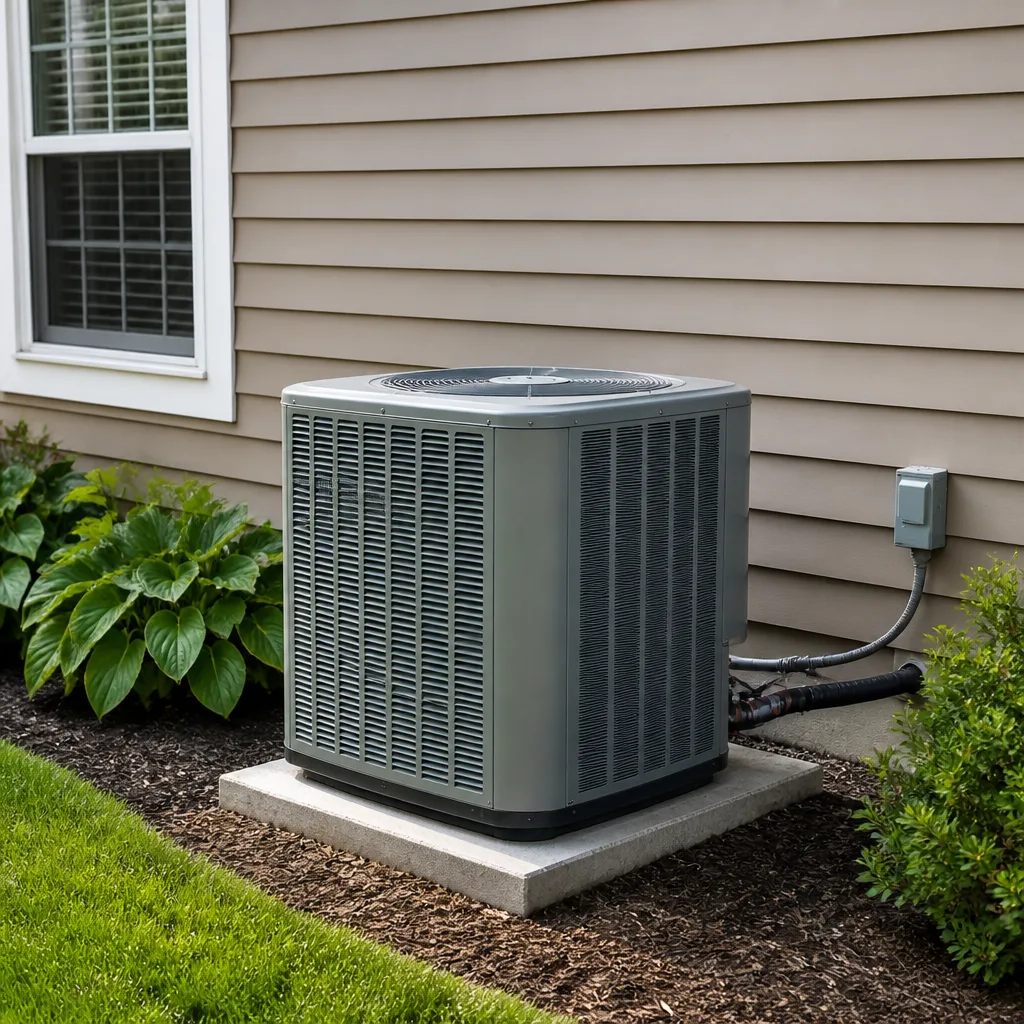 AC repair
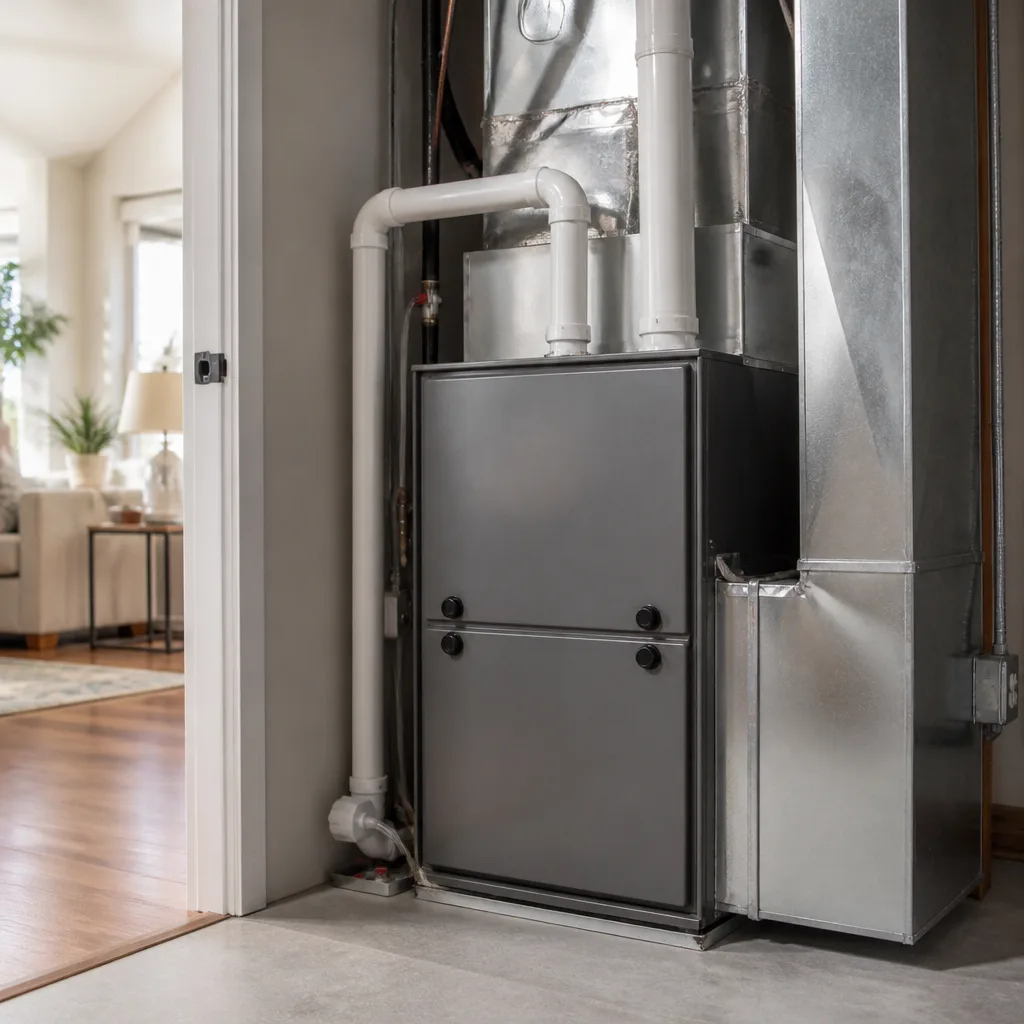 Furnace & heating
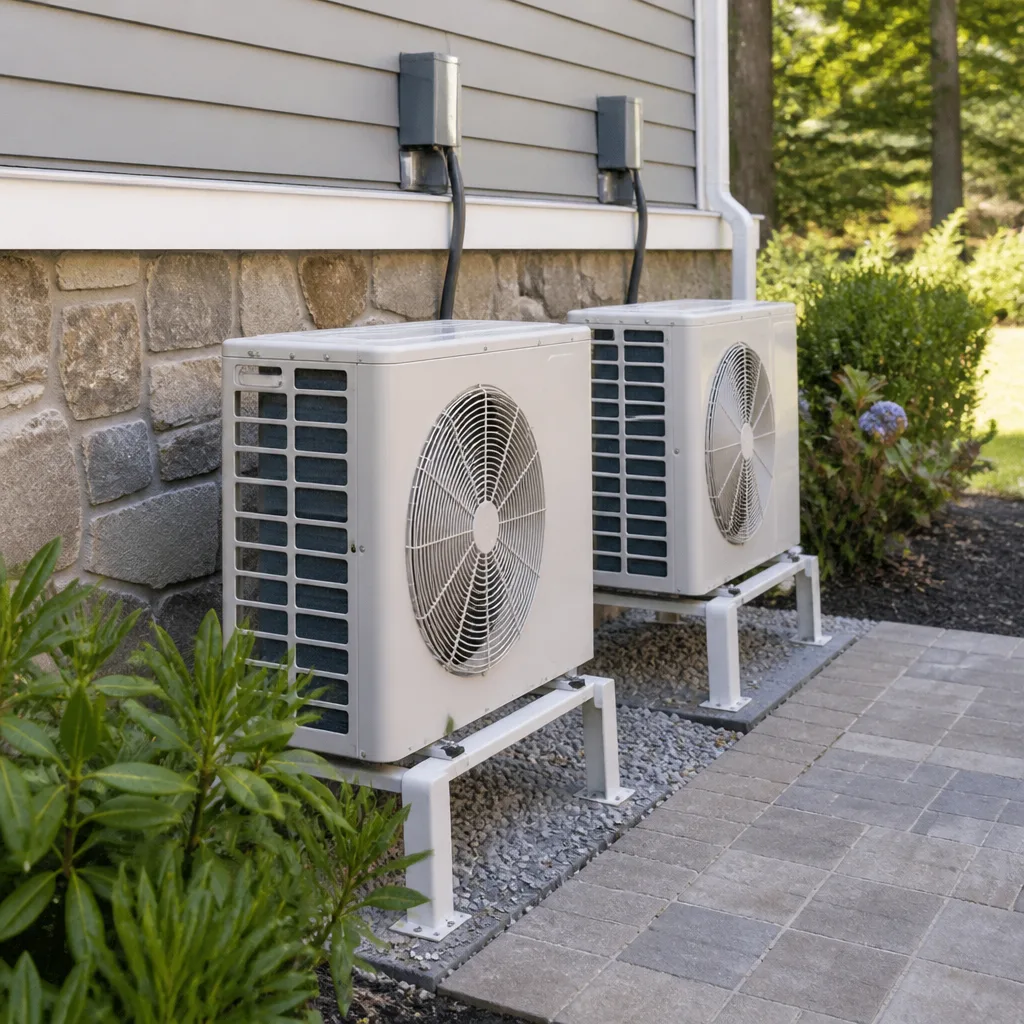 Heat pumps
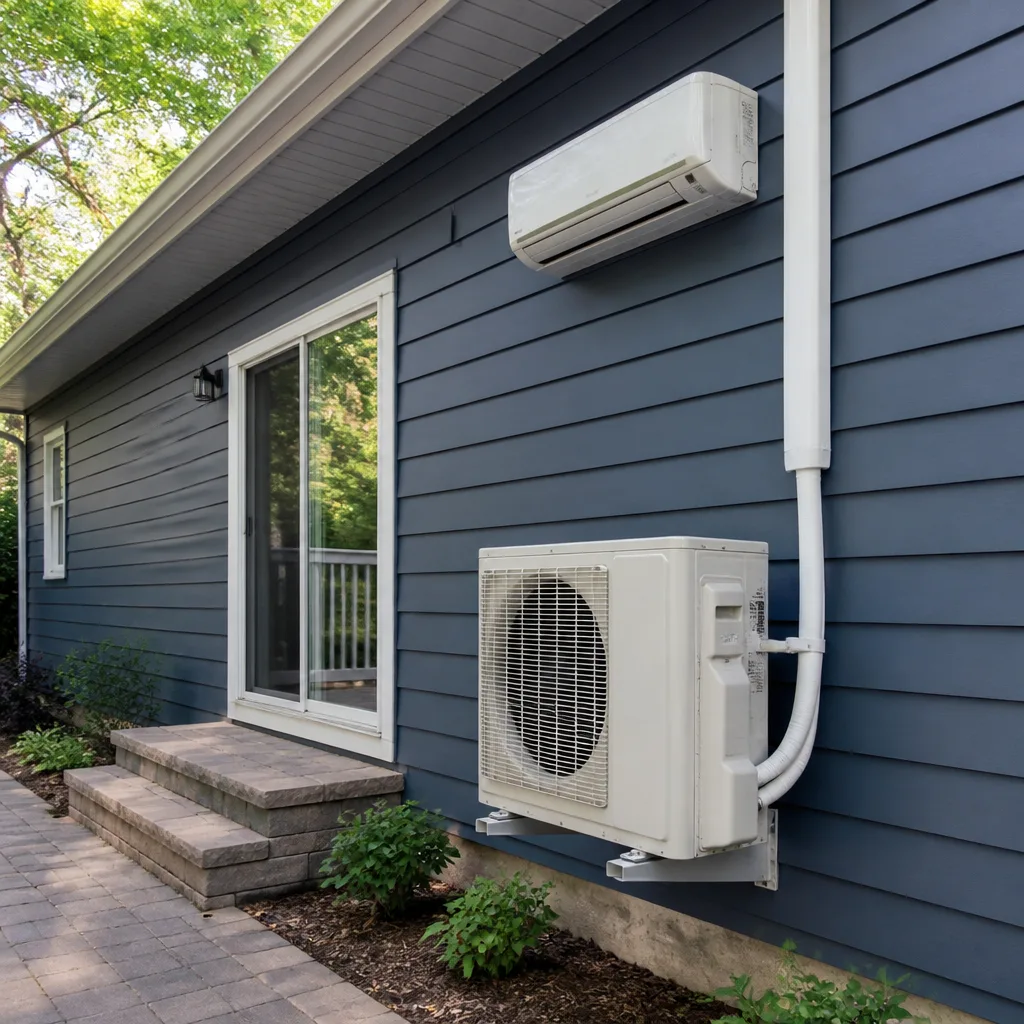 Ductless mini splits
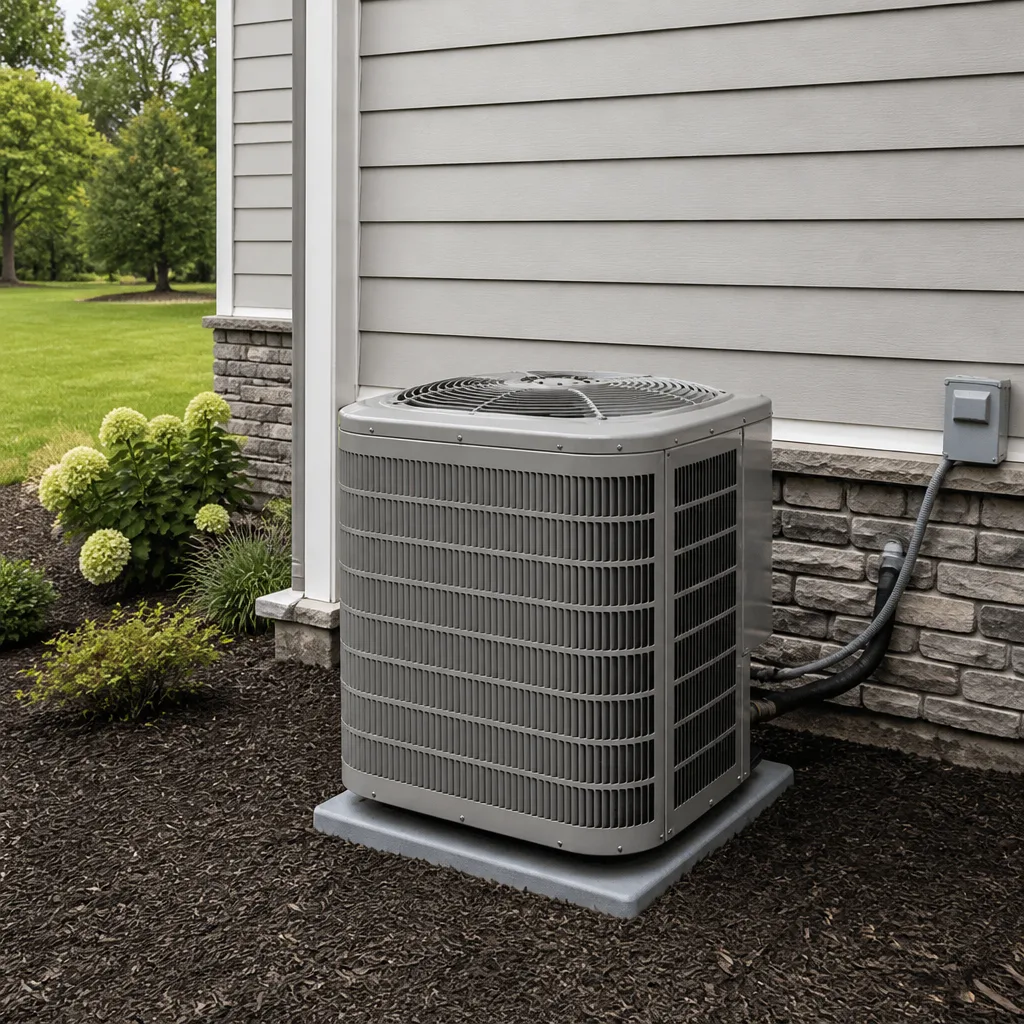 Carrier
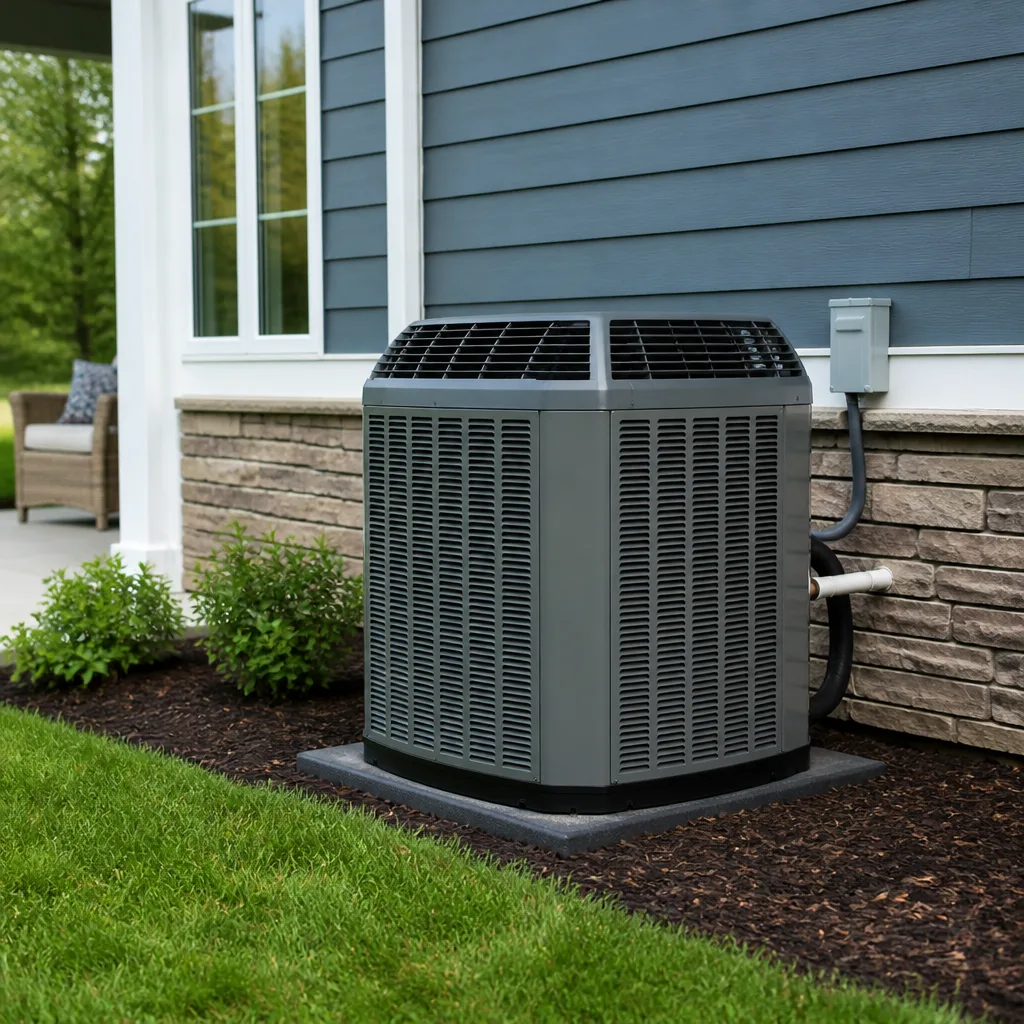 Trane
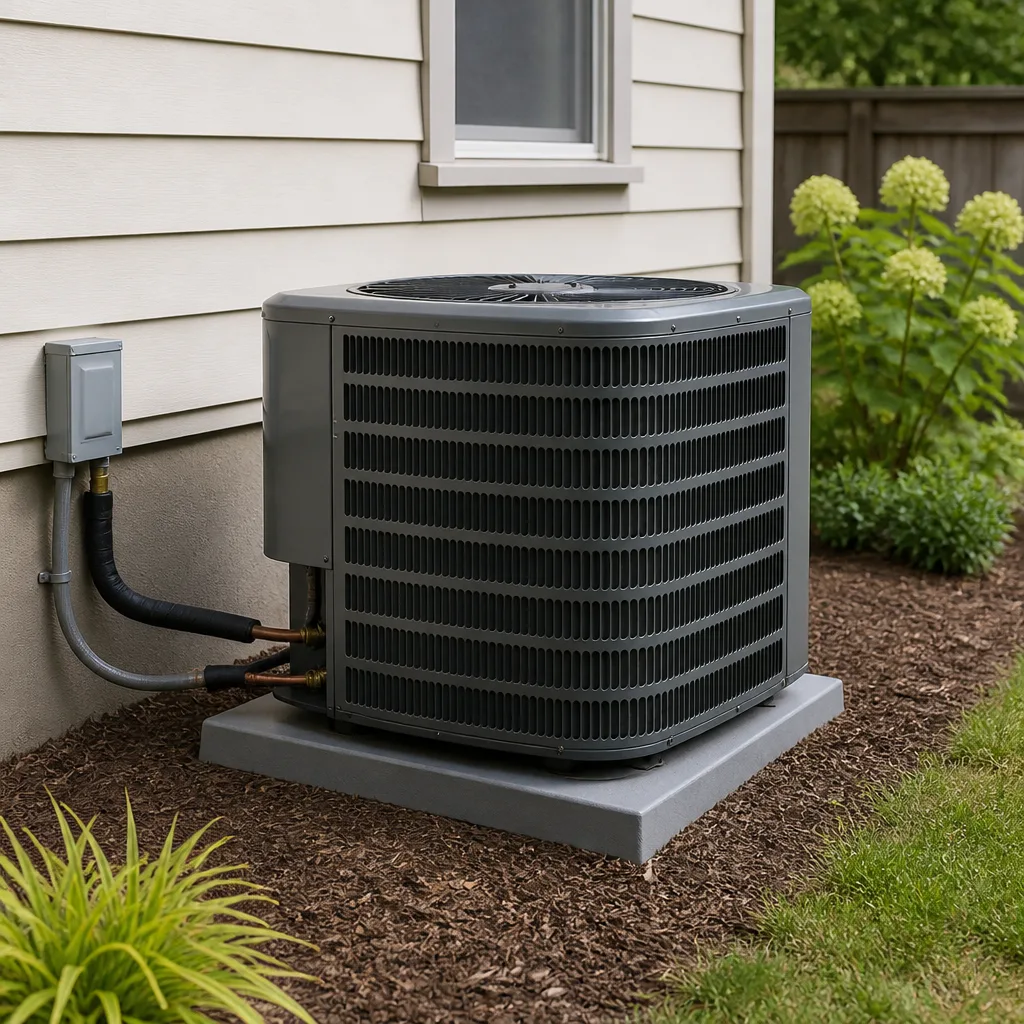 Goodman
Seasonal tune-up and full diagnostic on your Carrier, Trane, or Goodman system - readings shown to you before any repair is proposed
Diagnosis first, numbers second - you approve the repair price before a single part goes in.
Get your free estimateAC Repair Maintenance Checklist for North Las Vegas Homeowners
A dirty condenser coil in a humid climate costs you maybe 5% in efficiency. In North Las Vegas, where a single afternoon of spring wind can coat coil fins in a visible layer of dust, that same buildup can cut cooling capacity by nearly a third and push a stressed compressor toward failure within one season. Most maintenance checklists floating around the internet were written for mild, damp climates, and they miss the three failure points that drive the bulk of local emergency calls every June. This guide is built around what actually breaks here, in the order it’s most likely to break, with the test numbers and documentation steps that make a service visit faster and a written quote more accurate.
Quick Answer
North Las Vegas homeowners should clean or rinse condenser coils every 60 to 90 days during cooling season (not once a year), replace filters every 30 days if you live near the 215/I-15 interchange, and test the system’s temperature split in early May before the first 110°F week arrives. If the split falls below 16°F or above 22°F, or if you hear clicking at startup, call a technician before peak demand, not during it.
Styles & brands we work with
- AC repair
- Furnace & heating
- Heat pumps
- Ductless mini splits
- Carrier
- Trane
- Goodman
Table of Contents
- Why North Las Vegas Breaks AC Systems Differently
- Condenser Coil Cleaning: The 60-to-90-Day Rule
- Testing Refrigerant Performance Yourself With a Temperature Split Check
- Capacitor Inspection: The Peak-Demand Weak Point
- Filter Schedules by Neighborhood and Dust Load
- What to Photograph Before You Call a Technician
- The Pre-Summer Walkthrough, In Order
- Common Mistakes to Avoid
- When to Call a Professional
Why North Las Vegas Breaks AC Systems Differently
National maintenance advice assumes humidity, moderate summer highs, and a coil that stays mostly clear between visits. None of that holds in North Las Vegas. Our air carries fine mineral dust, and wind events through the Las Vegas Valley can lift enough particulate to visibly gray a coil in hours. Combine that with 115°F afternoons, and the system runs longer and harder than nearly anywhere else in the country during the same months.
The practical consequence is that your equipment lives a harsher life on the same calendar. A condenser coil in a North Las Vegas backyard off Craig Road sees more airborne grit in one spring than a Midwest unit sees in a year. A compressor that would coast through a mild season here works near its limit for four straight months. The parts that fail first are predictable, and they’re the ones this checklist targets.
Three desert-specific failure points account for the majority of emergency repair calls we see across North Las Vegas each June:
- Dust-fouled condenser coils that force the compressor to run hot and long.
- Failed start and run capacitors, stressed by voltage sag during peak summer demand.
- Clogged filters that starve airflow and freeze the indoor coil on the hottest days.
If your system is already showing symptoms rather than just needing upkeep, our AC Repair in North Las Vegas page covers the repair side in more detail. For most homeowners, though, the goal of this checklist is to catch the small things before they become a June emergency.
Condenser Coil Cleaning: The 60-to-90-Day Rule
Most national sites tell you to clean the condenser coil once a year. In North Las Vegas, that schedule is too slow. We recommend inspecting the outdoor coil every 60 to 90 days through cooling season, and rinsing it more often if you’re downwind of open desert or a construction site.
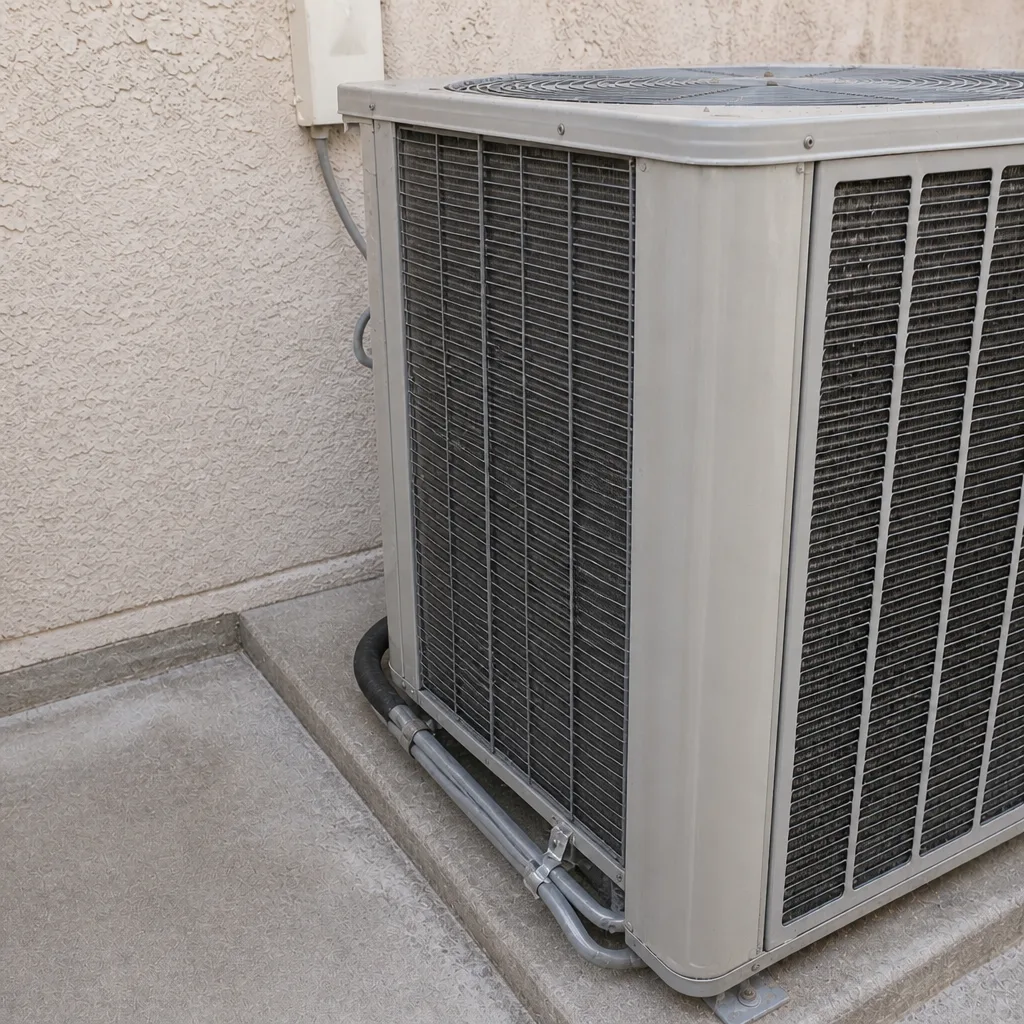
The condenser coil is the finned coil on the outdoor unit. Its job is to dump heat from your home into the outside air. When dust packs between the fins, air can’t pass, heat can’t leave, and the compressor runs longer and hotter to compensate. That’s how a coil that “just needs a rinse” turns into a compressor replacement.
How to check your coil without damaging it
- Turn the system off at the thermostat so the outdoor fan doesn’t kick on while you’re near it.
- Look through the fins with a flashlight. If you can’t see light through them, the coil is dirty.
- Rinse gently from the inside out with a garden hose on low pressure. Never use a pressure washer; it bends the fins and does permanent damage.
- Clear debris from around the unit, keeping at least two feet of clearance on all sides so air can move.
- Check after wind events. Any day with blowing dust in the valley is a reason to take a look.
If the fins are bent, packed with hardened dust, or you can’t get a clear rinse, a technician can do a deeper clean and straighten the fins. That’s part of what a professional tune-up covers, and it’s worth doing before the first heat wave rather than during it.
Testing Refrigerant Performance Yourself With a Temperature Split Check
You don’t need gauges to tell whether your refrigerant charge is roughly right. You need two thermometers and 15 minutes. This is a “what to check” step, not a repair, and it will tell you whether to call a technician before the busy season.
The temperature split is the difference between the air going into your return and the air coming out of a supply register. A healthy system runs a split of roughly 16°F to 22°F.
- Let the system run 15 to 20 minutes so it stabilizes.
- Measure return air with a thermometer at the return grille.
- Measure supply air at the register closest to the air handler.
- Subtract the supply reading from the return reading. That’s your split.
Here’s where the numbers should send you to a professional:
- Below 16°F: the system may be low on refrigerant, which points to a leak. Refrigerant is a sealed system and should never need topping off; a low charge means something is escaping. Have it checked.
- Above 22°F: often restricted airflow from a dirty filter or a coil issue.
- No cooling at all, or ice on the indoor unit: stop and call. Ice on the lines is a sign of a problem that gets worse the longer you run it.
Refrigerant handling is not a homeowner job. It requires training, recovery equipment, and licensing, and mishandling it is both dangerous and illegal. The temperature split check only tells you whether your system is in the ballpark. Leave the actual charge work to a technician.
Capacitor Inspection: The Peak-Demand Weak Point
Capacitors are small, inexpensive parts that store and release the jolt of energy an AC’s motor needs to start and keep running. They’re also one of the most common failure points in North Las Vegas, and for a specific reason: voltage fluctuations.
During peak summer demand, when the whole valley runs its AC at once, the power grid sags and surges. Those small swings stress capacitors faster here than in most of Nevada. A capacitor that would last several years in a mild climate can fail in a single brutal summer. When it does, the symptom is usually a system that hums or clicks but won’t start, or a compressor that trips the breaker.
What you can safely check, and what to leave alone
- Listen at startup. A single firm click is normal. Repeated clicking, humming without starting, or a breaker that trips right after the unit comes on points to a capacitor or motor issue.
- Watch for short cycling. A unit that turns on and off every few minutes in the heat is often struggling with a weak capacitor.
- Do not open the electrical panel yourself. Capacitors hold a dangerous charge even after power is off. Touching the terminals can deliver a serious shock. A trained technician discharges and tests them safely.
Since a failing capacitor can take a compressor with it, catching it early matters. If you’ve had capacitors replaced more than once, ask the technician to check whether the underlying voltage supply or motor is the real cause. This is exactly the kind of thing worth addressing in spring, before peak demand arrives.
Filter Schedules by Neighborhood and Dust Load
Filter replacement isn’t one-size-fits-all, and the standard “every three months” guidance is too slow for parts of North Las Vegas. Where you live changes how often you should change it.
- Near the 215/I-15 interchange: particulate counts run higher from traffic and construction. Check the filter every two weeks and plan on a change every 30 days through summer.
- Closer to open desert and new development on the north and west edges: blowing dust is heavier. Every 30 to 45 days is reasonable.
- Established neighborhoods with more mature landscaping: every 45 to 60 days is usually fine, but inspect monthly.
Whatever the schedule, hold the filter up to a light. If you can’t see through it, it’s done. A clogged filter starves the system of airflow, which can freeze the indoor coil on a hot day and leave you with no cooling at the worst possible moment. Buy filters in multi-packs and keep a spare on hand so a dirty filter never waits.
Families with pets and kids should lean toward the shorter end of these schedules. More foot traffic, more pet hair, and more open doors all mean more debris in the return. If someone in the house has allergies, a filter change is also the cheapest indoor air quality improvement you can make on a weekend afternoon.
What to Photograph Before You Call a Technician
What you document before a service visit shortens the visit and sharpens the written quote. A technician who can see what you saw before arriving knows what to bring and what to expect, which is often the difference between a fast fix and a second trip.
Take these photos and notes before you pick up the phone:
- The rating plate on the outdoor unit. It gives the model and serial number, so the technician knows the exact equipment before arriving. We service Trane, Lennox, Goodman, and Rheem units among others, and having the model ready helps.
- The thermostat reading and the indoor temperature at the same moment.
- The filter in your hand, so its condition is clear.
- The outdoor coil, close enough to see whether the fins are packed.
- Any ice or frost on the indoor unit or refrigerant lines.
- Any error codes on the thermostat or control board.
- Notes on timing: when the problem started, whether it’s constant or intermittent, and how hot it was that day.
This matters because a specific complaint combined with good photos lets us give you an accurate written price before any work starts. The Cedarwell Care Promise means you get that written price on every visit, every time, with no surprise numbers once the panel is off.
The Pre-Summer Walkthrough, In Order
The best time to run this checklist is late April or early May, before the first sustained triple-digit stretch. Doing it in order keeps you from missing the items that matter most.
- Change the filter. Start with airflow, since a clean filter makes every other check more accurate.
- Clear the outdoor unit. Two feet of clearance, no stored items, no overgrown landscaping pressed against the coil.
- Rinse the condenser coil with a hose on low pressure and confirm you can see light through the fins.
- Run the system and check the temperature split using the 16 to 22°F range as your guide.
- Listen at startup for clicking or humming that suggests a capacitor issue.
- Check the condensate drain so it drains freely; a clogged line can cause water damage and shutdowns.
- Photograph and note anything off, then schedule a professional tune-up if the split was off or the startup sounded rough.
If you’re not comfortable with any step, skip it and let a technician handle the whole sequence. That’s what a seasonal tune-up is for, and it’s a good investment in equipment that works hard in this climate. If you’re thinking about a larger change, our AC Installation in North Las Vegas page explains what a planned replacement looks like when it’s time to consider one.
Common Mistakes to Avoid
- Cleaning the coil once a year. The annual schedule was written for mild climates. In North Las Vegas dust, a yearly rinse leaves the coil fouled for months, and that’s when compressors fail.
- Pressure-washing the condenser. High pressure bends the fins and drives dirt deeper. A garden hose on low pressure is the right tool, and hard enough.
- Running the system with a dirty filter to “wait it out.” A clogged filter freezes the indoor coil on hot days, and thawing it can cause water damage and further strain.
- Trying to add or top off refrigerant. This is dangerous, illegal without licensing, and a sign of a leak that needs a real fix, not a top-off.
- Ignoring a clicking or humming startup. Repeated clicking often means a capacitor is failing, and a failed capacitor can take the compressor with it. Catch it before peak demand.
- Skipping the pre-summer check because “it’s still working.” By the time a North Las Vegas system clearly fails in July, you’re calling during the busiest week of the year. Spring is the calm time to find small problems.
- Not documenting before calling. A photo of the model plate and the coil means a faster visit and a more accurate quote, instead of a technician arriving to find the problem cold.
When to Call a Professional
Some jobs in this checklist are yours; others genuinely aren’t. Call a technician if the temperature split falls below 16°F or above 22°F, if you see ice on the indoor unit or refrigerant lines, if the system hums or clicks at startup without engaging, if the breaker trips after the unit comes on, or if the indoor coil has frozen. Those symptoms point to refrigerant leaks, failing capacitors, or electrical faults that require training and tools to diagnose safely. Electrical panels and capacitors carry dangerous charges, and refrigerant handling is regulated work. When in doubt, don’t open the panel.
Meadowsweet Heating & Air North Las Vegas offers free estimates in North Las Vegas – call (844) 320-2997. Our technicians have up to 22 years of experience, and every visit includes a written price before any work starts, background-checked uniformed technicians, shoe covers and drop cloths, and a photo of the clean-up before the crew leaves. A live person answers the phone 24 hours a day, so you’re never stuck in a voicemail queue when the house is hot.
See the difference
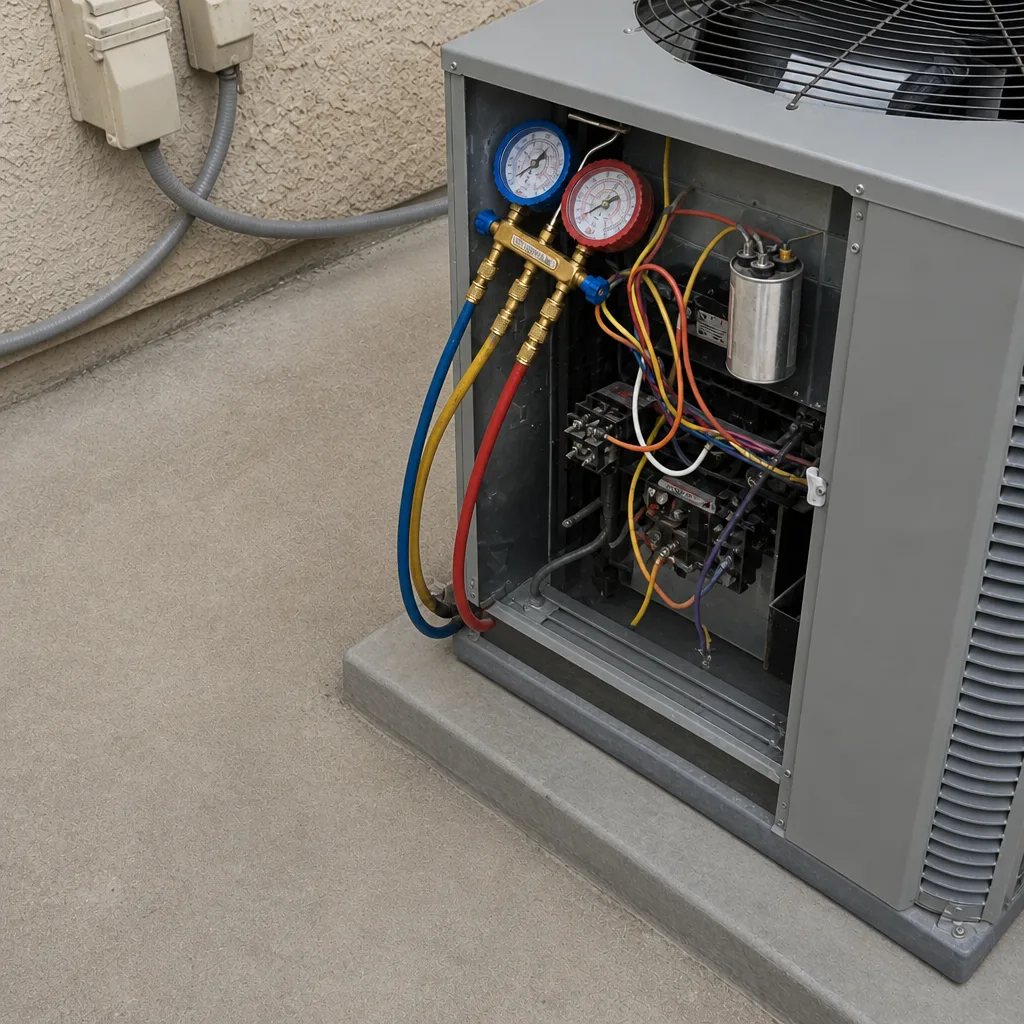
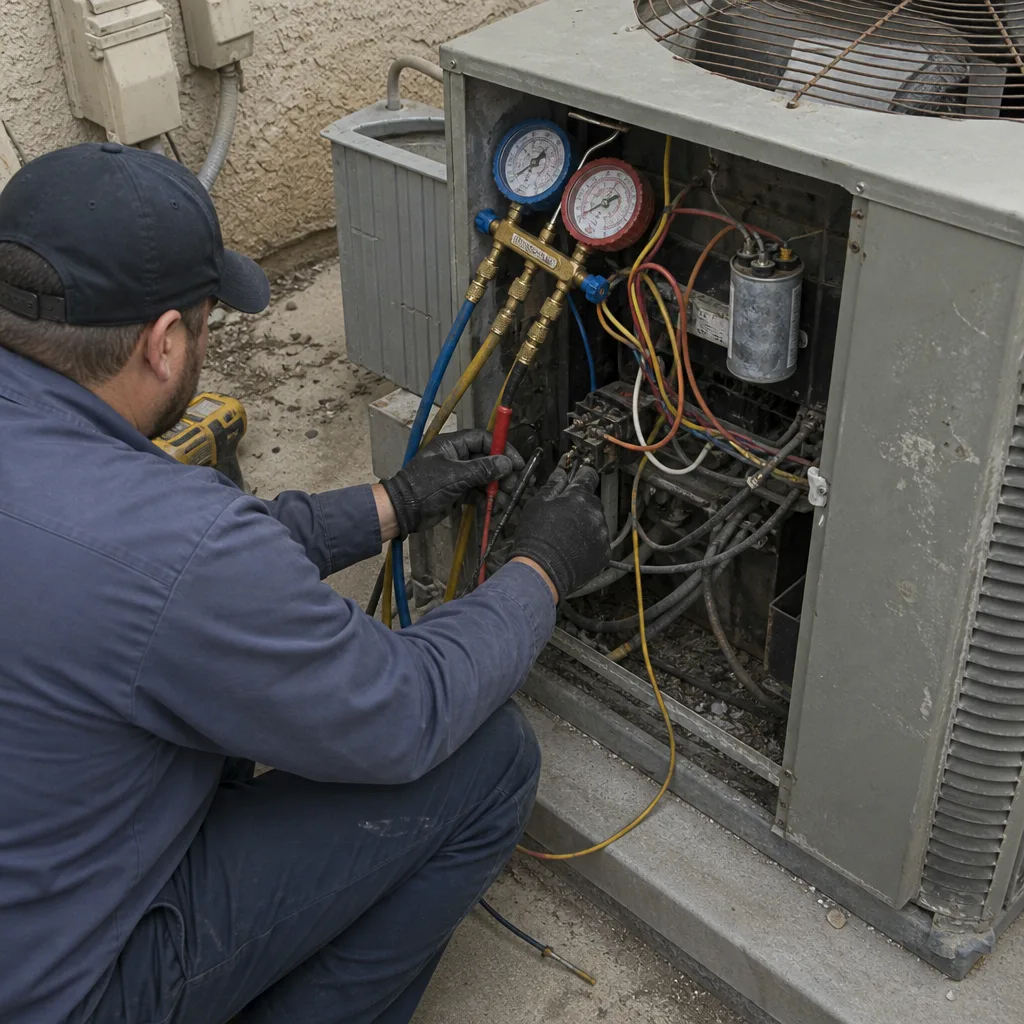 Before
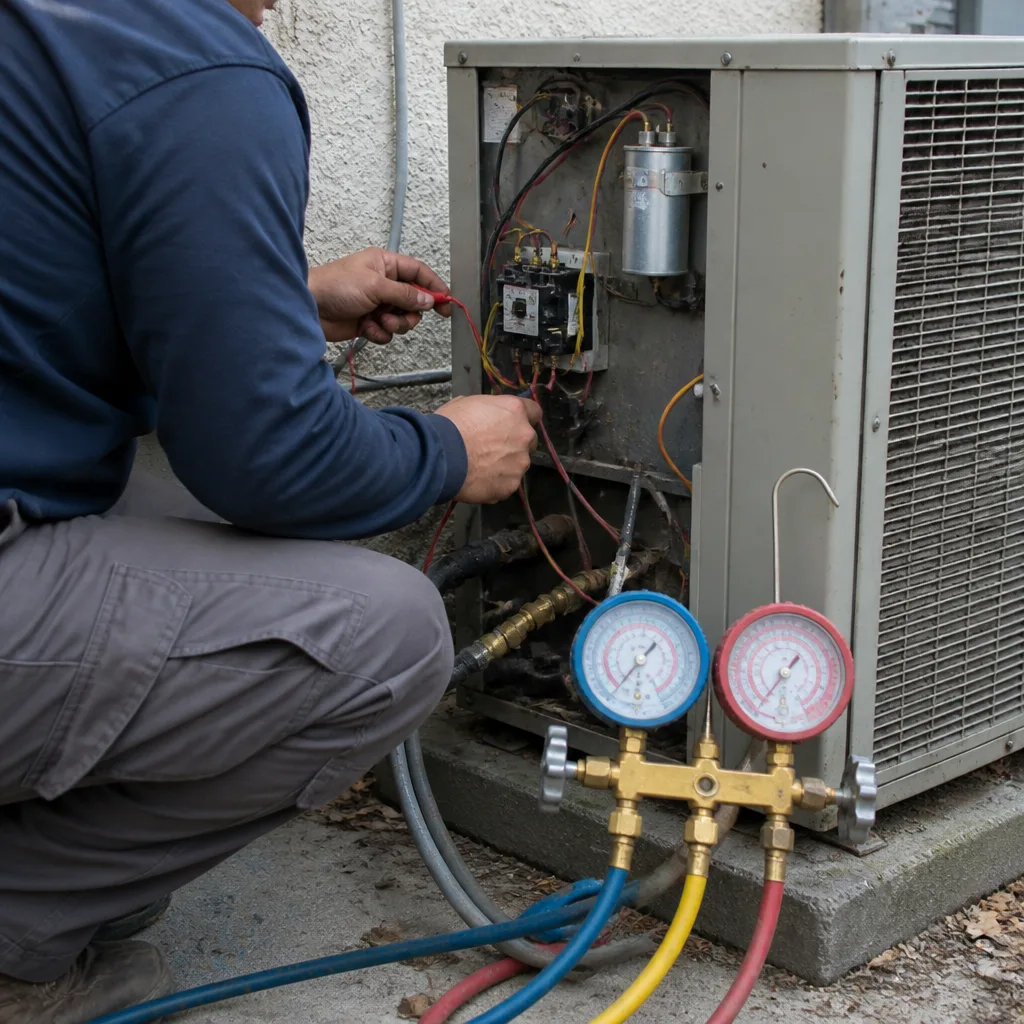
 After
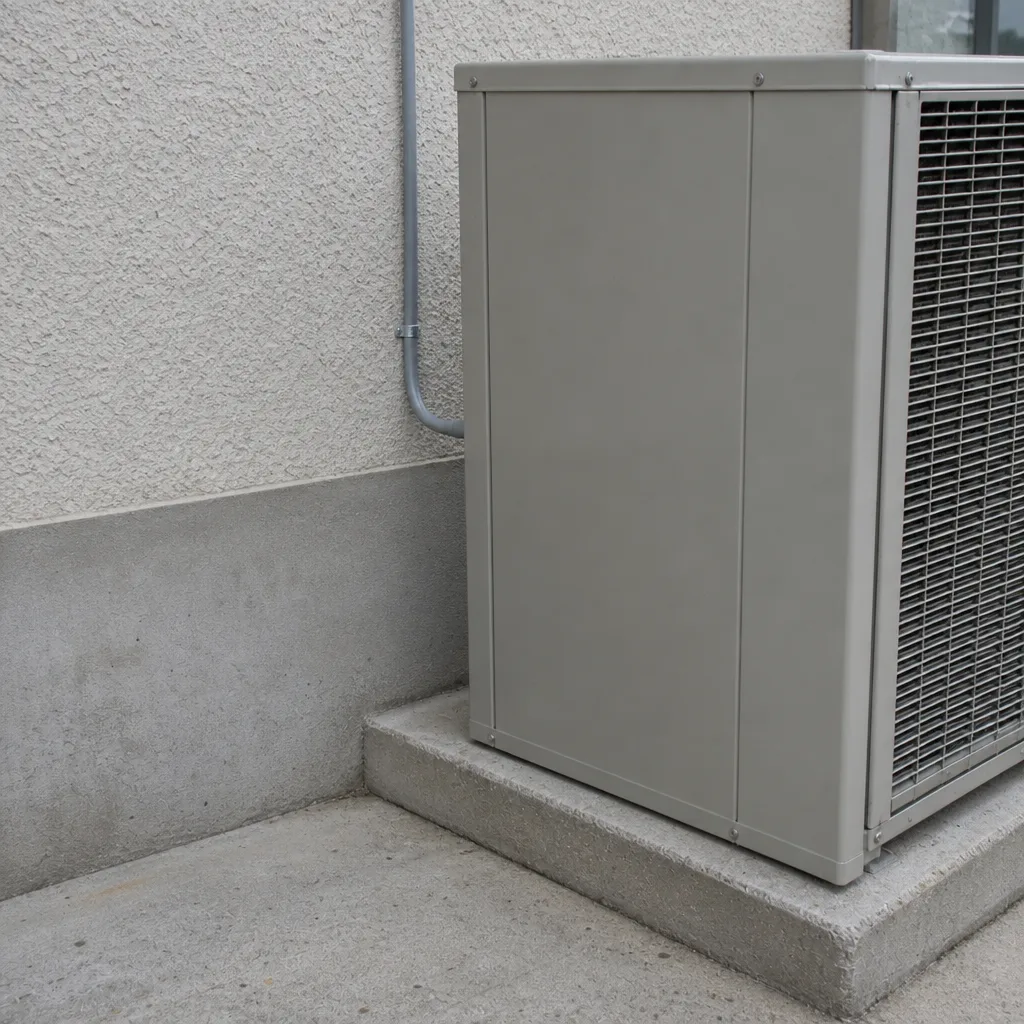
 Before
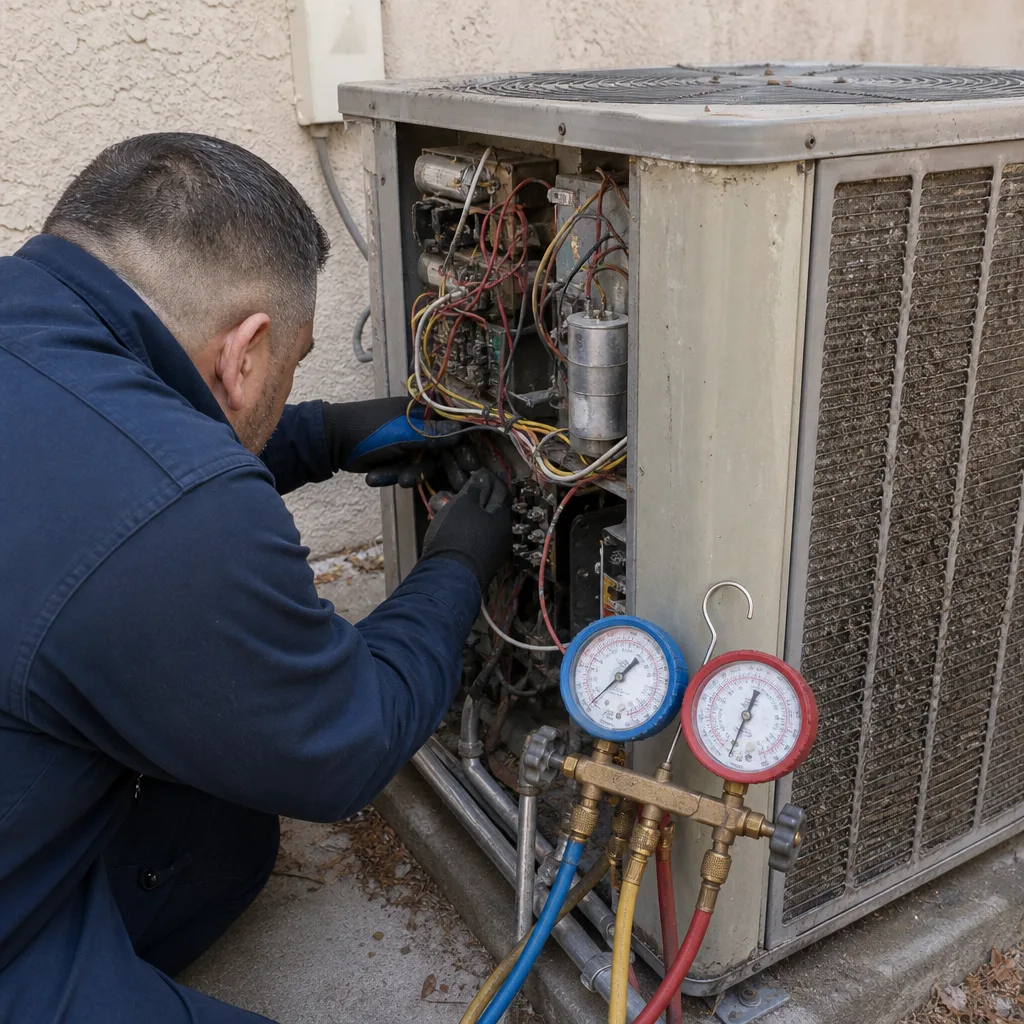
 After
 Before
 After
Frequently Asked Questions
Every 60 to 90 days during cooling season, not once a year like most national guides suggest. North Las Vegas dust can coat the coils fast, and a fouled coil forces the compressor to run hot and long. Check it after any windy, dusty day. Call (844) 320-2997 if the fins are bent or packed hard.
Below 16°F or above 22°F. A split under 16°F can mean low refrigerant from a leak, and an over-22°F split usually points to restricted airflow. Measure return air and supply air with two thermometers and subtract. If you’re out of range, call (844) 320-2997 for an exact diagnosis; estimates are free.
Peak summer demand causes voltage sag and surges, which stress capacitors faster here than in most of Nevada. Symptoms include clicking or humming at startup and short cycling. Don’t open the electrical panel yourself; capacitors hold a dangerous charge. Have a technician test it before peak demand.
Every 30 days through summer if you’re near the interchange, where traffic and construction push particulate counts higher than elsewhere in North Las Vegas. In other neighborhoods, every 30 to 60 days is reasonable, and inspect monthly. Hold the filter to a light; if you can’t see through it, change it.
Rinse coils, change filters, and check the temperature split yourself. Don’t handle refrigerant or open the electrical panel; both are dangerous without training. If you see ice, repeated clicking, or short cycling, call Meadowsweet Heating & Air North Las Vegas at (844) 320-2997 for a free estimate.
Photograph the model and serial plate on the outdoor unit, the thermostat and room temperature, the filter, the coil, any ice, and any error codes. Also note when the problem started and whether it’s constant. That documentation speeds the visit, sharpens the written quote, and helps our technicians arrive prepared.
The Bottom Line
Air conditioning in North Las Vegas works harder than it does almost anywhere in the country, and the maintenance schedule that works in a mild climate leaves you exposed here. The core of it: rinse the condenser coil every 60 to 90 days, change filters every 30 days if you’re near the 215/I-15 interchange, run the temperature split check in early May, and listen for capacitor trouble at startup before peak demand. Photograph what you see before you call so the visit is fast and the written quote is accurate. If a symptom points to refrigerant, a capacitor, or anything electrical, leave it to a trained technician. For equipment in the nine brands we service, including Trane, Lennox, Goodman, and Rheem, our Meadowsweet Heating & Air North Las Vegas home page shows how we handle every visit. Heating matters too; the Furnace Repair in North Las Vegas page covers the cooler months.
Contact
Ready to get ahead of the heat? Call (844) 320-2997 for a free estimate. Every job is backed by the 365-Day Done Right Promise, comes with a written price before any work starts, and includes shoe covers, drop cloths, and a photo of the clean-up before the crew leaves – so your floors, your kids’ play area, and your quiet hours are looked after from the first knock to the last. A live person answers 24 hours a day, seven days a week, including nights and weekends.
Written by the team at Meadowsweet Heating & Air North Las Vegas.