
Last updated November 18, 2026
 AC repair
 Furnace & heating
 Heat pumps
 Ductless mini splits
 Carrier
 Trane
 Goodman
Seasonal tune-up and full diagnostic on your Carrier, Trane, or Goodman system - readings shown to you before any repair is proposed
Diagnosis first, numbers second - you approve the repair price before a single part goes in.
Get your free estimateFurnace Repair Maintenance Schedule: What to Do and When
Here’s something most furnace maintenance guides get wrong: they assume your furnace runs all winter and talk about “annual fall tune-ups” as if cold is a given. In North Las Vegas, it isn’t. Your furnace sits untouched for eight or nine months, and that idle stretch does its own quiet damage. Dry desert air lets an unused igniter build up surface oxidation that shortens its life by an estimated 30% compared with the same part in a cold-climate home that cycles daily. Nobody notices until the first cold night, when the burner won’t light. This guide lays out a maintenance calendar built around that reality – what to do when heat season ends, what to check before it starts again, and what a real professional visit should include.
Quick Answer
Your furnace needs two homeowner touchpoints a year and one professional visit. In March, when heating season ends in North Las Vegas, change the filter, clear the flue vent, and do a visual check of the burner compartment. In September, before the first cold snap, change the filter again and schedule a professional inspection of the burners, igniter, heat exchanger, and gas connections. That annual inspection is the one task that protects your warranty and catches combustion problems before they become a winter emergency.
Styles & brands we work with
- AC repair
- Furnace & heating
- Heat pumps
- Ductless mini splits
- Carrier
- Trane
- Goodman
Table of Contents
- The Desert Furnace Maintenance Calendar
- March: Shutting Down for the Long Idle Season
- September: Waking the Furnace Before Cold Arrives
- The Filter Question: Heating Season vs. Cooling Season
- What You Can Safely Check Yourself (and What You Can’t)
- What the Annual Professional Visit Must Include
- How to Document Maintenance for Your Warranty
- Nevada Rebates and the High-Efficiency Maintenance Question
The Desert Furnace Maintenance Calendar
Most maintenance schedules published online were written for Chicago or Minneapolis, where a furnace runs from October to April and never really cools down. North Las Vegas is the opposite. Our heating season is roughly December through February, with occasional cold snaps in November and March when the desert drops into the 30s overnight. What that means for maintenance is simple but rarely said out loud: the idle period is longer than the working period. The furnace spends far more time waiting than running, and waiting in dry desert air is where parts quietly degrade.
A calendar that respects this looks different from the standard advice. Here is what the year should look like for a typical North Las Vegas home:
- March (end of heat season): Change the filter, do a visual check inside the burner compartment, confirm the flue vent is clear, and note any odd smells or sounds from the final weeks of heating.
- May (before AC season peaks): Your furnace and AC share a filter and, in many setups, an air handler. The filter swap you do here serves both systems.
- July (mid-summer): A filter check only. Air conditioning runs hard in July, and filters load fast with desert dust.
- September (before cold season): Change the filter and schedule the annual professional furnace inspection. Book early – the first cold week fills every HVAC calendar in North Las Vegas.
- November (first cold snap): Run the furnace for 15 minutes on a mild day to confirm it lights and heats before you actually need it.
That is five touchpoints, but only one of them requires a technician. The rest are the kind of thing any homeowner can handle with a filter, a flashlight, and ten minutes.
March: Shutting Down for the Long Idle Season
March is the most underrated month on the furnace calendar in North Las Vegas. Heating demand is dropping, the AC is about to take over, and it’s tempting to just forget the furnace until fall. But the way a furnace goes into its idle season shapes how it comes out. Dust settles in the burner compartment, the igniter collects oxidation, and a filter left in place all summer becomes a matted block of desert silt by September.
Here’s what we recommend doing in March, in order:
- Change the filter. This is the last filter the furnace will see until fall, so make it a fresh one. A dirty filter sitting all summer attracts dust and moisture.
- Do a visual check of the burner compartment. With the power off at the breaker, open the access panel and look – don’t touch. You’re checking for soot, rust flakes, or a strong sulfur smell. Anything unusual is a reason to call, not to clean.
- Confirm flue vent clearance. Look at the vent pipe where it exits the furnace and where it terminates outside. The flue needs to be clear of debris, bird nests, and anything stored against it. In North Las Vegas, pack rats are a real problem in outdoor utility areas, and a blocked flue is a genuine carbon monoxide risk.
- Listen and note. During the last few weeks of heating, does the furnace rattle? Short-cycle? Smell different? Write it down. September-you will not remember.
- Clean around the unit. Clear stored boxes, paint cans, and holiday decorations from the area around the furnace. Combustion needs airflow, and cluttered utility closets are a fire risk with gas equipment.
That’s it. No tools beyond a screwdriver for the panel, no disassembly, nothing that puts you near gas lines or the heat exchanger.
September: Waking the Furnace Before Cold Arrives
September is when the fall maintenance rush hits every HVAC company in North Las Vegas, and it’s also when smart homeowners book their annual inspection – before the first cold night, not after. The goal of the September pass is to verify that eight months of idling hasn’t degraded anything, and to catch the small failures that would otherwise turn into a no-heat call in January.
The September routine has two parts: what you do, and what a technician does.
What you do in September:
- Change the filter one more time. This is the fresh filter the furnace will run on all heating season.
- Turn the thermostat to heat and run the furnace for 15 minutes on a mild afternoon. You want to hear it light, feel warm air at the registers, and confirm nothing smells like burning dust beyond the first minute or two.
- Walk through the house and confirm every register is open and unobstructed. Furniture, rugs, and pet beds scattered over registers are common in family homes and quietly strangle airflow.
- Check the exterior flue termination one more time – same pack-rat concern as spring.
What the professional visit covers is the subject of a section further down. The short version is that a technician inspects and tests the parts you can’t safely reach: the igniter, the flame sensor, the burners, the heat exchanger, and the gas connections. That inspection is the one piece of furnace maintenance that genuinely requires training, and it’s the piece that protects your family and your warranty.
The Filter Question: Heating Season vs. Cooling Season
Here’s a detail most filter guides miss: the same filter serves two very different jobs depending on the season, and it loads at different rates. During heating season in North Las Vegas, the furnace pulls air through the filter but runs far less often than the AC does in summer. Heating season is a low-airflow, low-hours stretch. The filter stays cleaner longer than people expect – often good for 60 to 90 days, sometimes more.
Cooling season is the opposite. Your AC runs hundreds of hours across June, July, and August, and every one of those hours pushes desert air through the filter. Fine dust, pollen from spring blooms, and the grit that comes with a windy spring all load the filter fast. A filter that would last three months in heating season can be choked in six weeks in July.
What that means in practice:
- Heating season (roughly December to February): Check the filter monthly; change it every 60 to 90 days depending on pets and dust.
- Cooling season (roughly May to September): Check monthly and change every 30 to 60 days. Homes with shedding pets or a nearby construction site should sit at the shorter end.
- Shoulder months (March, April, October, November): Change on the way in and on the way out. These are the filter swaps that get forgotten.
One more local note: North Las Vegas sits downwind of a lot of open desert and construction. If you live near the northern edges of the valley or anywhere with active building, your filter will load faster than a filter guide written for a leafy suburb would suggest. Check it more often than the box says.
What You Can Safely Check Yourself (and What You Can’t)
We want to be honest here, because a lot of maintenance guides blur the line and put homeowners in danger. Some furnace tasks are genuinely safe for anyone. Others are not, and no amount of YouTube confidence changes that. High-tension components, gas lines, and the heat exchanger are not homeowner territory.
Safe for homeowners:
- Filter changes. The single most valuable thing you can do, and completely safe.
- Visual check of the burner compartment. Power off at the breaker, panel open, look only. No cleaning, no touching, no disassembly.
- Flue vent clearance. Look at the vent where it exits and terminates. Confirm it’s unobstructed. Don’t take it apart.
- Register and thermostat checks. Confirm every register is open and unobstructed; run the furnace briefly to confirm it lights.
- Cleaning around the unit. Keep the area clear of stored items and clutter.
Not safe for homeowners:
- Burner cleaning or adjustment. Burners involve gas and combustion. A trained technician adjusts them with instruments; a homeowner with a wire brush can create a carbon monoxide problem.
- Igniter and flame sensor work. These are fragile, and messing with them can leave you with a furnace that won’t light. Let a technician handle it.
- Heat exchanger inspection. A cracked heat exchanger can leak carbon monoxide into your home. Only a trained technician with a camera and combustion analyzer can genuinely verify this part.
- Gas line work of any kind. This is a licensed-plumber-and-technician job, full stop. Do not touch gas connections.
If you smell gas, leave the house and call your gas utility first. That’s not a maintenance item – it’s an emergency.
What the Annual Professional Visit Must Include
An annual furnace inspection should take roughly 60 to 90 minutes and cost between $100 and $200 in the North Las Vegas market, with the higher end covering homes with multiple zones or a furnace that hasn’t been serviced in several years. What matters more than the price is what’s actually done. A “tune-up” that’s a filter change and a pat on the back is not an inspection. Here’s what a real visit covers:
- Combustion analysis. A technician measures the flue gases to confirm the furnace is burning cleanly. This is the single check that catches a dangerous combustion problem.
- Heat exchanger inspection. Visual inspection with a camera, checking for cracks, corrosion, or soot streaks that suggest a leak.
- Igniter and flame sensor. Both inspected and tested, which matters enormously in North Las Vegas because these are the parts most affected by the long idle season. A technician can clean minor oxidation and flag an igniter that’s on its way out.
- Burner inspection and cleaning. Burners removed, cleaned, and confirmed to be delivering even flame.
- Gas connection and pressure check. Leak detection and a pressure check on the gas line at the furnace.
- Flue and venting verification. Confirming the vent draws properly and is clear all the way out.
- Blower and airflow check. Confirming the blower motor is drawing the right amps and moving air correctly.
- Thermostat and safety controls. Testing the limits, flame rollout switch, and thermostat calibration.
- Written report. A good technician leaves you with a record of what was found and what was done – which is exactly what the Cedarwell Care Promise is built around, along with a written price before any work starts.
That written report matters more than most homeowners realize. It’s the document that protects your manufacturer warranty and gives you a paper trail if a repair becomes necessary later.
How to Document Maintenance for Your Warranty
Most furnace manufacturers require annual professional maintenance as a condition of the parts warranty, and they aren’t flexible about it. If your furnace fails at year six and you can’t prove it was serviced, the manufacturer can decline the claim. In North Las Vegas, where furnaces sit idle for most of the year, this matters even more – an unserviced furnace looks neglected, and manufacturers know it.
Documentation that actually protects you:
- Keep every invoice. It should list the date, the technician’s findings, and the parts inspected. A one-line receipt that says “tune-up – $129” won’t satisfy a warranty claim.
- Note the technician’s license or company information. Warranty departments want to see the work was done by a qualified company, not a handyman.
- Photograph the filter and the unit before and after each visit. A five-second photo record isn’t required, but it’s a fast way to prove service history if a claim gets challenged.
- Register the furnace with the manufacturer when it’s installed. Many warranties require it within 60 days, and an unregistered furnace often drops to a shorter base warranty period.
- Keep combustion analysis results. If the manufacturer asks for proof the furnace was burning cleanly, that piece of paper is gold.
When the work is done by a company that stands behind it with a 365-Day Done Right Promise, you get one more layer of documentation – the work itself is guaranteed, so if the technician finds a problem and the fix doesn’t hold, you’re covered without a runaround. That’s part of why we push for written records on every visit.
Nevada Rebates and the High-Efficiency Maintenance Question
Nevada’s gas utility rebates for high-efficiency equipment are real, but they’re tied to equipment upgrades, not maintenance. The rebate is for installing a high-efficiency furnace, not for tuning up an old one. Still, the maintenance question and the rebate question are connected, and the connection is worth explaining so you don’t overpay for the wrong thing.
What the rebates actually look like in our experience:
- High-efficiency furnace rebates: Typically in the hundreds of dollars when you install a qualifying unit, though the amount changes with each program year. Current NV Energy rebates should be confirmed directly with the utility before you plan around them.
- Not covered: Routine maintenance visits, filter changes, and repairs. The rebate is for the equipment, not the tune-up.
- Maintenance that protects the rebate: A high-efficiency furnace installed today has a manufacturer warranty that likely requires annual professional service. Skip the maintenance, and you risk the warranty – which is a bigger number than the rebate.
The practical takeaway: don’t chase a maintenance rebate that doesn’t exist. Do the annual service because it protects your warranty and your family’s safety. If you’re considering a furnace replacement, ask for a written estimate and a breakdown of any rebates you might qualify for before you commit to anything.
If you’re weighing repair versus replacement and wondering whether a high-efficiency unit pencils out for your home, our team is glad to walk through the numbers without pressure. That conversation is free, and it’s a better place to start than a rebate flyer.
If you’re looking for a broader overview of how our heating work fits together, our Furnace Repair in North Las Vegas page is a good next stop, and if you’re also thinking about the cooling side, our AC Repair in North Las Vegas page covers that half of the year.
Common Mistakes to Avoid
- Treating the furnace like a year-round system. Most maintenance advice online assumes the furnace runs all winter. In North Las Vegas it doesn’t, and the idle season is when oxidation and dust settle in – so the March and September passes matter more here than a “fall tune-up” alone.
- Skipping the September test run. Running the furnace for 15 minutes on a mild day in September is the cheapest insurance you can buy. Waiting until the first cold night to discover it won’t light is a much more expensive way to find out.
- Leaving the filter in all summer. A filter that sits through a North Las Vegas summer is a matted block of desert dust by fall. Change it on the way out of heating season, not just on the way in.
- Ignoring the flue clearance. Pack rats, bird nests, and stored items near the flue are common in North Las Vegas utility areas, and a blocked flue is a carbon monoxide hazard, not a nuisance.
- Cleaning the burners yourself. Adjusting burners without combustion instruments can create a carbon monoxide problem that wasn’t there before. It’s a technician’s task, and there’s no shortcut.
- Losing the service records. Manufacturers require proof of annual maintenance for warranty claims. A one-line receipt doesn’t cut it – keep the detailed report.
- Booking the inspection in the first cold week. Every HVAC company in North Las Vegas is booked solid when the first cold snap hits. Book in September, not December.
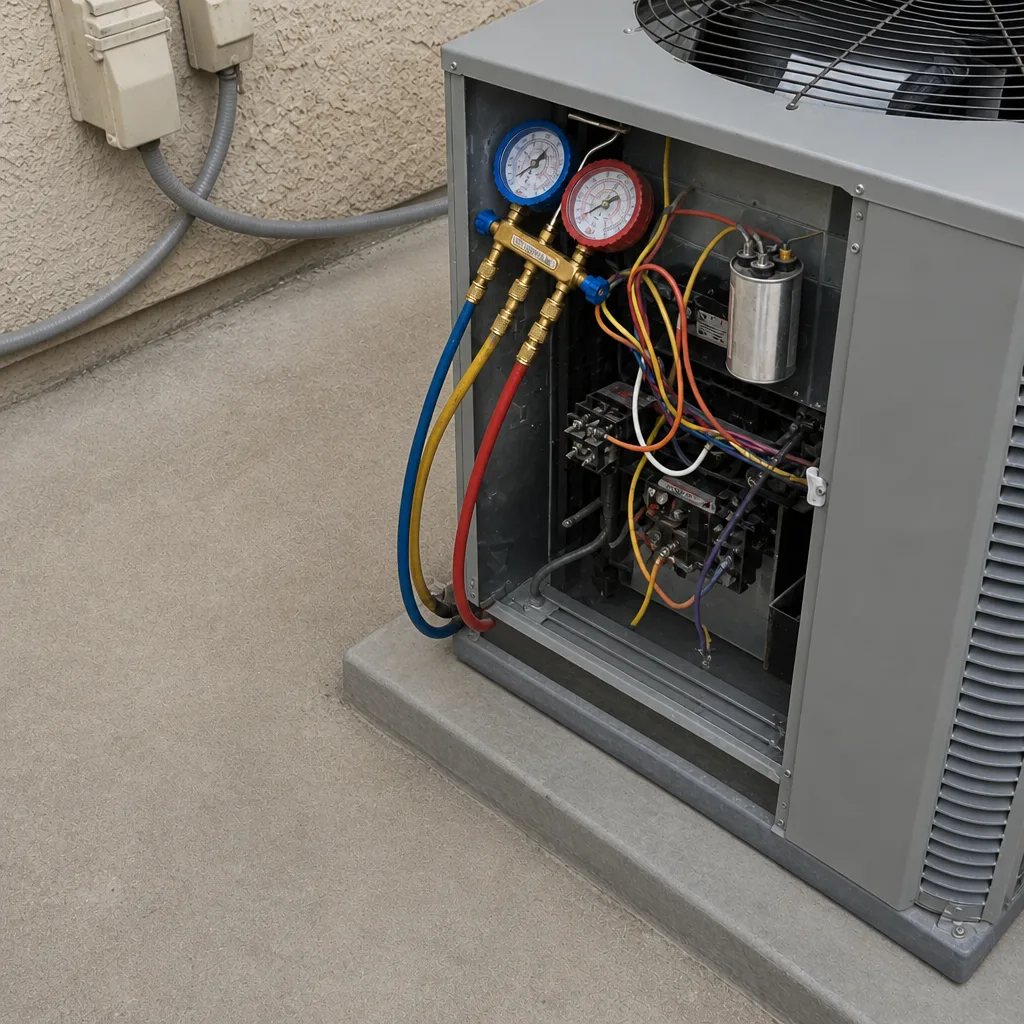
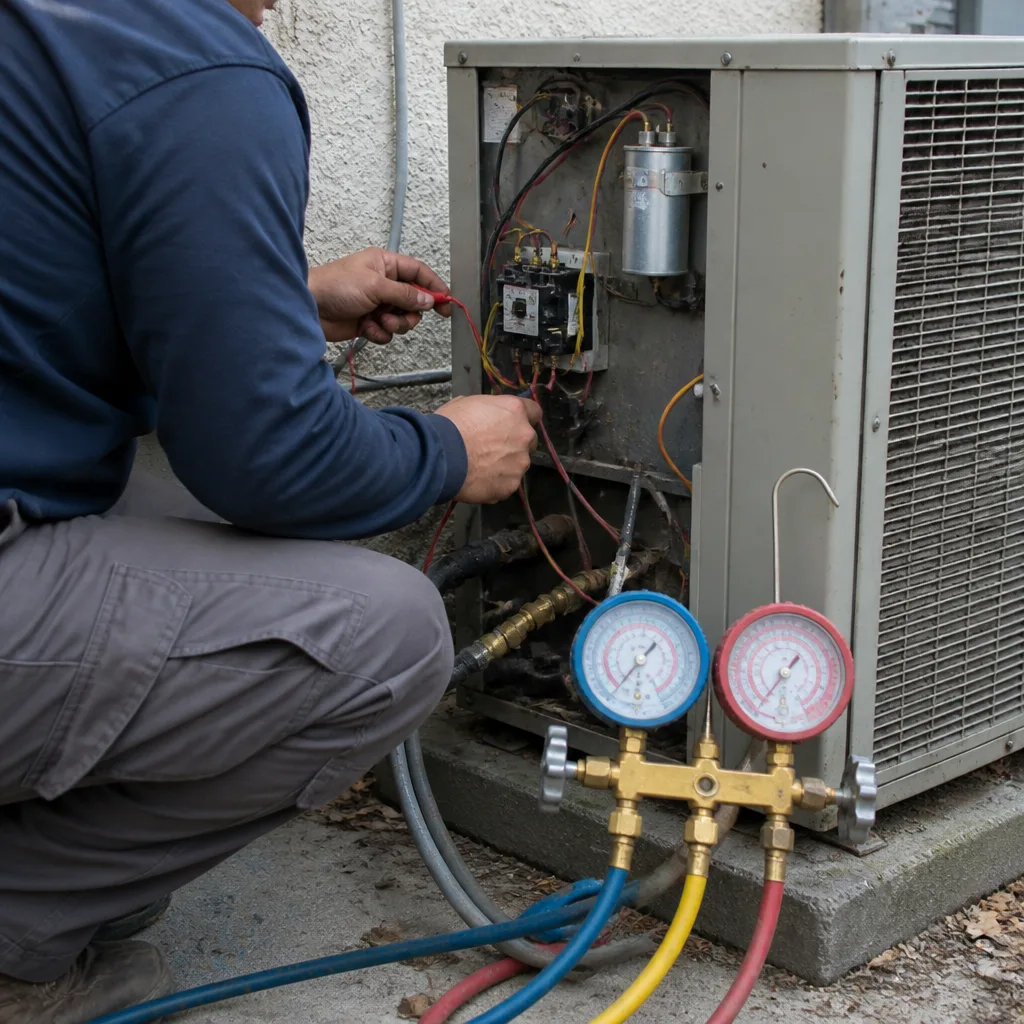
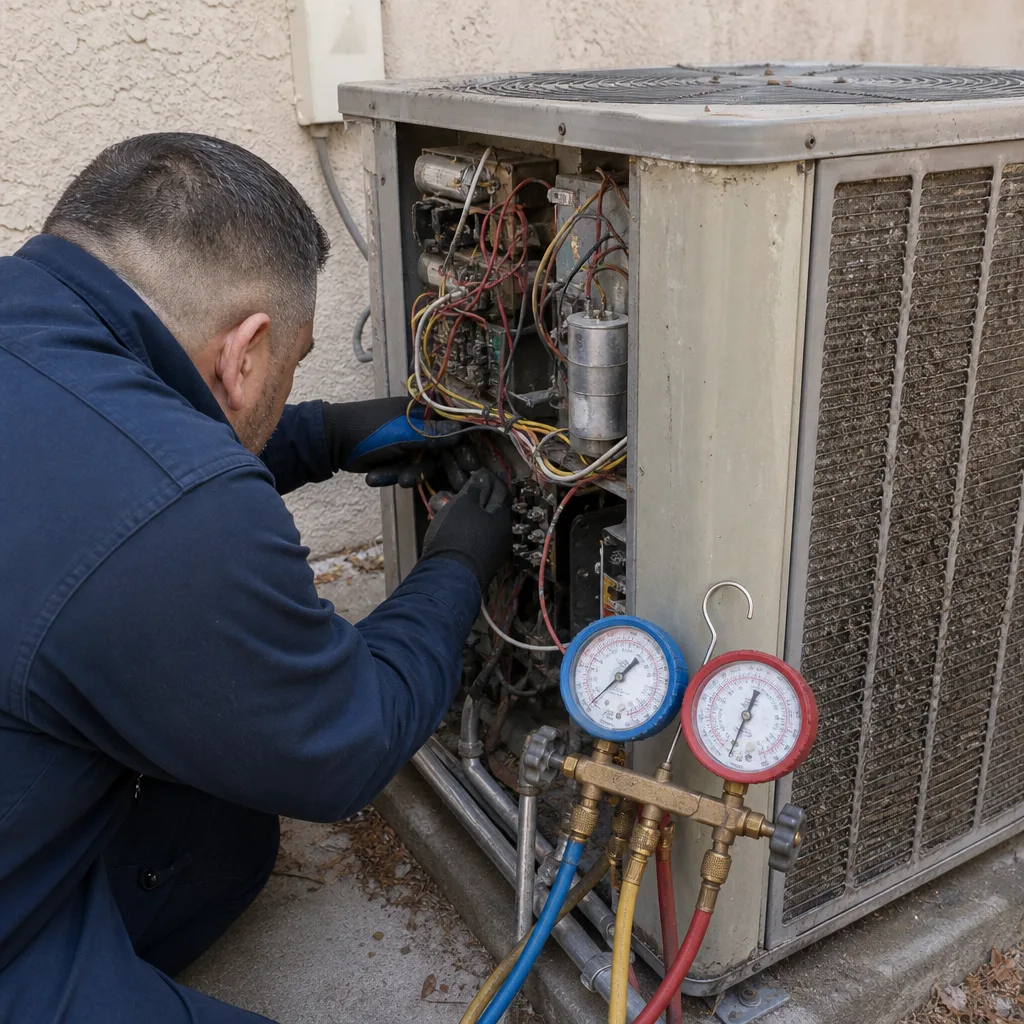
See the difference
 Before
 After
 Before
 After
 Before
 After
When to Call a Professional
Some things are worth a service call, and some are worth an emergency call. Get a technician out for any of these: a furnace that won’t light on a cold night; a smell of gas (leave the house and call your gas utility first); a yellow or orange flame instead of blue; soot around the burner compartment; a furnace that short-cycles or shuts off before the house warms up; any strange noise from the blower or inducer motor; or a carbon monoxide alarm going off. On the routine side, the annual inspection should be booked once a year, ideally in September before cold season. Meadowsweet Heating & Air North Las Vegas offers free estimates in North Las Vegas – call (844) 320-2997 and a live person will answer, day or night.
Frequently Asked Questions
Once a year is the standard, and in North Las Vegas the best time is September, before the first cold snap. Because the furnace sits idle for eight or nine months, the annual visit is the only time the igniter, flame sensor, burners, and heat exchanger get inspected before they’re asked to run hard. Skipping it means the first test of those parts happens on a cold night when you actually need heat.
No, and skipping it can void your warranty. Most manufacturers require documented annual professional maintenance as a condition of the parts warranty, and a new furnace still sits idle through the North Las Vegas summer just like an old one. The idle season is when oxidation and dust settle in, so a new furnace benefits from the annual visit as much as an older one. Call (844) 320-2997 to book a free estimate and get it on the calendar.
A tune-up is the cleaning and adjustment part – filter, burners, blower. An inspection is the diagnostic part – combustion analysis, heat exchanger check, gas pressure test, and safety control testing. You want both, and a real service visit covers both. If a company quotes you a “tune-up” that doesn’t include combustion analysis, ask what’s actually being done. A written report of findings should come with every visit.
Expect $100 to $200 for an annual inspection in the North Las Vegas market, with the higher end covering multi-zone homes or furnaces that haven’t been serviced in several years. That’s the range for the routine visit; repairs are quoted separately and should always come with a written price before any work starts. Call (844) 320-2997 for an exact quote – estimates are free.
A dusty burning smell during the first 10 to 15 minutes of the season is usually dust burning off the heat exchanger, and it’s normal. A sulfur or rotten-egg smell is not – that’s a gas smell, and you should leave the house and call your gas utility. A persistent burning smell that doesn’t clear after 15 minutes is worth a service call, especially in North Las Vegas where dust accumulates on idle equipment.
If the furnace is under 12 years old, the repair is under a third of replacement cost, and the heat exchanger is sound, repair usually makes sense. If it’s over 15, the heat exchanger is compromised, or you’ve had two or more repairs in two seasons, replacement is often the better call. If you’re leaning toward replacement, our AC Installation in North Las Vegas page covers how we handle installation paperwork and rebates. Whatever you decide, you’ll get a written price before any work starts. Call (844) 320-2997 for a free estimate.
The Bottom Line
Furnace maintenance in North Las Vegas isn’t a generic fall tune-up. It’s a calendar built around a long idle season – a March shutdown pass, a September wake-up pass, and one professional inspection before cold weather arrives. Change filters on the seasonal rhythm, not the calendar year. Check the flue for pack-rat debris. Test the furnace in September, not December. And keep the written documentation from every professional visit, because that’s the paper that protects your warranty. If you want help with the once-a-year visit, Meadowsweet Heating & Air North Las Vegas is here. A live person answers every call, 24 hours a day, 7 days a week, and you’ll get a written price before any work starts.
You can start with Meadowsweet Heating & Air North Las Vegas home to see how the Cedarwell Care Promise works on every job, including the shoe covers and drop cloths that keep your floors clean and the photo of the cleanup before the crew leaves. If you’re a family with kids and pets, we schedule around naps and school hours and choose pet-safe products wherever we can. And if the furnace eventually needs replacing rather than repairing, our team handles the written estimate, the install date, and the rebate paperwork with the same care.
Call (844) 320-2997 for a free estimate. We’ll walk through your furnace, your calendar, and your options, and leave you with a written price before anything gets started. If you’re not sure whether to repair or replace, that conversation is a good first step – and it’s free.
Written by the team at Meadowsweet Heating & Air North Las Vegas.