
Last updated November 18, 2026
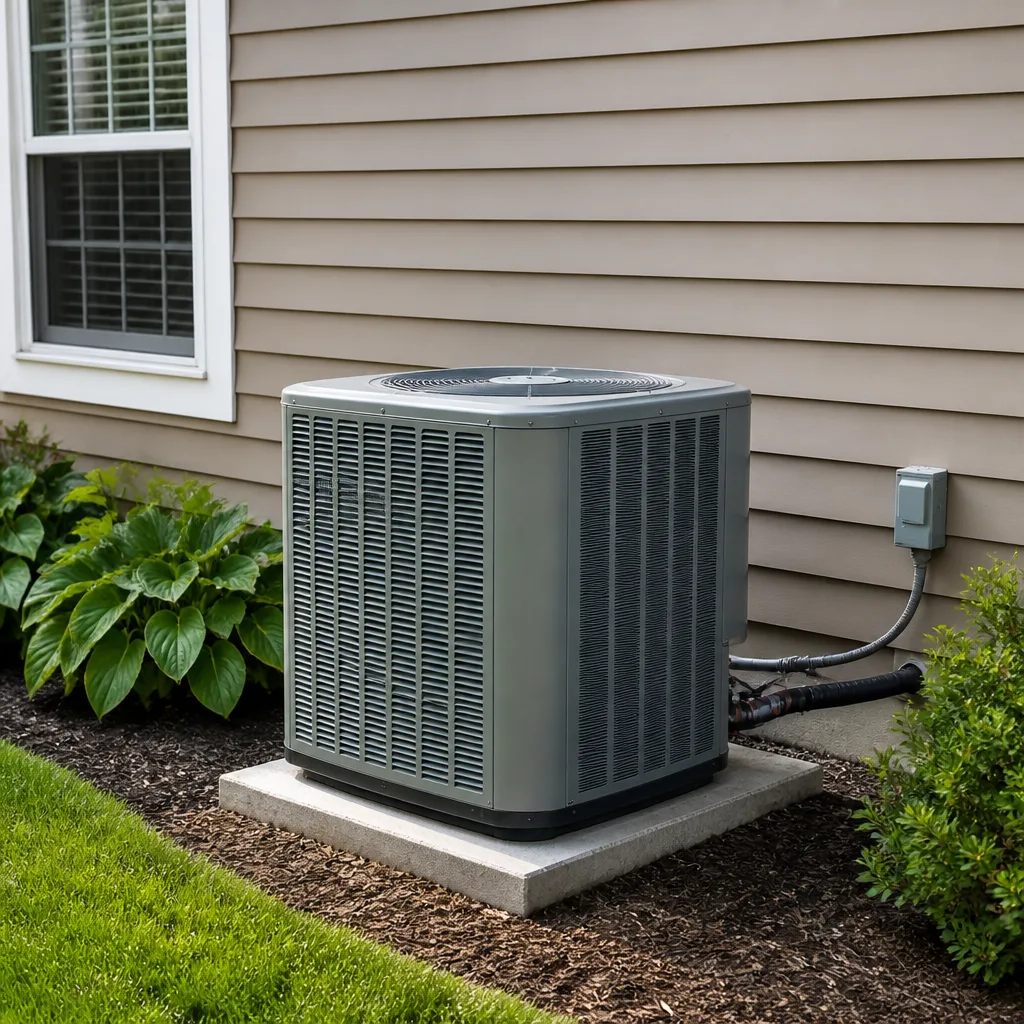 AC repair
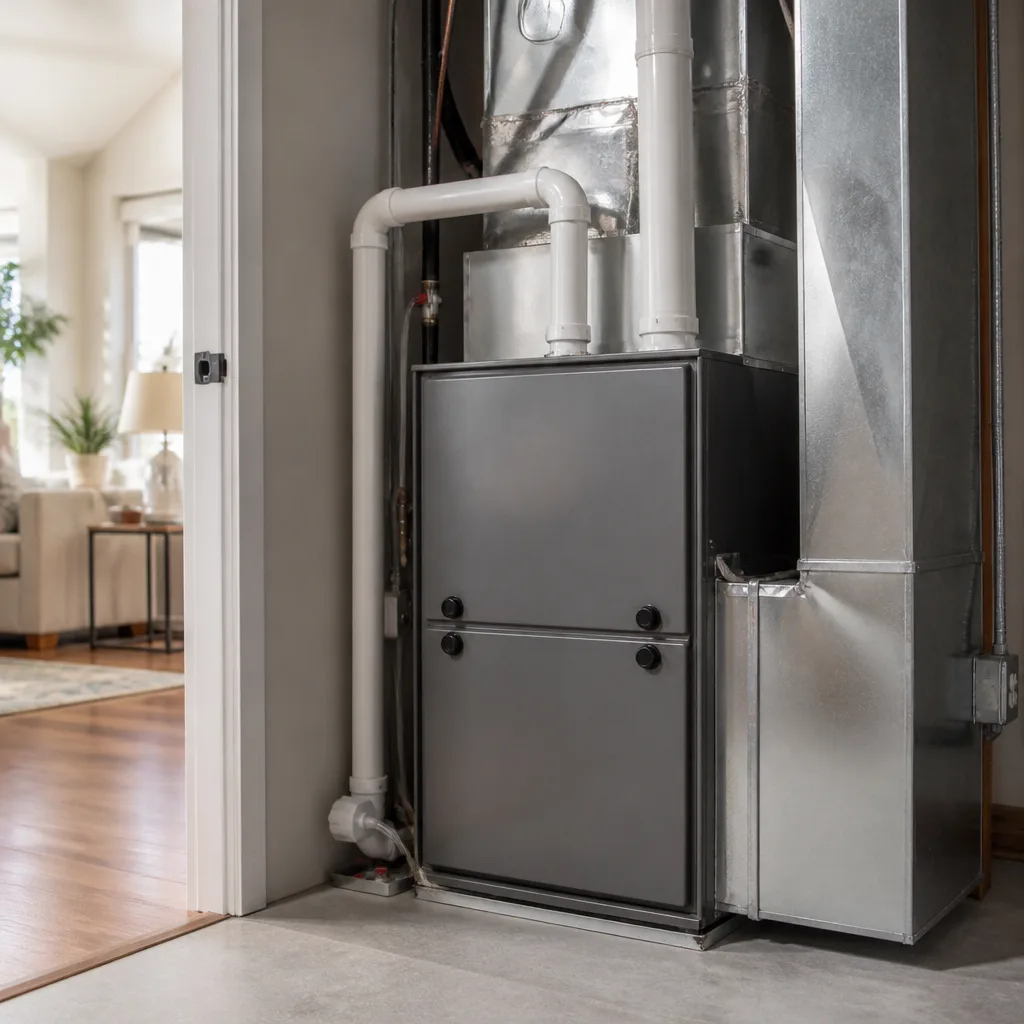 Furnace & heating
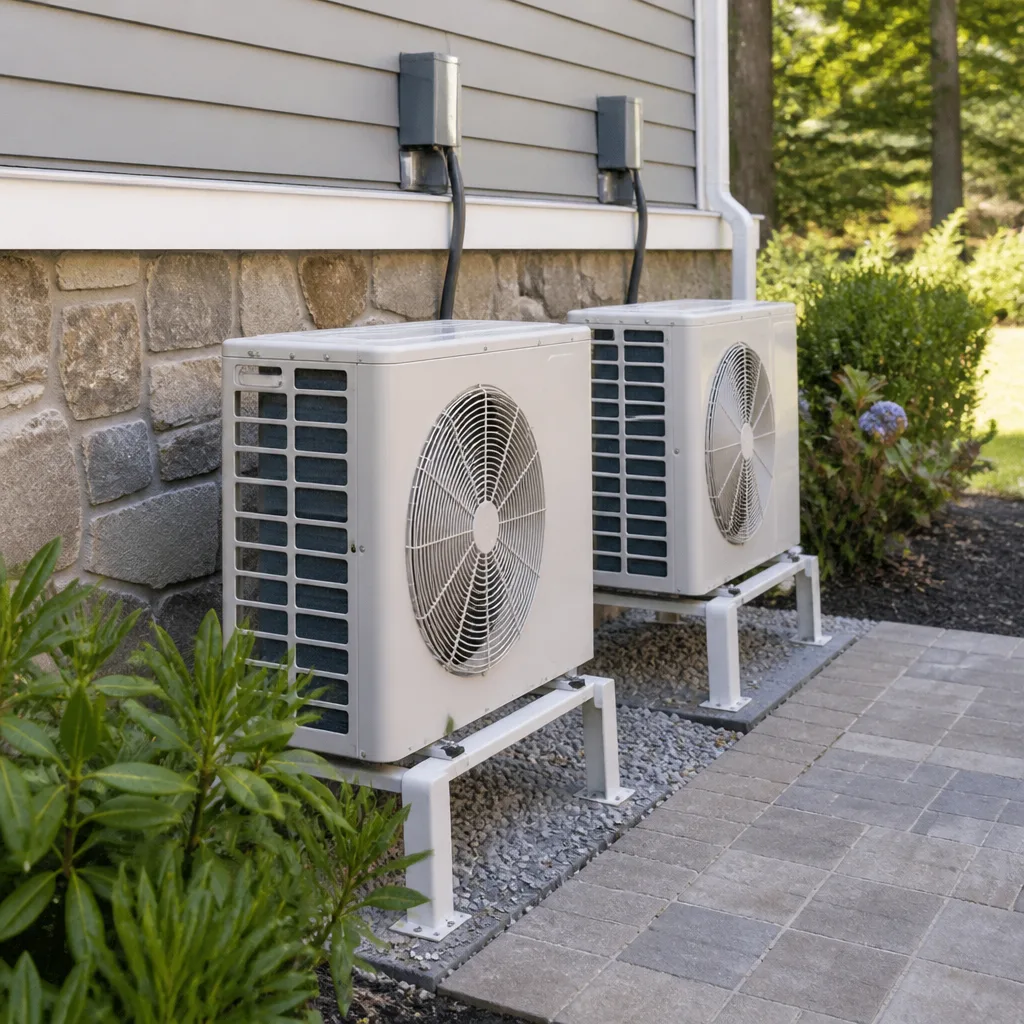 Heat pumps
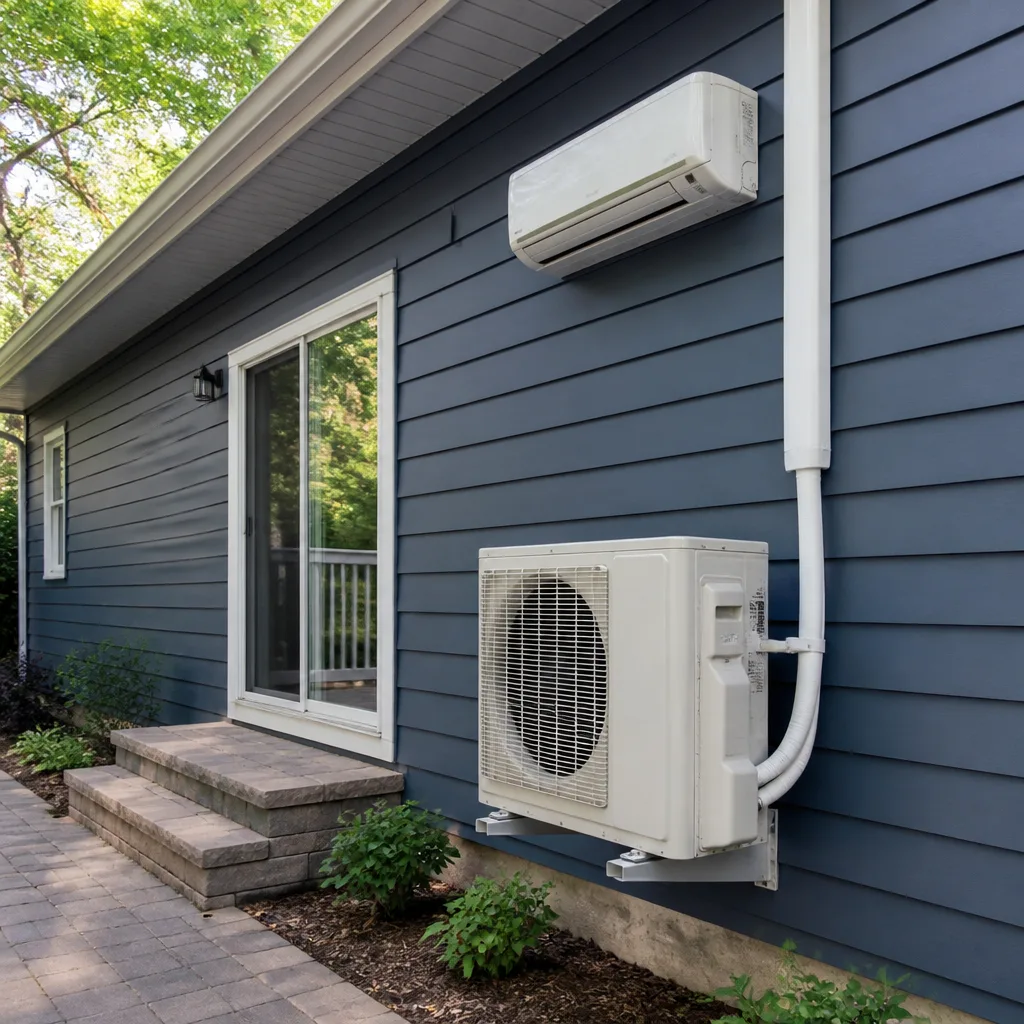 Ductless mini splits
 Carrier
 Trane
 Goodman
Seasonal tune-up and full diagnostic on your Carrier, Trane, or Goodman system - readings shown to you before any repair is proposed
Diagnosis first, numbers second - you approve the repair price before a single part goes in.
Get your free estimateFurnace Repair Troubleshooting: Common Problems and How to Fix Them
Your furnace already knows what’s wrong with it. Most modern units built in the last 20 years run a diagnostic sequence on the control board and broadcast it through a small LED light – a pattern of blinks that maps to a specific fault. A two-blink pause followed by three blinks on a Lennox G61 points to a pressure switch issue. The same code on another unit might mean something different, which is why the legend matters. Learning to read that light before you call can move your repair from a week out to the next available slot. In North Las Vegas, where first cold snaps hit fast in late October and demand spikes, that difference is real. This guide walks you through it.
Quick Answer
Most furnace problems fall into a handful of categories: no heat at all, short cycling, weak airflow, strange noises, or a system that won’t stay lit. Before calling for repair, check the thermostat settings and batteries, confirm the furnace has power and gas, and read the LED error code on the control board. That code often tells you and your technician exactly which component failed – sometimes in under five minutes.
Styles & brands we work with
- AC repair
- Furnace & heating
- Heat pumps
- Ductless mini splits
- Carrier
- Trane
- Goodman
Table of Contents
- How to Read Your Furnace’s Error Codes
- The No-Heat Symptom Tree: What a Technician Checks First
- The Safe Reset Sequence (and When Not to Use It)
- Is It the Furnace or the Thermostat? A 5-Minute Test
- Brand-by-Brand: Blink Codes on Trane, Lennox, Goodman, and Rheem
- What to Have Ready Before You Call
- Why Furnaces Fail in North Las Vegas (and How to Prevent It)
How to Read Your Furnace’s Error Codes
Every modern furnace has a control board with a small LED indicator light. On most units, that light flashes in a pattern – a sequence of blinks, a pause, then another sequence. The pattern corresponds to a fault code defined in a legend printed on the inside of the furnace’s access panel or in the owner’s manual. That legend is the single most useful piece of paper in your mechanical closet.
Here’s how to find and read it:
- Turn off the furnace. Use the switch on or near the unit (it looks like a light switch), then wait 30 seconds.
- Remove the upper access panel. Most panels lift up and out or slide down. You don’t need tools on most Trane and Lennox models; a screwdriver helps on some Goodman units.
- Locate the LED light on the control board. It’s usually a small bulb near the edge of the board, behind the gas valve.
- Turn the furnace back on and watch the light. Count the blinks, note the pause, count again. On units with a steady light, the code is continuous – no pause.
- Match the pattern to the legend. Look for a sticker on the inside of the panel you just removed, or the manual. The legend will say things like “3 blinks = pressure switch open” or “2+3 = pressure switch stuck closed.”
Write the pattern down before you call anyone. In our experience across North Las Vegas, homeowners who arrive on the phone with a code get scheduled faster and get more accurate parts estimates, because the technician knows what to bring. It takes the diagnostic visit from a 45-minute exploration down to roughly 10 minutes of confirmation and repair.
The No-Heat Symptom Tree: What a Technician Checks First
When your furnace won’t heat, a technician follows a specific order. Understanding that order helps you do your own safe preliminary check and gives you language to describe the problem. The sequence below is how we approach a no-heat call in North Las Vegas, and it’s the same sequence most experienced HVAC technicians follow.
- Thermostat. Is it set to HEAT, is the fan set to AUTO, and does the display show a call for heat? Dead batteries are the most common cause of “my furnace won’t run” calls we see.
- Power. Confirm the furnace’s service switch is on and the breaker in your panel hasn’t tripped. A tripped breaker that won’t reset points to a serious electrical fault – call a professional.
- Igniter. If the thermostat calls for heat but nothing happens, the hot surface igniter is often the culprit. Modern igniters glow orange-red when working. If you can safely see yours (usually behind a small sight glass on the burner cover), a failed one shows no glow at all.
- Gas supply. Confirm the gas valve at the furnace is open (handle parallel to the pipe) and that other gas appliances in the house are working. In North Las Vegas, where most homes are on Southwest Gas lines, a service interruption is rare but not impossible after a major event.
- Flame sensor. If the burners light and then shut off within 5-10 seconds, the flame sensor is usually the cause. It’s a rod that senses whether a flame is present; when it’s coated with carbon, it reports “no flame” and shuts the gas valve for safety.
- Heat exchanger. If the furnace cycles on and off short of the set temperature, or you smell exhaust indoors, the heat exchanger may be cracked. This is a serious safety issue – turn the system off and call a professional immediately.
Each step narrows the field. If the thermostat is calling, the igniter glows, and the burners light but shut off after a few seconds, you know to expect a flame sensor cleaning or replacement when the technician arrives. If nothing glows, the parts estimate is likely for an igniter. Walking in with this level of detail speeds up your repair significantly.
The Safe Reset Sequence (and When Not to Use It)
Furnaces have a lockout feature built into the control board. After a certain number of failed ignition attempts – usually three to five – the board shuts everything down for a set period, typically one hour, as a safety measure. A reset can clear that lockout, and in the right situation it’s the correct first step.
Here’s how to do it safely:
- Set the thermostat to OFF.
- Find the furnace’s power switch and turn it to OFF.
- Wait a full 30 seconds. This gives the control board time to fully discharge.
- Turn the power back on and set the thermostat to HEAT.
- Watch the sequence. If the burners light and stay lit for several minutes, the lockout was likely a one-time event triggered by an interruption.
When resetting makes things worse: If you’ve reset the furnace three times and it locks out again each time, stop. Repeated resets after failed ignition can flood the combustion chamber with unburned gas, which is a real safety hazard. At that point, leave the system off and call a professional. If you smell gas, leave the house and call your gas utility first.
If your furnace reset successfully and runs fine, note the date and time it happened. Repeated lockouts at the start of each heating season in North Las Vegas often trace back to a dirty flame sensor or a restricted vent, both of which a proper furnace repair in North Las Vegas visit will resolve in one trip.
Is It the Furnace or the Thermostat? A 5-Minute Test
Before you assume the furnace is broken, rule out the thermostat. You don’t need tools for this. The steps below isolate which device is actually failing.
Step 1: Set the thermostat to HEAT and turn the setpoint 5 degrees above room temperature. A basic heat call should trigger the furnace within 90 seconds. Listen for the igniter to glow and the burners to light.
Step 2: Walk to the furnace and listen. If you hear the inducer fan running (a low hum near the top of the unit) but no ignition, the furnace is receiving the call and trying to work. That points to a furnace-side problem.
Step 3: If the furnace is silent, jump the R and W terminals. This is a 60-second test but requires you to remove the thermostat from the wall. If you’re not comfortable doing that, skip it and call. But if you can, shut off power at the furnace, remove the thermostat’s cover, and find the terminal labeled R and the one labeled W. Use a small piece of wire to bridge them, then restore power. If the furnace fires, the thermostat is the problem. If it doesn’t, the furnace is.
For a Goodman or Rheem unit, this test works identically – R and W are standards on every low-voltage thermostat. Trane and Lennox systems using proprietary communicating thermostats won’t respond to a jump test, so you’ll need a technician to diagnose those.
If your thermostat is digital and the display is blank, dead batteries (usually AA or AAA) or a blown low-voltage fuse is the culprit. That’s a five-minute fix, not a furnace repair.
Brand-by-Brand: Blink Codes on Trane, Lennox, Goodman, and Rheem
Exact codes vary between brands and even between models within a brand. The legend on your furnace is the authority. That said, some codes repeat across platforms and knowing them gives you a head start on your diagnosis.
- Trane: Trane and American Standard furnaces typically use three-flash and four-flash codes for pressure switch and igniter faults respectively. A steady flash (no pause) often indicates a flame present when none should be. A rapid blinking pattern usually points to reversed polarity or a failed control board.
- Lennox: Lennox units like the G61 and EL series often cycle through two, three, and four-blink codes for high-limit trips, pressure switch failures, and flame loss. A four-flash code on a Lennox frequently indicates the flame was sensed when it shouldn’t have been – a condition that shuts the system down safely. Call us for that one.
- Goodman: Goodman furnaces use a similar pattern, with three blinks indicating a pressure switch stuck open or closed. A seven-flash pattern on a Goodman often means the flame sensor needs cleaning – the cheapest fix in the book.
- Rheem: Rheem’s communicating and standard furnaces use LED codes that sometimes combine with a two-digit display. On units with a digital readout, the number shown (like “45” or “13”) maps to a fault table in the manual.
We service all four of these brands plus Carrier, York, Daikin, Bryant, and American Standard, and the codes are close enough within a family that a trained eye reads most of them in seconds. The key is having the code ready and the model number handy so we can confirm the exact meaning before we arrive.
What to Have Ready Before You Call
Every minute saved on the front end of a service call is time back in your day. If you walk into your first call with the details below, you’ll get an accurate parts estimate rather than a “we’ll see when we get there.”
- Model and serial number. Both are on a metal plate inside the access panel or on the outside of the cabinet. Snap a photo with your phone.
- The error code. Write down the blink pattern or digital number, and note when it appears (on startup, after 10 minutes, only on cold mornings).
- Symptom timeline. When did the problem start? Was it after a power outage? Did it begin the first cold snap of the year? Is it intermittent or consistent?
- Age of the system. If the furnace is 15+ years old, the repair-versus-replace conversation is different than if you replaced it five years ago.
- Recent changes. New thermostat, new filter, recent remodel, or a service call from another company – all of these matter.
- Access notes. Is the furnace in the attic, garage, or closet? Anything blocking it? Do you have pets that need to be contained?
With this information in hand, our team can give you a written price before any work starts – not a ballpark, a real number. If your furnace is old enough that replacement is on the table, the same information helps us quote accurately for AC installation in North Las Vegas bundled with a new furnace, since most North Las Vegas homes replace both at once.
Why Furnaces Fail in North Las Vegas (and How to Prevent It)
North Las Vegas has a specific climate profile that affects furnaces in ways homeowners from other parts of the country don’t experience. The desert air is dry – which is generally good for mechanical equipment – but summer dust settles into mechanical closets and air returns during the long cooling season, then gets pushed into the furnace the first time it fires up in the fall.
The first cold snap of the year in North Las Vegas, usually around Halloween, triggers the biggest repair weekend of the year for HVAC companies. Systems that sat idle all summer suddenly demand full heat output, and anything marginal fails. A flame sensor with dust on it, a pressure switch with a slightly loose hose, or a blower motor that’s been quietly wearing out for a year – all of these pick that particular week to fail.
A pre-season tune-up in September or early October catches most of these issues before the cold arrives. So does a simple habit: change the furnace filter on the first of every month during the heating season, and again once in July even if the furnace isn’t running, so the filter isn’t sitting loaded all summer. Vacuum the return air grille with a brush attachment once a season, and keep the mechanical closet clear of stored items – dust and cleaning products both degrade furnace performance.
If you’ve had a repair in the past two seasons, watch for the same symptom recurring. Repeated failures on the same component almost always point to an underlying issue – restricted airflow, a failing blower, or a venting problem – rather than a bad part. That’s the kind of diagnosis we do in every North Las Vegas call, and it’s why our Meadowsweet Heating & Air North Las Vegas home page explains the Cedarwell Care Promise in detail: if the fix doesn’t hold, we come back.
Common Mistakes to Avoid
- Resetting the furnace repeatedly. Three resets with no ignition is a signal, not a solution. Each failed attempt can dump unburned gas into the chamber. Call a professional instead.
- Chasing the thermostat first when you have a code. The furnace already told you what’s wrong. Read the LED before you swap the thermostat – we’ve seen homeowners replace a $150 thermostat for a $0 problem.
- Ignoring the filter. A plugged filter in a North Las Vegas home during July restricts airflow so badly that the blower motor and heat exchanger age years in a single season. Change it monthly.
- Skipping the pre-season tune-up. In our service area, the difference between a September tune-up and no tune-up is the difference between a quiet winter and a repair call during the first cold front.
- Running the furnace with a known cracked heat exchanger. A cracked heat exchanger can leak carbon monoxide into your home. If a technician flags it, shut the system off until it’s replaced – no exceptions.
- Buying an oversized furnace to “be safe”. An oversized furnace short-cycles, wears out faster, and heats unevenly. Sizing matters as much as brand, and it’s computed, not guessed.
- Blocking return air grilles with furniture or rugs. Furnaces in smaller North Las Vegas homes are sensitive to return-air restrictions. If you hear rattle or whoosh when the system runs, check the returns first.
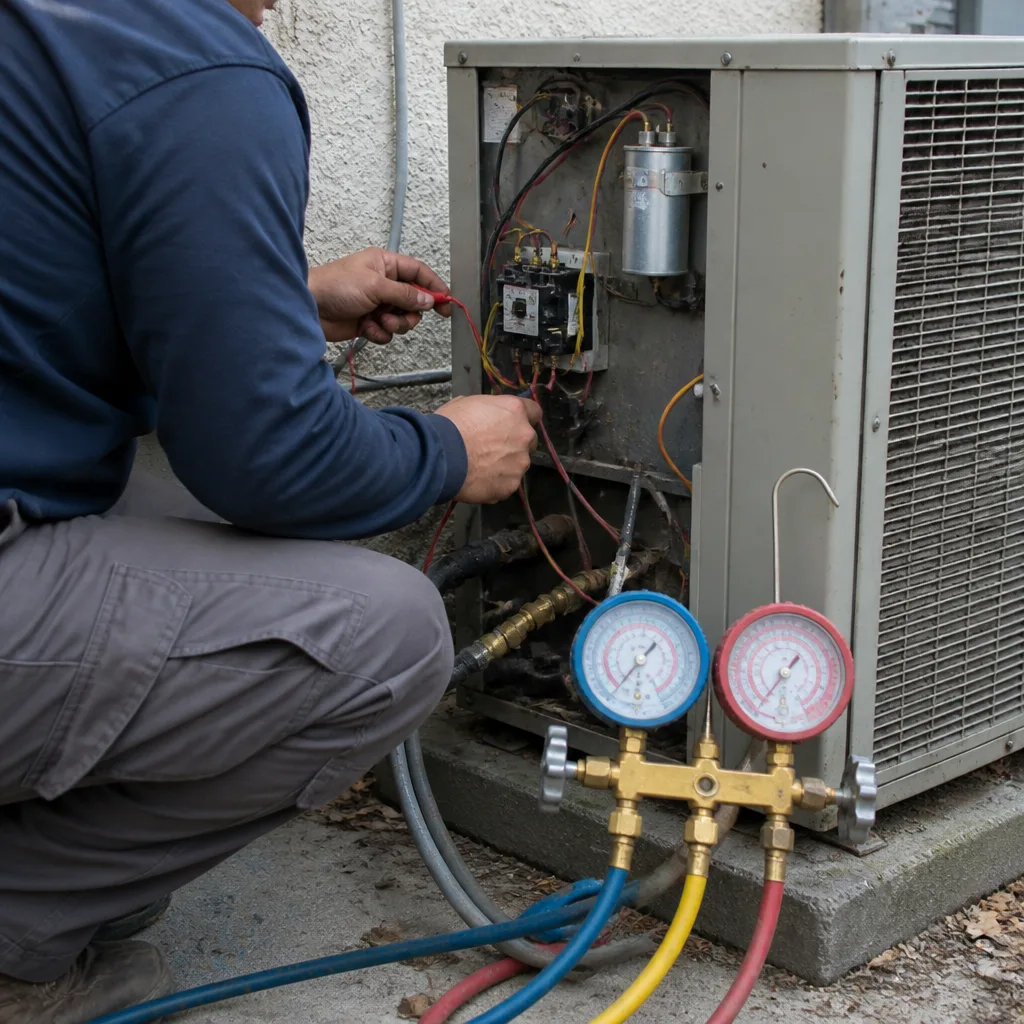
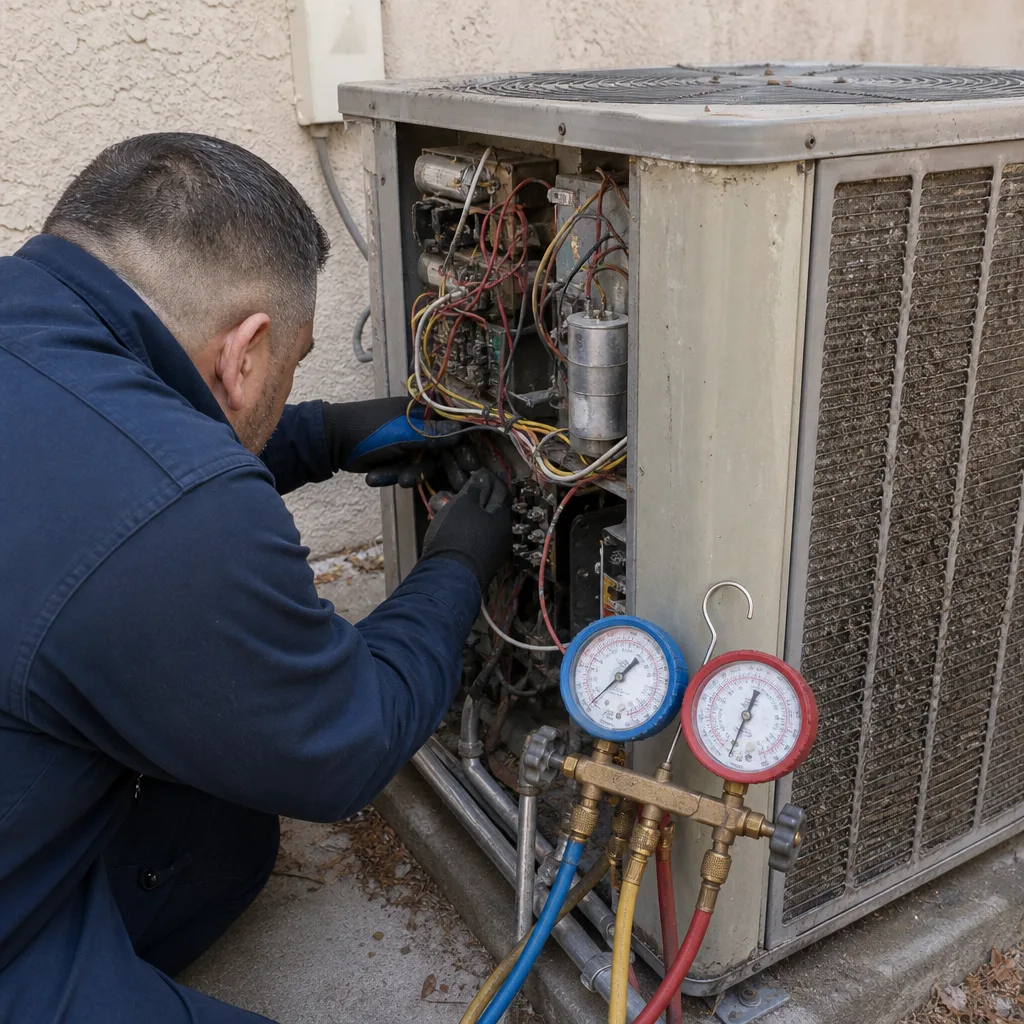
See the difference
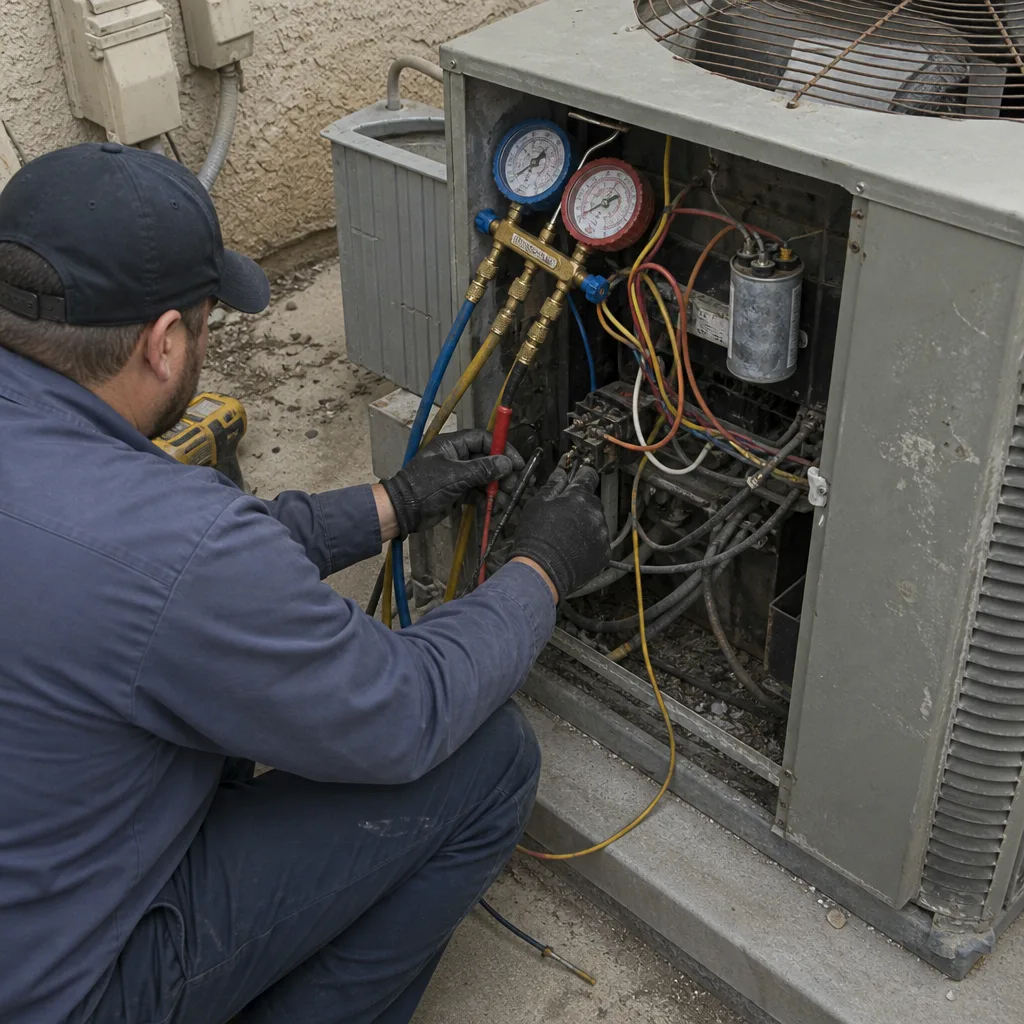 Before
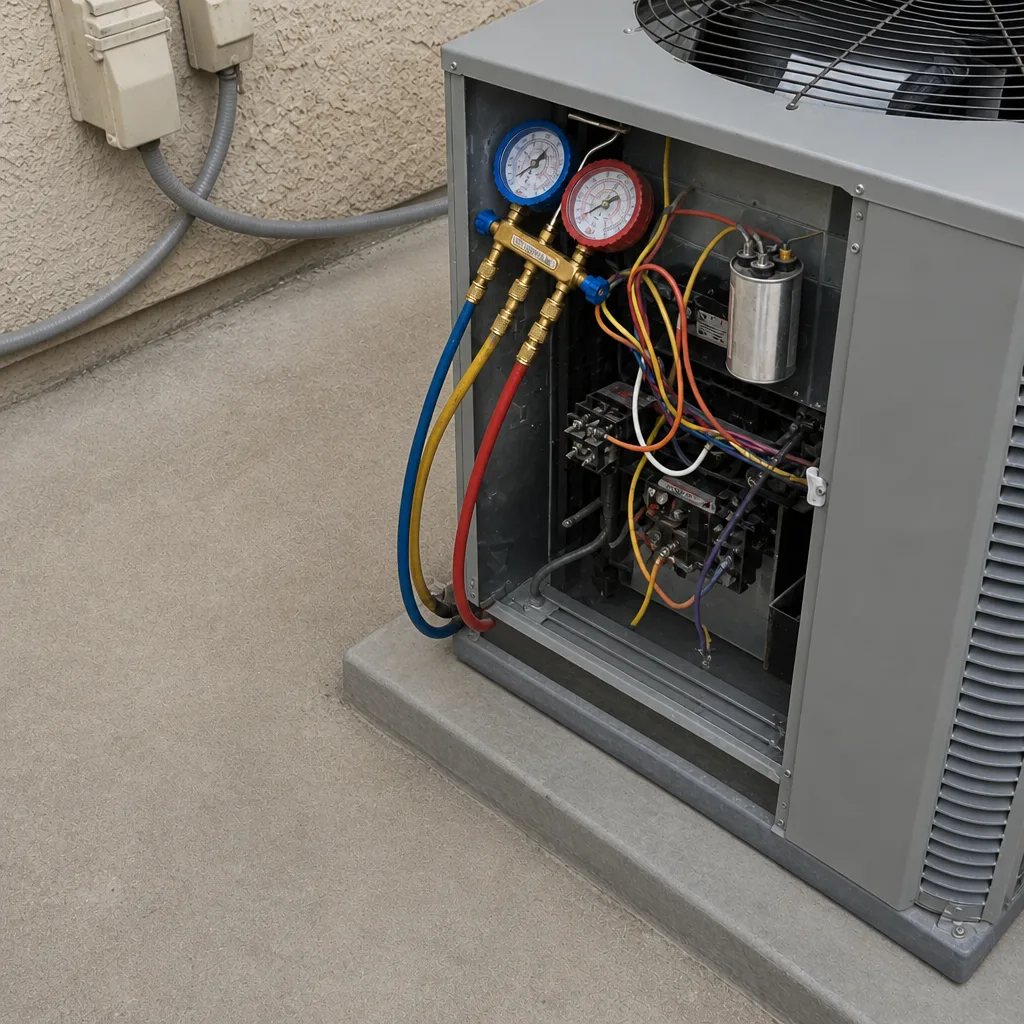 After
 Before
 After
 Before
 After
When to Call a Professional
Some furnace issues are genuinely do-it-yourself territory: filter changes, thermostat batteries, and reading the LED code. Others require a licensed technician. Call a professional if you smell gas anywhere near the furnace, if you see a cracked heat exchanger, if the furnace locks out three times after resets, if the breaker trips when the furnace starts, if you see corrosion or soot around the burners, or if the furnace runs but never reaches the set temperature. For a proper diagnostic without the guesswork, our team handles furnace repair in North Las Vegas with a written price before any work starts and a 365-Day Done Right Promise behind every job. If you’re considering replacement rather than repair, we can also discuss AC Repair in North Las Vegas pairing options to keep both systems matched for efficiency. Meadowsweet Heating & Air North Las Vegas offers free estimates in North Las Vegas – call (844) 320-2997.
Frequently Asked Questions
Turn off the furnace, remove the access panel, find the LED light on the control board, turn the furnace back on, and count the blink pattern – including the pause between sequences. Match that pattern to the legend printed on the inside of the panel or in your owner’s manual. Write the pattern down before calling for repair.
Failed hot surface igniters and dirty flame sensors top the list, especially during the first cold snap in late October. Both are inexpensive to fix, and both are easy to diagnose from the LED code. A plugged filter is a close third, and it’s the cheapest thing to prevent. Call (844) 320-2997 for a free estimate on any furnace repair.
Once is enough if it works. Three failed resets is the signal to stop. Repeated resets after ignition failure can flood the combustion chamber with unburned gas, which is a real safety concern. Turn the furnace off and call us at (844) 320-2997 – estimates are free.
Repair makes sense if the furnace is under 12 years old, the repair is under $600, and it hasn’t failed in the past two seasons. Replacement is usually the smarter move if the unit is 15 or more years old, has a cracked heat exchanger, or has needed multiple repairs in the same heating season. Call us for a written quote on both paths before you decide – no pressure either way.
In most cases, yes – our team prioritizes no-heat calls, and a live person answers the phone every hour of the day, including nights and weekends. Same-day availability depends on the season and the day, but we’ll tell you a real window when you call. Reach us at (844) 320-2997.
We service nine brands, including Carrier, Trane, Lennox, Goodman, Rheem, York, Daikin, Bryant, and American Standard. Our technicians have up to 22 years of experience across all of them. If your unit is on the list, we can walk you through codes and repairs on the phone before we arrive.
The Bottom Line
Modern furnaces hand you the diagnosis in the form of an LED code – if you know where to look. Reading that code, checking the thermostat and power supply, and knowing when to reset and when to stop are the three skills that separate a fast repair from a long wait. In North Las Vegas, where the first cold snap sends demand through the roof, having the model number, error code, and symptom timeline ready when you call speeds up the estimate and often lands you on the same day or the next. Reading your furnace before you call isn’t about fixing it yourself – it’s about arriving at the repair with information that gets your heat back on faster. Live person on every call, written price before any work starts, 365-Day Done Right Promise on every job.
Call (844) 320-2997 for a free estimate in North Las Vegas, or reach us any hour of any day – we answer live, every time.
Written by the team at Meadowsweet Heating & Air North Las Vegas.