
Last updated November 18, 2026
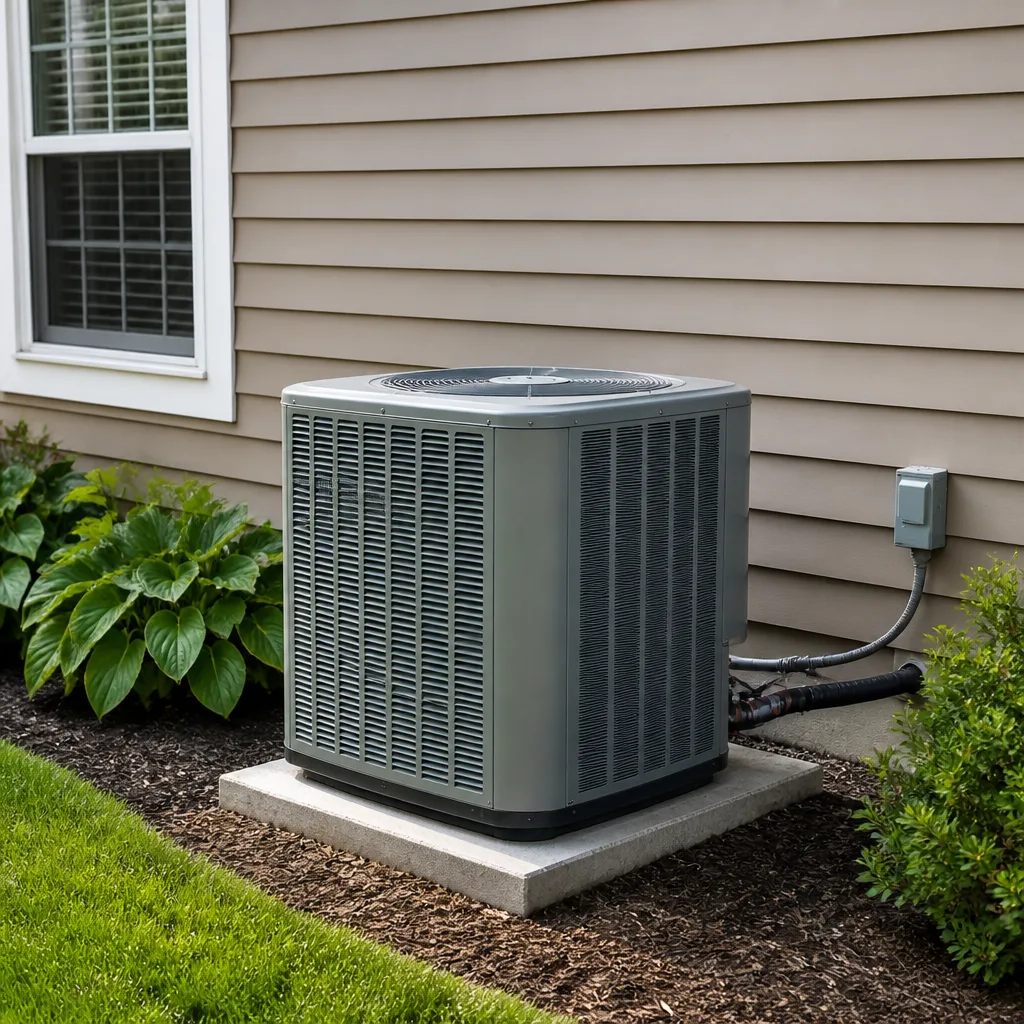 AC repair
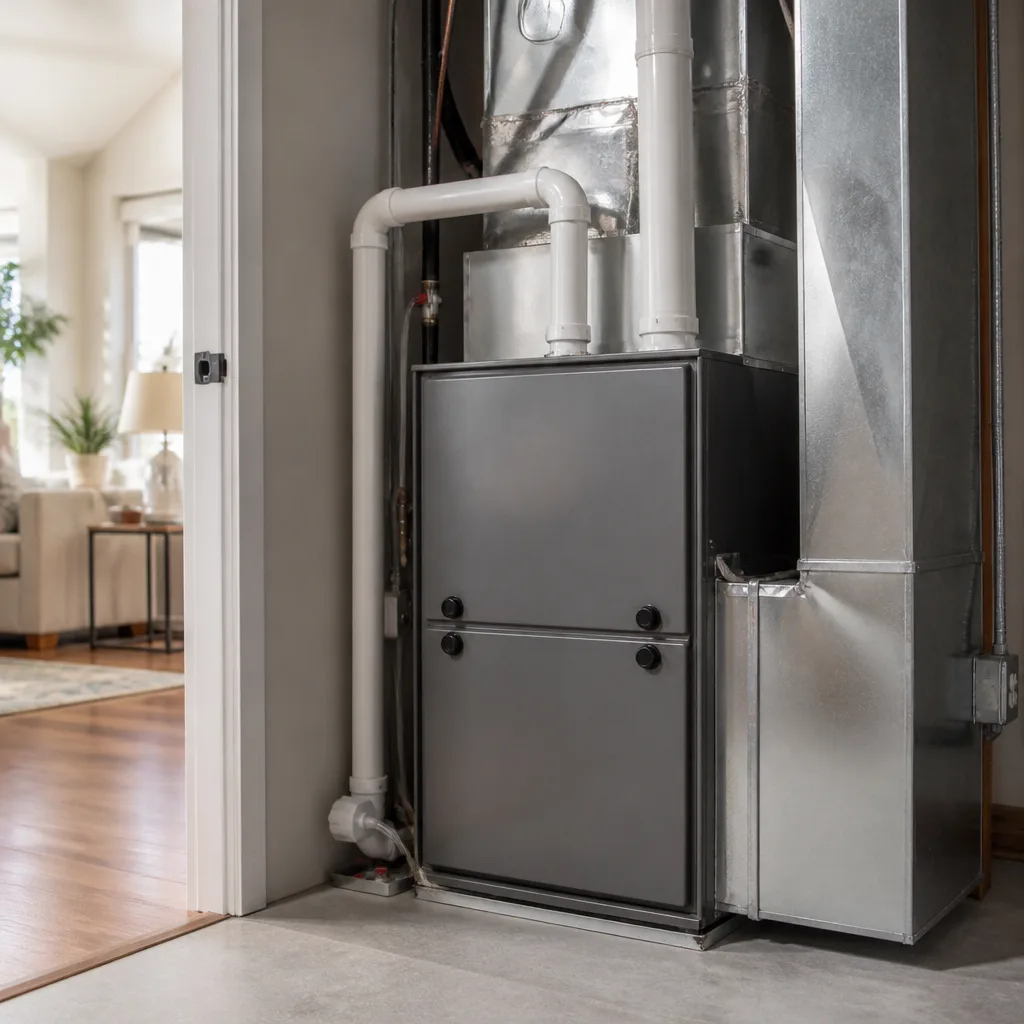 Furnace & heating
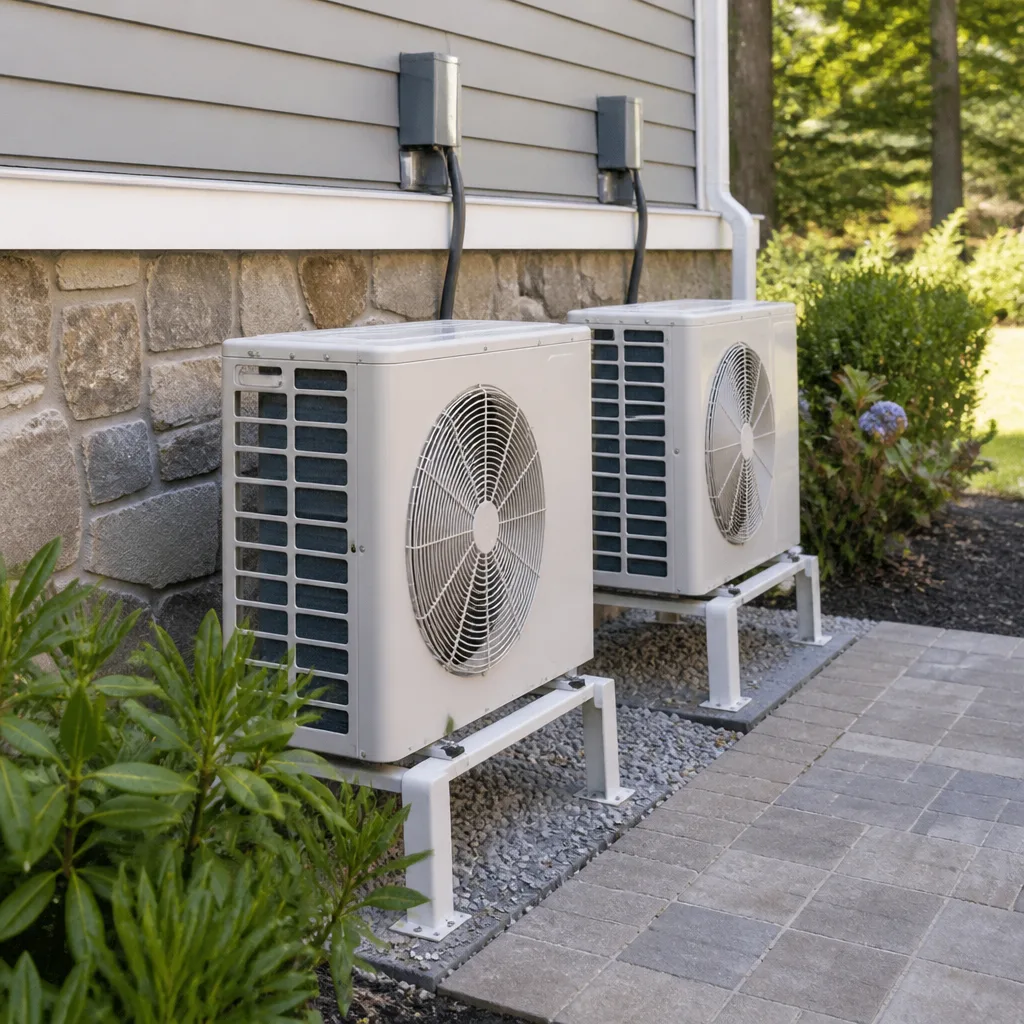 Heat pumps
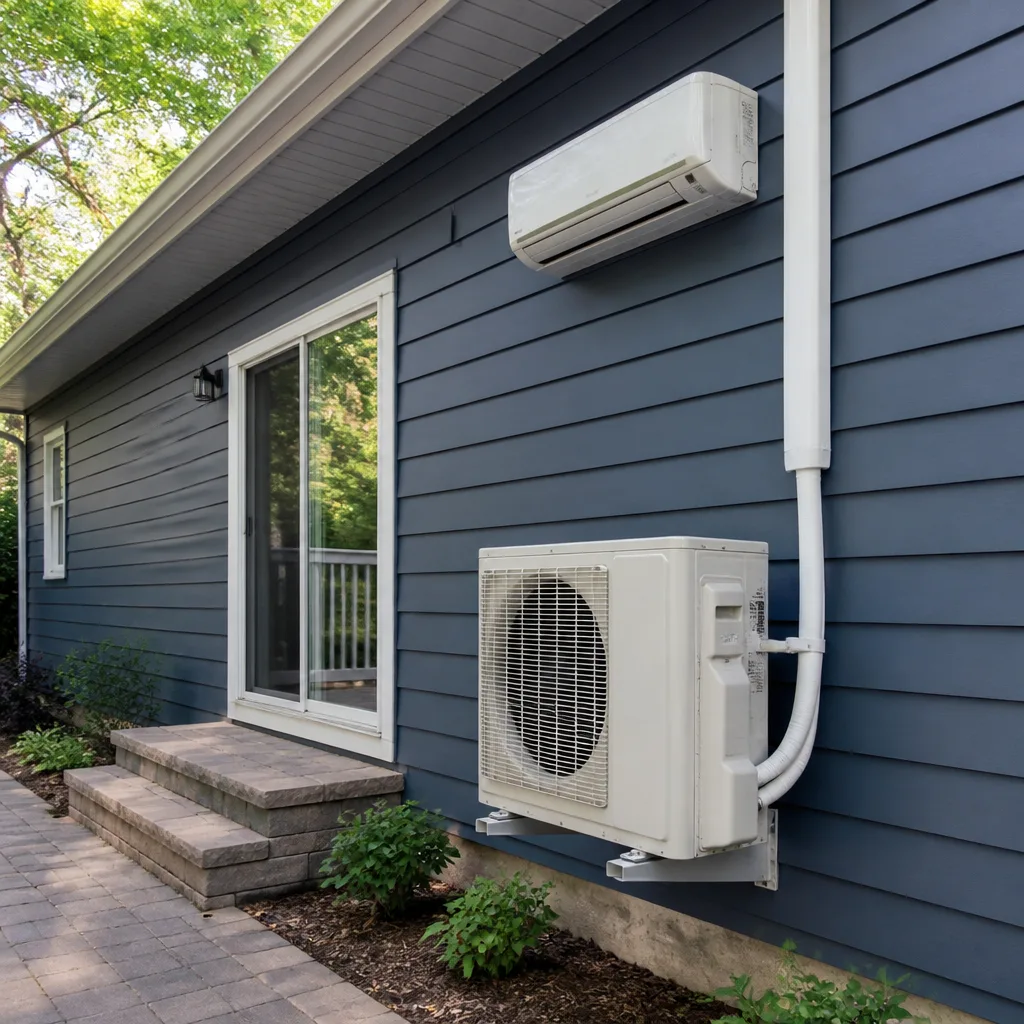 Ductless mini splits
 Carrier
 Trane
 Goodman
Seasonal tune-up and full diagnostic on your Carrier, Trane, or Goodman system - readings shown to you before any repair is proposed
Diagnosis first, numbers second - you approve the repair price before a single part goes in.
Get your free estimateAC Repair Maintenance Schedule: What to Do and When
Skipping the March coil cleaning doesn’t just cost you efficiency points. It means your AC enters June – when North Las Vegas routinely hits 108°F – with restricted airflow, and restricted airflow can push discharge air temperature high enough to trigger a compressor lockout within days. The standard “change your filter every 90 days” advice was written for mild climates. Here, it causes real equipment damage. Below is a month-by-month maintenance calendar built around actual desert conditions, NV Energy peak-demand windows, and the way homes in North Las Vegas heat and cool. By the end you’ll know exactly what to do each month, what to hand to a licensed technician, and how to log it all so problems get caught before they become emergencies.
Quick Answer
In North Las Vegas, your AC needs filter checks every 30 to 60 days during cooling season, a professional coil cleaning and refrigerant pressure check each spring (March or April, before the first 100°F week), and a fall furnace inspection before heating season. Homeowners can safely handle filters, outdoor unit clearing, and thermostat checks; coil cleaning and refrigerant work should always go to a licensed technician. Everything else falls onto a simple 12-month calendar we lay out below.
Styles & brands we work with
- AC repair
- Furnace & heating
- Heat pumps
- Ductless mini splits
- Carrier
- Trane
- Goodman
Table of Contents
- Why a Desert Maintenance Schedule Is Different
- The 12-Month North Las Vegas Maintenance Calendar
- Filter Replacement Intervals by Type and Location
- What You Can Do Safely vs. What Needs a Technician
- How to Log Maintenance So a Technician Can Spot Patterns
- NV Energy Peak-Demand Windows and Your Maintenance Timing
- Common Mistakes to Avoid
- When to Call a Professional
Why a Desert Maintenance Schedule Is Different
A schedule written for Atlanta or Seattle assumes moderate summers and mild shoulder seasons. North Las Vegas doesn’t have those. Our cooling season runs from roughly April through October, and July afternoons regularly push past 110°F. When outdoor temperatures sit above 105°F for days at a time, your system doesn’t just work harder – it runs continuously, and every small restriction in airflow compounds into heat stress on the compressor.
That’s why a March coil cleaning matters more here than a June one does in other markets. By the time the first real heat wave hits, you want your evaporator coil clean, your refrigerant charge verified, and your condenser clear of the dust and cottonwood fluff that accumulate through spring. In our experience across North Las Vegas neighborhoods like Aliante, Centennial, and the older tracts near Civic Center Drive, the homes that fail in the first hot week of June are almost always the ones that skipped spring service.
There’s a second layer of local reality: new construction. North Las Vegas is one of the fastest-growing cities in Nevada, and that means active building sites near established neighborhoods. Construction dust travels. Homes within a few blocks of an active site need filter changes roughly twice as often as the manufacturer recommends – sometimes every three weeks during grading and framing phases.
And the desert air itself carries more than dust. Spring pollen from olive and palm trees, summer monsoon grit, and year-round caliche dust all end up on your condenser fins. If you’ve ever wondered why AC repair in North Las Vegas calls spike in early summer, this is a big part of the reason.
The 12-Month North Las Vegas Maintenance Calendar
Here’s the schedule we recommend to every homeowner we work with. Specific tasks, specific months. Print this and tape it inside a utility closet door.
- January: Replace or clean the filter. Check the outdoor unit for debris after winter winds. Test the heating system with a short run. Listen for unusual sounds.
- February: Check filter again. Clear any leaves or grit from around the outdoor condenser. Inspect the condensate drain line for algae growth (a common issue when heating runs daily).
- March: Schedule professional spring AC service. This is the single most important month on the calendar. Coil cleaning, refrigerant pressure check, and capacitor testing should all happen now, before the first 100°F day.
- April: Replace filter. Test the AC for 20-30 minutes on a mild afternoon. Note any weird smells, weak airflow, or unusual cycling.
- May: Replace filter. Verify thermostat schedule is set for cooling season. Clear debris from outdoor unit again (spring winds bring it). Check that the condensate drain is flowing freely.
- June: Replace filter. Walk outside and listen to the condenser – it should hum steadily, not click or rattle. If you’re on NV Energy’s AC cycling program, confirm your enrollment is active and note the peak windows.
- July: Replace filter. Check outdoor unit clearance (24 inches minimum). Watch for ice on the indoor coil or refrigerant lines – that indicates a problem and requires a tech call.
- August: Replace filter. Inspect window and door seals; cool air lost here makes the system work harder in peak heat. Schedule any follow-up service now, before fall.
- September: Replace filter. Clear the outdoor unit one more time before the monsoon dust settles. This is the last month to catch summer-related wear before heating season.
- October: Schedule professional fall furnace service. Heat exchanger inspection is critical – it’s a safety issue. Replace filter.
- November: Test heating for 20-30 minutes. Replace filter. Check for unusual smells when the furnace first fires (a light dust-burning smell is normal for a few minutes; persistent odor is not).
- December: Replace filter. Check the outdoor unit for debris. If you’re traveling for the holidays, set the thermostat to 60°F rather than turning the system off entirely – it prevents pipe freeze issues in rare cold snaps.
Two months carry the most weight: March and October. March protects your cooling system before summer; October protects your family’s safety and your heating system before winter. If you only do two things per year, do those two. For a full furnace tune-up reference, see our guide on furnace repair in North Las Vegas.
Filter Replacement Intervals by Type and Location
“Every 90 days” is a national average. In North Las Vegas, it’s often wrong by a factor of three. Here’s how we adjust for filter type and location.
1-inch fiberglass filters
- Standard homes away from construction: every 30 days during cooling season, every 60 days during heating season.
- Homes near active construction sites: every 14-21 days until the site is finished.
- Homes with pets: every 21-30 days year-round.
4-inch MERV-11 filters
- Standard homes: every 60-90 days. The deeper pleat holds far more dust before it restricts airflow.
- Homes near construction: every 45 days.
- Homes with pets or allergy-sensitive family members: every 45-60 days.
1-inch pleated MERV-8 filters
- Standard homes: every 30-45 days in summer, every 60 days in winter.
- Homes near construction: every 21-30 days.
A simple test: hold the filter up to light. If you can’t see light through the mesh, it’s overdue regardless of what the calendar says. In the expanding tracts on the north side of North Las Vegas, we tell homeowners to just assume construction dust and check every three weeks from April through September. It takes thirty seconds.
One caution on high-MERV filters: pushing MERV-13 or higher into a system not designed for it can restrict airflow badly enough to strain the blower. If you want upgraded filtration, ask a technician what your specific Carrier or Trane air handler can handle before switching. Installing the wrong filter is one of the most common and expensive maintenance mistakes we see.
What You Can Do Safely vs. What Needs a Technician
Two maintenance tasks must be done by a licensed technician. Everything else on this list is safe for a homeowner with basic comfort around tools.
Homeowner-safe tasks
- Replacing air filters (the single biggest DIY win)
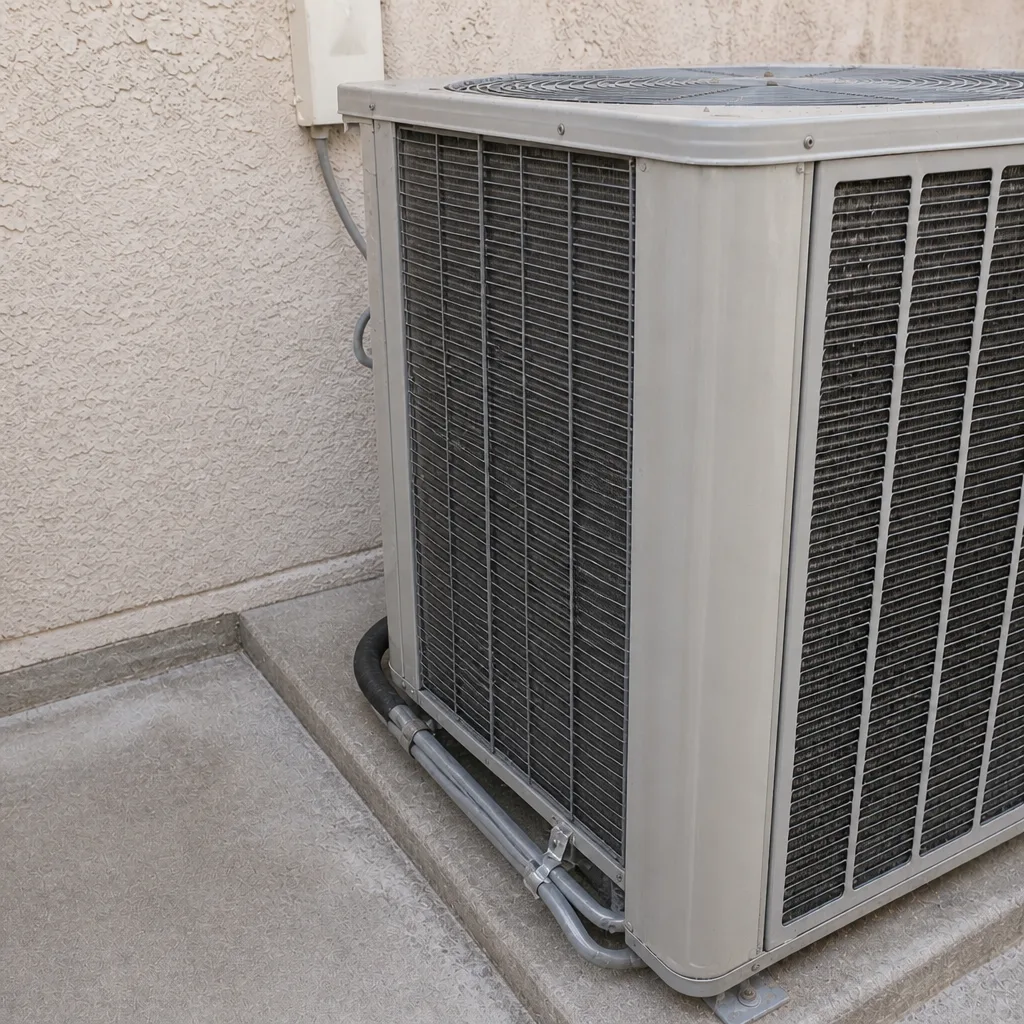
- Clearing leaves, debris, and cottonwood fluff from around the outdoor condenser
- Hosing off the exterior condenser cabinet – with the power off at the disconnect
- Checking the condensate drain pan for standing water
- Verifying thermostat schedules and battery
- Listening for unusual sounds and noting them in your log
- Testing the system briefly at the start of each season
Tasks for a licensed technician only
- Coil cleaning. The evaporator coil sits inside the air handler, requires disassembly, and involves chemical cleaners and water management. Done wrong, it damages the coil. Done right, it restores the airflow that desert summers demand.
- Refrigerant pressure check. Refrigerant is a pressurized, regulated substance. Handling it without certification is illegal under federal law, and misdiagnosing charge issues can destroy a compressor. This is where experience matters most – our technicians have up to 22 years of experience reading charge and pressure under high-ambient desert conditions.
There are a handful of borderline tasks – capacitor testing, blower motor inspection, heat exchanger examination – that a confident DIYer might attempt, but that we strongly recommend leaving to a pro. Capacitors can hold a dangerous charge after power-down, and heat exchanger cracks on a gas furnace are a genuine carbon monoxide concern.
How to Log Maintenance So a Technician Can Spot Patterns
A checklist tells you what you did. A log tells a technician what’s going wrong. The difference is enormous.
Buy a simple notebook and keep it near the thermostat or in the utility closet. Or use a shared note on your phone. The format below is what we’ve found makes the biggest difference during service calls.
- Date and time of each entry. Yes, every time.
- Task performed. “Replaced filter” or “Hosed condenser” – brief is fine.
- What you observed. Filter color (white, light gray, dark gray, black). Airflow (strong, weak, uneven). Sounds (steady, clicking, rattling, nothing). Outdoor unit behavior.
- Thermostat setpoint and outdoor high temp. A single line: “set 78°F, outdoor high 112°F.”
- Any anomalies flagged for a technician. Even small ones. “Guest room vent feels weaker than others.”
Why does this matter? Because the most useful diagnostic signal isn’t what’s happening today – it’s what changed. If your filter used to need replacing every 45 days and now needs it every 15, that’s a story. If the guest room vent has been weak for two months, that’s a different story than if it just started yesterday. A technician who can see the pattern can solve the root cause on the first visit instead of the third.
Bring the notebook out when the tech arrives. In our experience, homes with a maintenance log get more accurate diagnoses and fewer “we need to come back and check again” follow-ups. For bigger equipment decisions like AC installation in North Las Vegas, that history can also shape which American Standard or Lennox model fits your home’s actual load.
NV Energy Peak-Demand Windows and Your Maintenance Timing
NV Energy operates AC cycling programs that let the utility briefly reduce cooling during peak demand events – usually late afternoon to early evening on the hottest days. If you’re enrolled, your compressor short-cycles through the summer more than a non-enrolled home’s does.
What does that mean for maintenance? Two things.
First, schedule your spring technician visit before your cycling program typically starts issuing events – usually by mid-May. You want a clean coil, verified charge, and tested capacitor in place before the system starts getting short-cycled. A system running on a weak capacitor under cycling stress is far more likely to fail in July.
Second, log your cycling events. When a technician sees “outdoor 114°F, three cycling events today” next to a note about the system struggling, they know exactly what stress load to account for. Not every “my AC can’t keep up” complaint is a system problem – sometimes it’s cycling events plus a 115°F afternoon, and the answer is a small setpoint adjustment rather than a repair.
If you’re not enrolled in NV Energy’s program, ask your technician whether a smart thermostat rebate makes sense for your system. Programmable schedules pair especially well with cycling programs, because the house pre-cools before the peak window rather than fighting it.
Common Mistakes to Avoid
- Following the 90-day filter rule. In North Las Vegas, that rule fails from April through October. Check the filter every 30 days in summer, more often near construction.
- Skipping the March coil cleaning. This is the mistake that sends the most families to us in June. A dirty coil entering the first 108°F week can trigger compressor lockout within days, as we described at the top.
- Switching to a high-MERV filter without asking. A MERV-13 in a system designed for MERV-8 can restrict airflow enough to strain the blower motor and freeze the indoor coil.
- Covering the outdoor condenser with a tarp “to protect it” while it runs. This traps heat and can fry the compressor within a single afternoon. Tarps are only for the off-season, and only after the breaker is off.
- Ignoring a rattle for weeks. Rattles are usually loose panels or failing fan bearings. Small now. Expensive after a month of 110°F afternoons.
- Turning the system fully off when traveling in winter. A rare North Las Vegas cold snap plus an off system can freeze pipes in exposed attic runs. Set the thermostat to 60°F instead.
- Not writing anything down. Even a rough log turns guesswork into diagnosis. Skipping it is the quiet mistake that costs the most across a system’s life.
When to Call a Professional
Call us when: your AC is running but the house won’t cool below 80°F on a 110°F day; you hear clicking, rattling, or the compressor cycling on and off rapidly; you see ice forming on the indoor coil or refrigerant lines; your filter is dark gray after two weeks instead of the usual month; or your heating system’s flame looks yellow rather than blue, or you smell gas anywhere near the furnace. Any of these deserve a same-day look, especially in July and August when heat illness is a real risk for kids and older family members.
Meadowsweet Heating & Air North Las Vegas offers free estimates in North Las Vegas – call (844) 320-2997 and a live person will pick up, day or night. Every visit starts with a written price before any work begins, and every job is backed by our 365-Day Done Right Promise.
See the difference
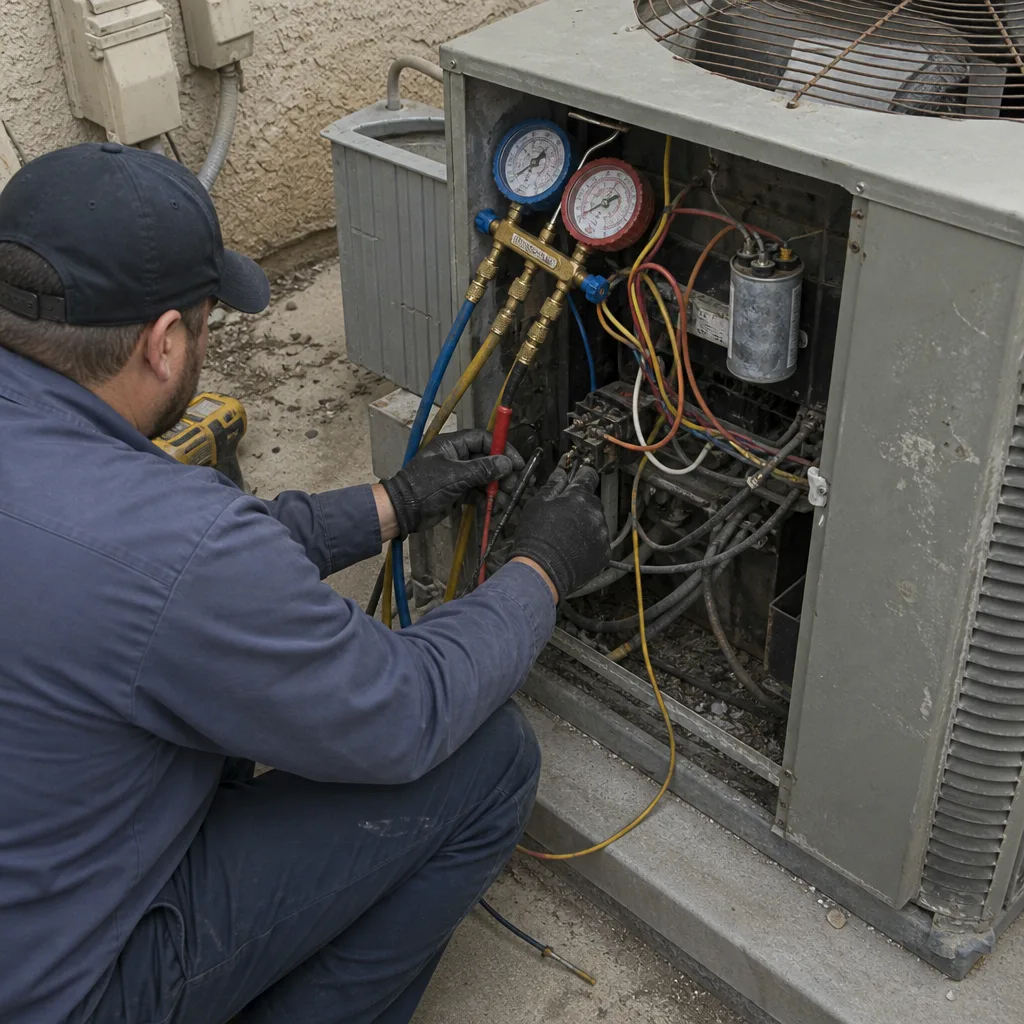 Before
 After
 Before
 After
 Before
 After
Frequently Asked Questions
Every 30 days during cooling season for a standard 1-inch fiberglass filter, every 60-90 days for a 4-inch MERV-11, and every 14-21 days if your home is near an active construction site. The desert dust and construction activity around North Las Vegas mean the national “every 90 days” rule is usually too lax here. If you can’t see light through the filter when you hold it up, it’s overdue.
March is the sweet spot in North Las Vegas – early enough to be ready before the first 100°F week and before NV Energy cycling events start. A March visit lets a technician clean the coil, verify refrigerant charge, and test the capacitor while the system is still cool, so any repairs can be scheduled with plenty of runway. Call (844) 320-2997 to book a spring visit and get a written price before any work starts.
No – coil cleaning should always go to a licensed technician. The evaporator coil sits inside the air handler and requires disassembly, chemical cleaners, and careful water management. A misdirected spray can damage electrical components or bend the fins. The condenser fins are also delicate and easy to crush. Stick to filters and outdoor clearing as a homeowner; leave the coil to a pro.
NV Energy AC cycling events, a high setpoint, and outdoor temperatures above 112°F can all make a healthy system feel weak. If cycling events are enrolled, expect slight temperature rise during event windows; pre-cooling the house before peak hours helps. If the struggle happens outside cycling windows, or the house can’t hold 78°F at any point, call us for a diagnostic – there’s something else going on.
Yes, if you have a gas furnace. Fall service covers the heat exchanger, burners, and flue – all safety-critical components that can fail silently. A cracked heat exchanger is a carbon monoxide risk, and no homeowner inspection can catch it. If your home is all-electric with a heat pump, one annual service visit in spring typically covers both modes; ask your technician at the spring appointment whether you need a separate fall check.
A rough rule: if the repair costs more than 40% of a new system and the equipment is over 12 years old, replacement usually wins on total cost. But that math changes in North Las Vegas because our extreme summers shorten equipment life faster than the national average. For an honest read, ask a technician to give you a written repair-versus-replace comparison – we provide that at no charge during any service visit. For a full picture of new system pricing, our AC installation in North Las Vegas page walks through options.
The Bottom Line
A desert AC maintenance schedule isn’t the same as a national one. In North Las Vegas, filters need checking every 30 days through summer, spring service needs to happen in March before the first heat wave, and fall service needs to happen in October before the furnace gets used daily. The two tasks that must go to a licensed technician are coil cleaning and refrigerant pressure check – everything else you can do. Log what you see. Then when something feels off, you’ll have a pattern to show a technician, not just a hunch. That’s the whole game: catch small things before they become June emergencies.
If you’d like a schedule tailored to your specific system – whether it’s a Carrier, Trane, or American Standard – our team at Meadowsweet Heating & Air North Las Vegas home is happy to help. Call (844) 320-2997 for a free estimate. We’ll show up with shoe covers and drop cloths, give you a written price before we start, and send you a photo of the clean-up before we leave. The 365-Day Done Right Promise stands behind every visit.
Written by the team at Meadowsweet Heating & Air North Las Vegas.