
Last updated November 18, 2026
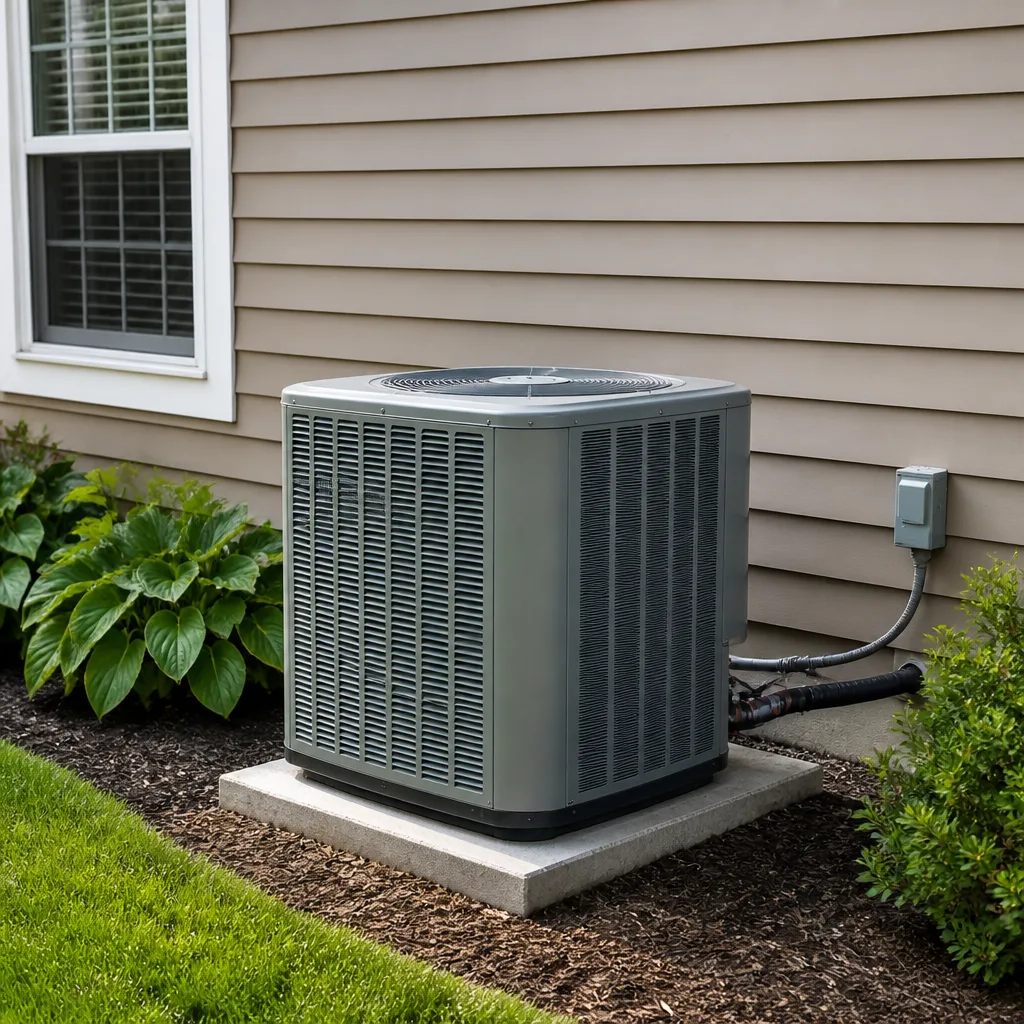 AC repair
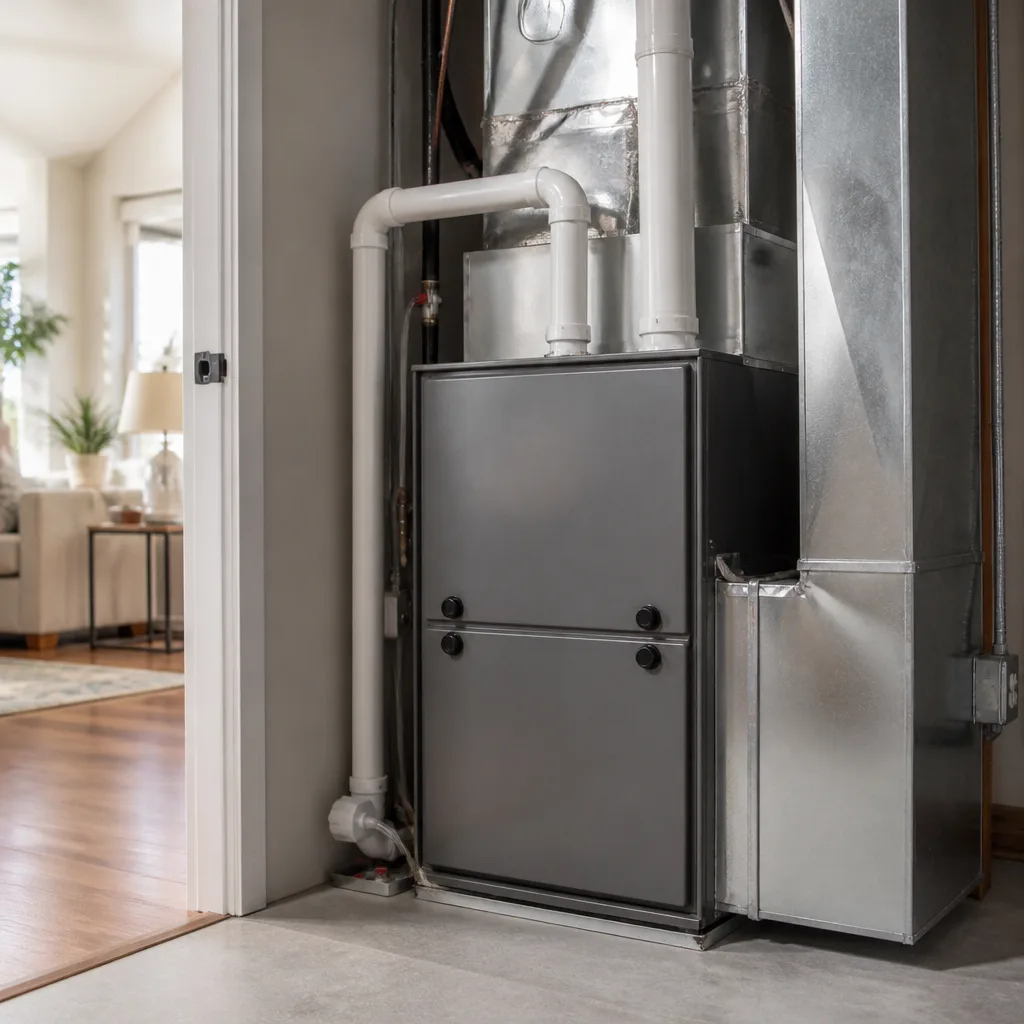 Furnace & heating
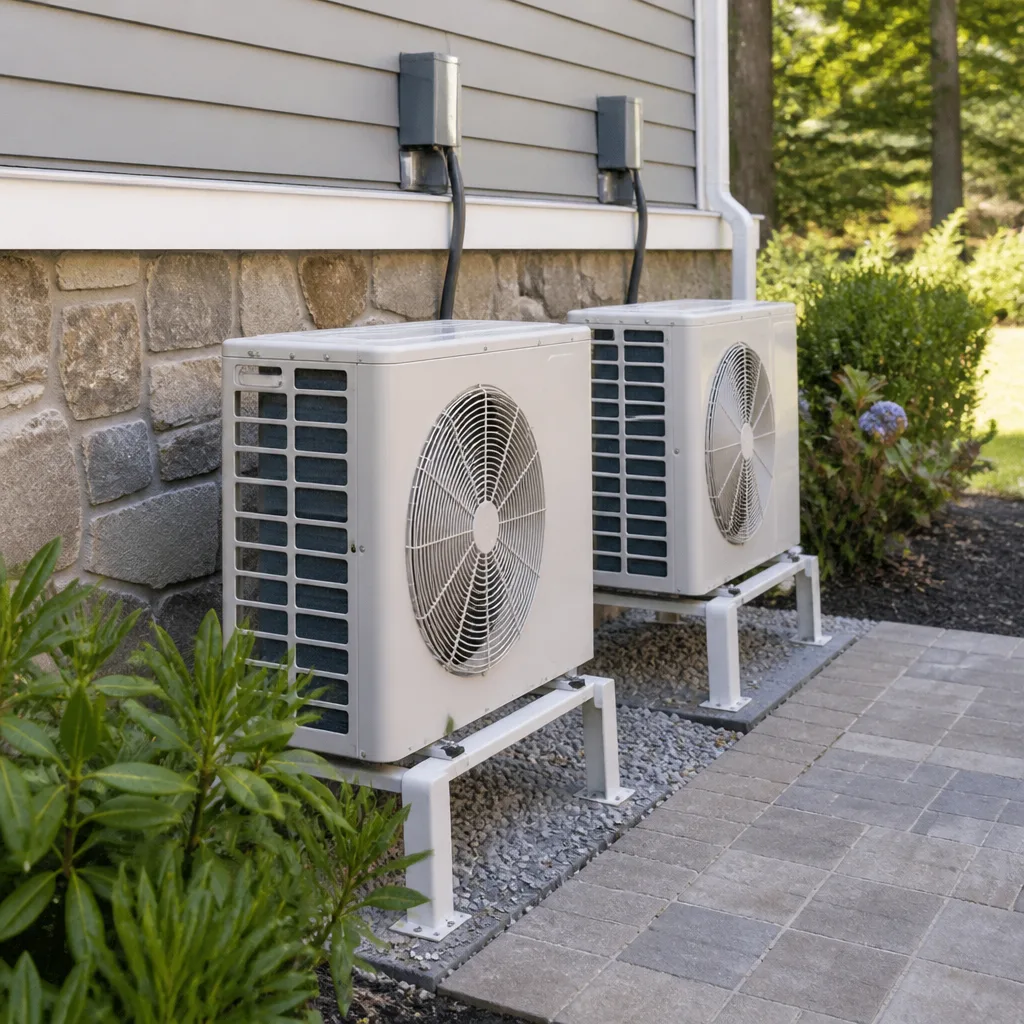 Heat pumps
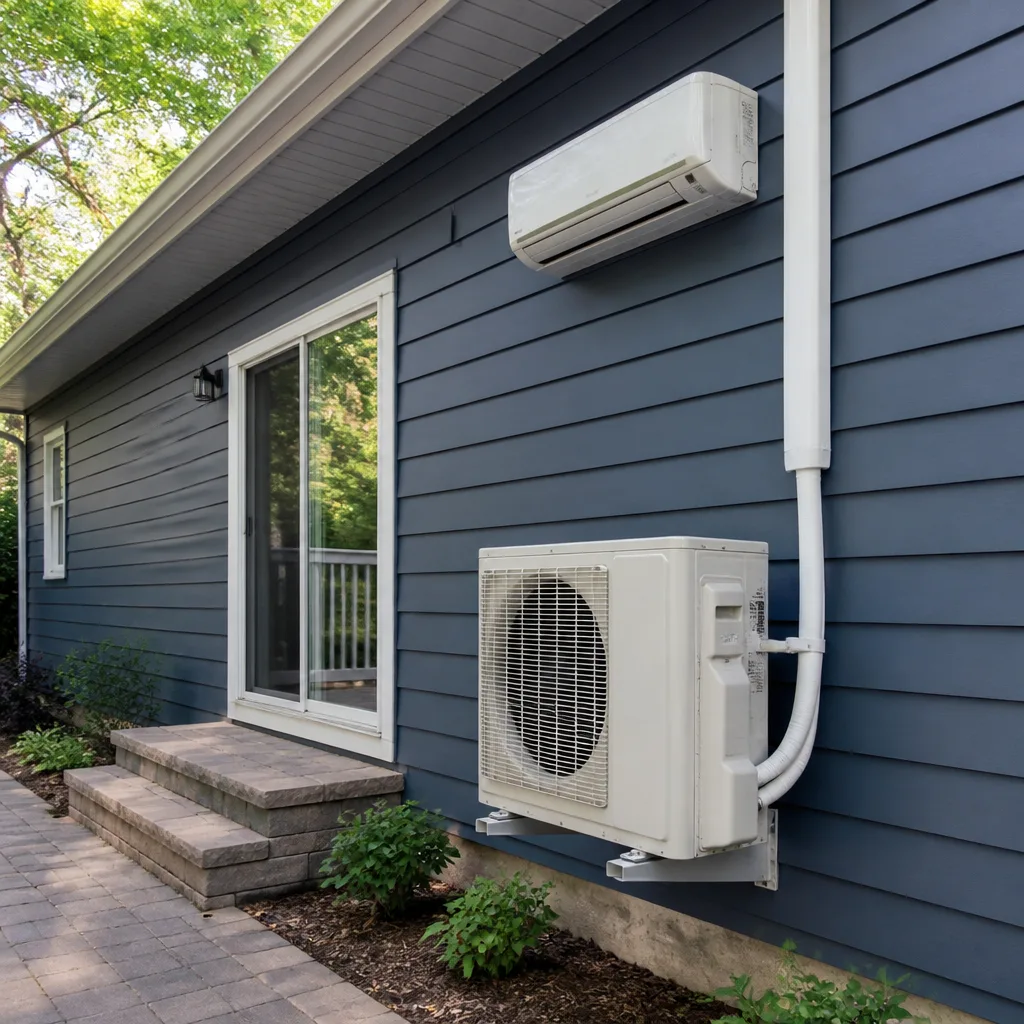 Ductless mini splits
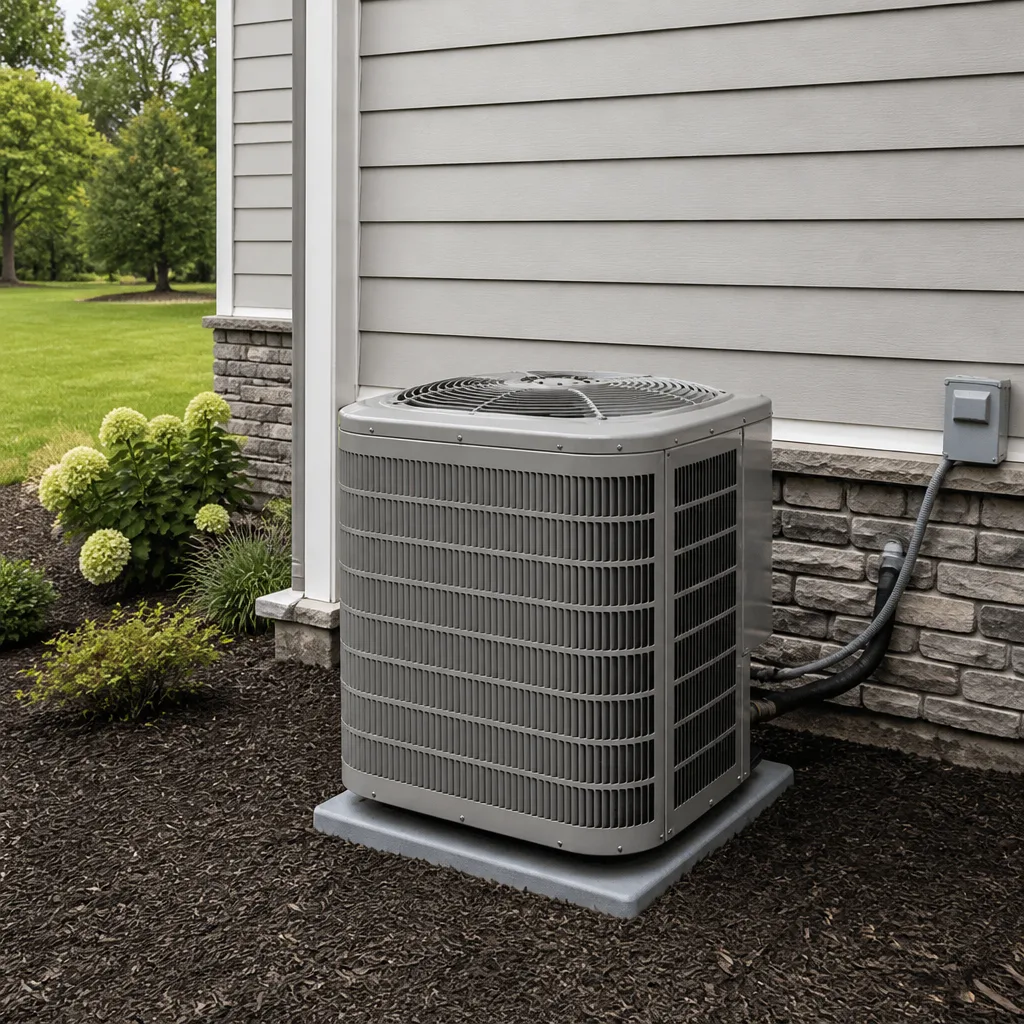 Carrier
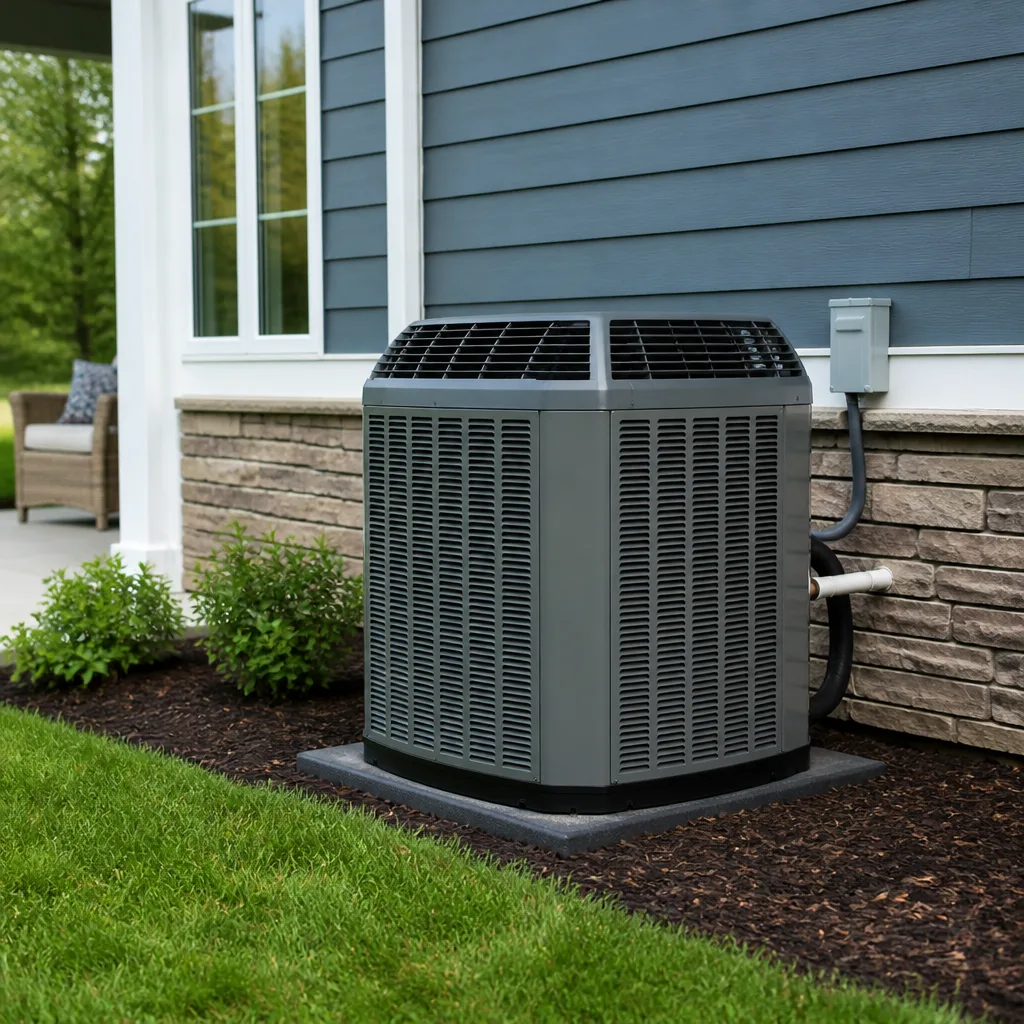 Trane
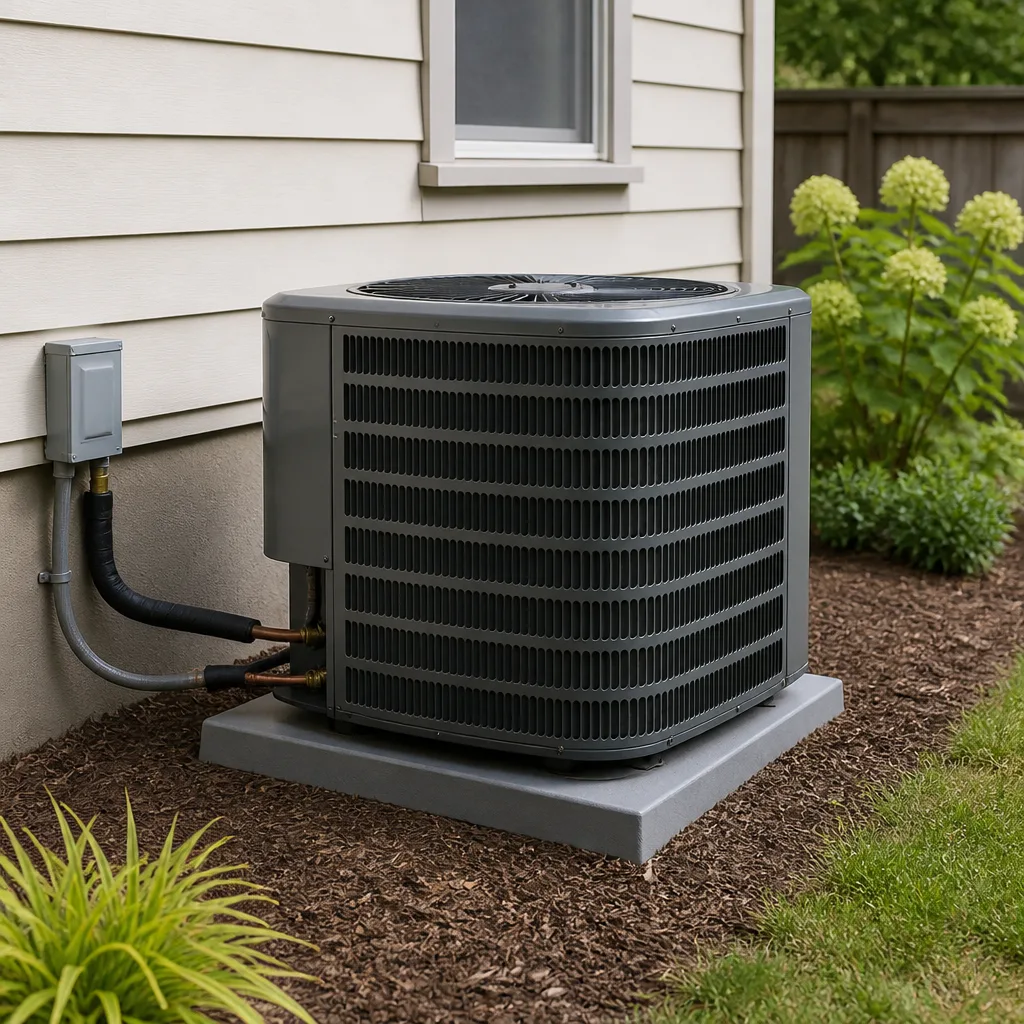 Goodman
Seasonal tune-up and full diagnostic on your Carrier, Trane, or Goodman system - readings shown to you before any repair is proposed
Diagnosis first, numbers second - you approve the repair price before a single part goes in.
Get your free estimateAC Repair Warning Signs Every Homeowner Should Know
Most guides hand you a checklist of symptoms as if each one lives alone. In North Las Vegas, they rarely do. Here’s what we see on service calls across the valley: a refrigerant leak and a frozen coil show up together, and the frozen coil is the part you can actually see. You notice the ice, you turn the system off, maybe you call someone about “a frozen unit” – but the leak underneath it keeps going until the compressor seizes and a $200 recharge turns into a $1,400 repair. The symptom you can see is often not the problem you have. This guide teaches you to read symptoms in clusters, sort them by urgency, and describe them so the first visit fixes the real thing.
Quick Answer
Watch for symptom clusters, not single signs. Ice on the refrigerant lines together with warm air and short cycling points to a refrigerant problem; rising dust with a musty smell usually means airflow or a wet coil; and a burning smell, hissing, or repeated breaker trips are same-day safety concerns. In North Las Vegas, extreme heat and dust accelerate all of these, so a cluster that might be “wait a week” elsewhere often deserves a call today.
Styles & brands we work with
- AC repair
- Furnace & heating
- Heat pumps
- Ductless mini splits
- Carrier
- Trane
- Goodman
Table of Contents
- The Three Tier Urgency System
- Symptom Clusters That Always Travel Together
- Warning Signs Specific to North Las Vegas Conditions
- Indoor Air Quality Signals Homeowners Misread
- How to Describe a Symptom So the First Visit Fixes It
- What a Technician Actually Checks (and Why)
- Repair or Replace? Reading the Warning Signs Backward
- Common Mistakes to Avoid
The Three Tier Urgency System
Sorting a symptom by urgency is the most useful thing you can do before you call anyone. Instead of asking “is this bad?” ask “which tier is this in?” We’ve found that homeowners who can name the tier get faster, cheaper resolutions because they’re not waiting on things that shouldn’t wait and not flooding the phone line over things that can be scheduled.
Tier 1: Cosmetic and efficiency issues (schedule within the month)
- Your electric bill climbing 10 to 15 percent with no change in habits
- Slightly uneven cooling between rooms
- A faint rattle or hum that comes and goes
- Dust collecting on supply registers faster than usual
Tier 2: Repair-within-a-week issues (call now, schedule this week)
- Ice on the refrigerant lines or the indoor coil
- Short cycling every few minutes
- Warm air from some vents, cool from others
- Musty smell that returns within days of a filter change
- Water pooling in the drain pan or near the air handler
Tier 3: Same-day safety concerns (call right now)
- Any burning or electrical smell from the unit or vents
- A hissing or bubbling sound near refrigerant lines
- The breaker tripping more than once
- Complete loss of cooling during a heat advisory
- Visible sparks, scorch marks, or a unit that won’t shut off
When a Tier 1 symptom has been ignored for two summers in North Las Vegas, it frequently graduates to Tier 2. That’s the pattern we see most: small signals left alone because the house is “still cool enough.”
Symptom Clusters That Always Travel Together
Here’s the core idea of this guide: isolated symptoms mislead, clusters diagnose. When you call, the pattern you describe tells a technician what to bring and what to test first, which is what makes the visit corrective instead of just exploratory.
Cluster A: Ice on the lines, warm air, and short cycling
This cluster almost always points to a refrigerant issue, not a thermostat issue. The frozen coil is the visible symptom; the leak is the problem. As refrigerant drops, the coil temperature falls below freezing, condensation freezes, airflow chokes, and the system begins to short cycle. Homeowners who turn the thermostat down further make it worse. Turn the system off, let the ice melt, and call. We’ve seen this cluster turn into a seized compressor in a matter of weeks during July in North Las Vegas.
Cluster B: Dust intrusion, musty smell, and rising humidity
Tight, well-sealed North Las Vegas homes hold moisture when airflow drops. A clogged filter, a wet evaporator coil, or a fan running slower than it should all push this cluster forward. It reads as “the house feels stale,” which gets blamed on carpets or cleaning, not on the AC.
Cluster C: Rattle, rattle, then no cool
A repeating rattle that becomes a hard stop is usually a failing fan motor bearing or a loose blower wheel. Catch it early in Tier 1 and it’s a modest repair; wait until it stops and you may be looking at a motor replacement on one of the brands we service, whether that’s a York fan assembly or a Daikin blower.
Cluster D: Cyclic water near the air handler, then a shutdown
A clogged condensate drain drips, then backs up, then trips the float switch and stops the system. In North Las Vegas, mineral-heavy condensate makes this drain clog faster than most homeowners expect – a reason we include it in every diagnostic.
Warning Signs Specific to North Las Vegas Conditions
An AC running in North Las Vegas is not working under the same conditions as the same unit in a coastal city. The valley’s extreme heat, dust, and mineral-heavy water supply produce recognizable patterns that you can learn to hear and see in your own house.
What extreme heat stress looks like
Systems here often run eight to twelve hours straight in July and August, not the two or three hours a day a unit in a milder climate logs. That continuous run exposes anything marginal. A capacitor that would last a decade in cooler air may fail in three summers here. A compressor that’s slightly undercharged works twice as hard. The signal to watch is a system that runs without stopping and still doesn’t hold temperature – that’s heat stress, and it’s a Tier 2 call, not a thermostat adjustment.
What dust intrusion looks like
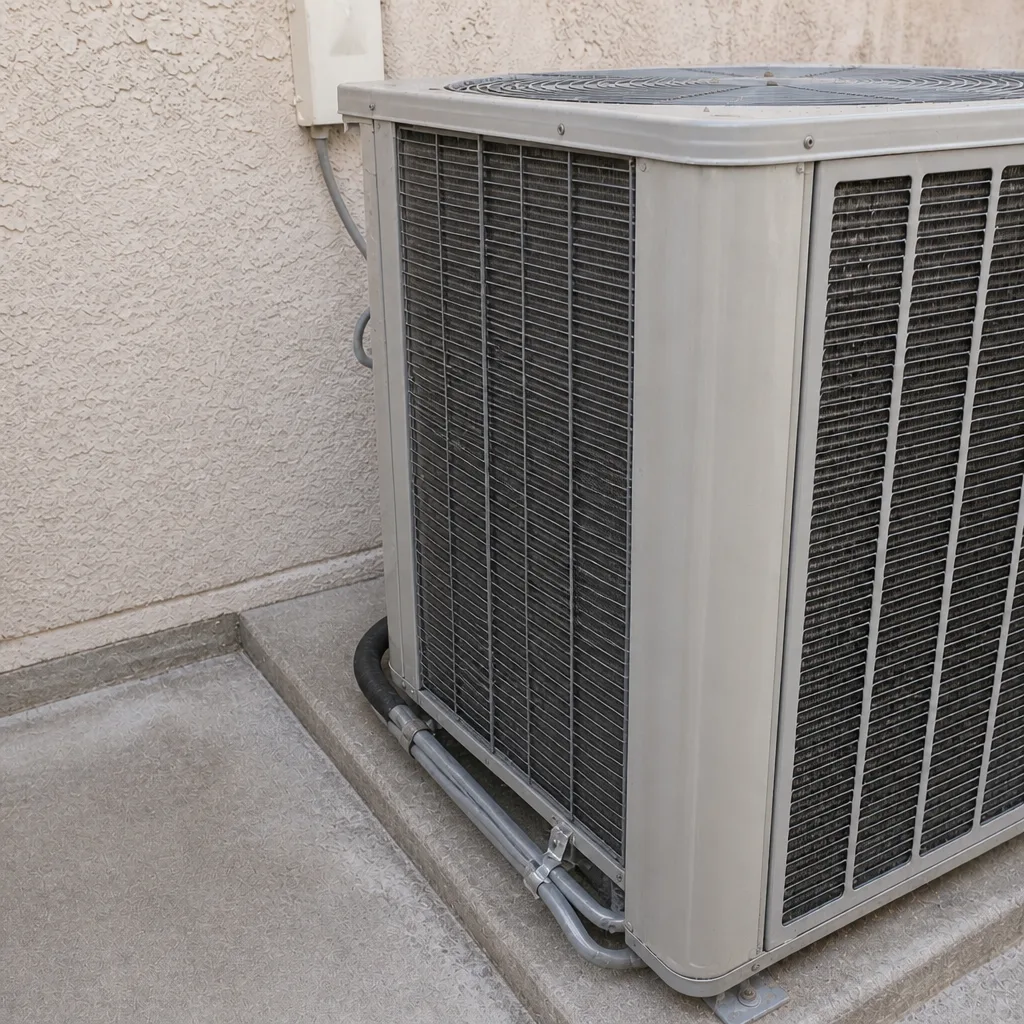
Valley dust finds every gap. On supply registers, dust streaks that appear within weeks of a filter change mean air is bypassing the filter somewhere upstream. On the outdoor unit, dust coating the condenser coil looks like a gray film and makes the fan sound labored. Homeowners often hear the fan lag a second after start-up and dismiss it. Dust-coated coils are one of the most common efficiency losses we find across North Las Vegas, and they’re cheap to correct when caught before the compressor is strained.
What mineral deposits look like
The valley’s water leaves scale on drain pans, condensate lines, and float switches. If you see white crust along the drain line or a chalky ring in the pan, the drain is narrowing. A float switch that trips once is a warning; one that trips twice within a few weeks needs the line cleared and the pan cleaned properly, not a reset.
If any of these sounds like your system, a scheduled diagnostic will usually pin the cause down in one visit. Our team handles AC Repair in North Las Vegas with that first-visit-fixes-it approach.
Indoor Air Quality Signals Homeowners Misread
Many calls that start as “something feels off in the house” turn out to be AC problems wearing an air-quality disguise. Before you buy an air purifier or a whole-house dehumidifier, rule out the cooling system.
- Musty smell that returns days after a filter change. Filters are not the cause. A wet evaporator coil or a pan that isn’t draining properly grows the same smell. Point that out to whoever you call; it directs the visit to the right component.
- Dust on surfaces in a new pattern. A sudden increase in dust in one room usually means a supply register is blowing dust-laden air, often because the return duct has a leak or a filter is bypassing its frame.
- Humidity climbing indoors. North Las Vegas is dry, but a well-sealed house with a short-cycling AC will feel sticky, because the system never runs long enough to pull moisture out. Sticky air plus short cycling is a cluster, not a house problem.
- Allergy symptoms that worsen on high-heat days. Days when the AC runs longest are the days a dirty coil or contaminated duct disturbs the most particles. If your symptoms follow the weather, the system is the likely cause.
- A faint sweet or chemical smell. This can signal a refrigerant leak. Treat it as Tier 3 and call, especially if anyone in the house has headaches or dizziness.
Families with kids and pets feel these signals first. Pet dander and play-area dust concentrate in a house with weak airflow, which is one reason our crews lay drop cloths and send a photo of the clean-up before they leave: the standard is that the house comes back cleaner than it was, not just cooler.
How to Describe a Symptom So the First Visit Fixes It
The difference between “my AC isn’t cooling” and “cool air in the front rooms, warm in the back two bedrooms, ice on the line set outside, short cycles every four minutes, started three days ago” is the difference between a diagnostic visit and a corrective one. You can help make the first visit count. Here’s the sequence we recommend:
- Name the timing. When did it start? Was it after a dust storm, after the first 110°F day, or gradually over the last two months? Timing narrows cause faster than almost anything else.
- Name the location. Which rooms cool and which don’t? A whole-house problem and a back-bedroom problem are two different service calls.
- Name the sound. Rattle, hum, click, hiss, or nothing? “Hiss” near the outdoor unit almost always means refrigerant.
- Name the water. Any pooling, dripping, or ice? Where exactly?
- Name the smell. Musty, dusty, sweet, or burning? “Burning” moves you to a same-day call.
- Name the bill. What was last July’s electric bill compared to this July? A 15 percent climb has diagnostic value; a doubling suggests something has failed.
- Name the history. When was the last filter change? Has anyone else opened the unit this year? Clear history saves time.
The technician who hears that pattern arrives with the right tools, the right part numbers, and a clear first diagnosis. That’s how a first visit becomes a fix rather than a look. Our technicians have up to 22 years of experience, and the ones we send are trained to ask exactly these questions before they start work.
What a Technician Actually Checks (and Why)
Knowing what happens on a diagnostic visit helps you decide whether you’re comfortable with the process and whether the technician is doing a thorough job. Here’s the order we use, and the reason for each step.
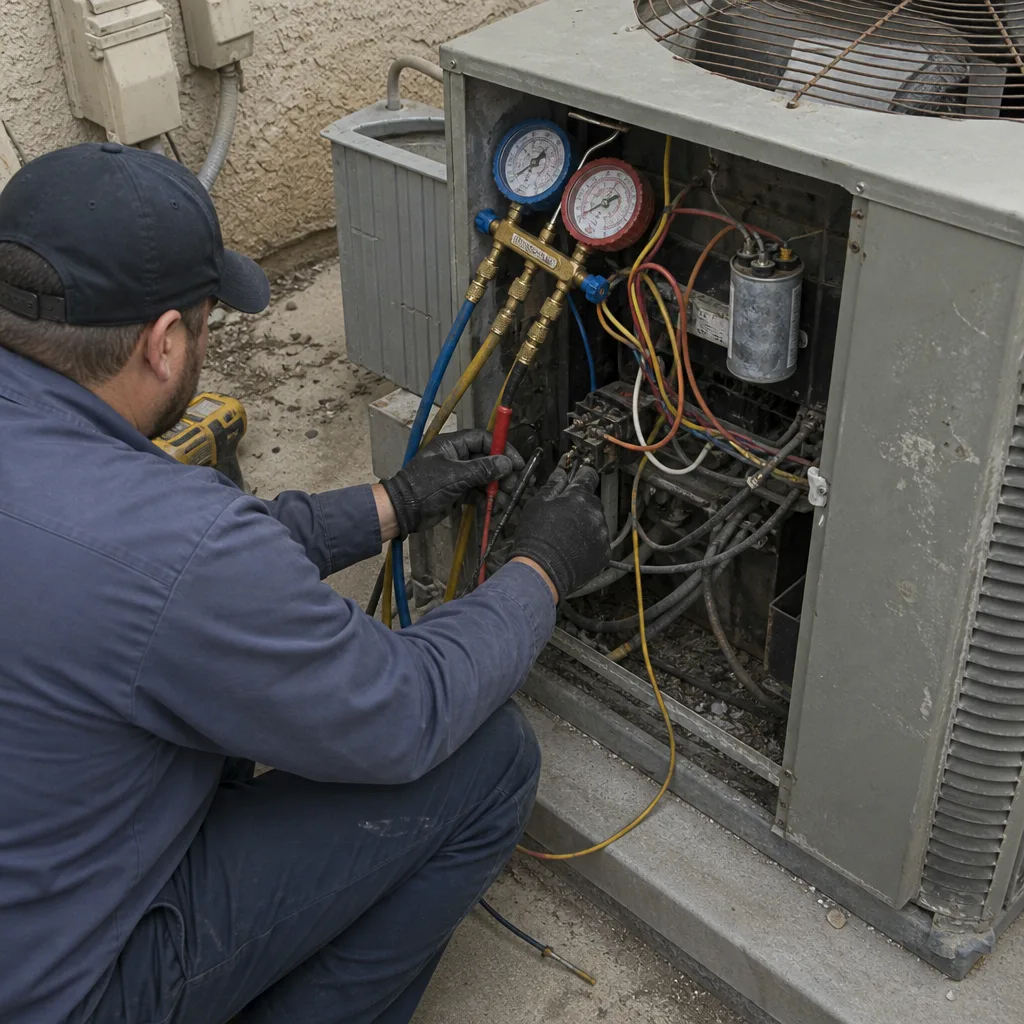
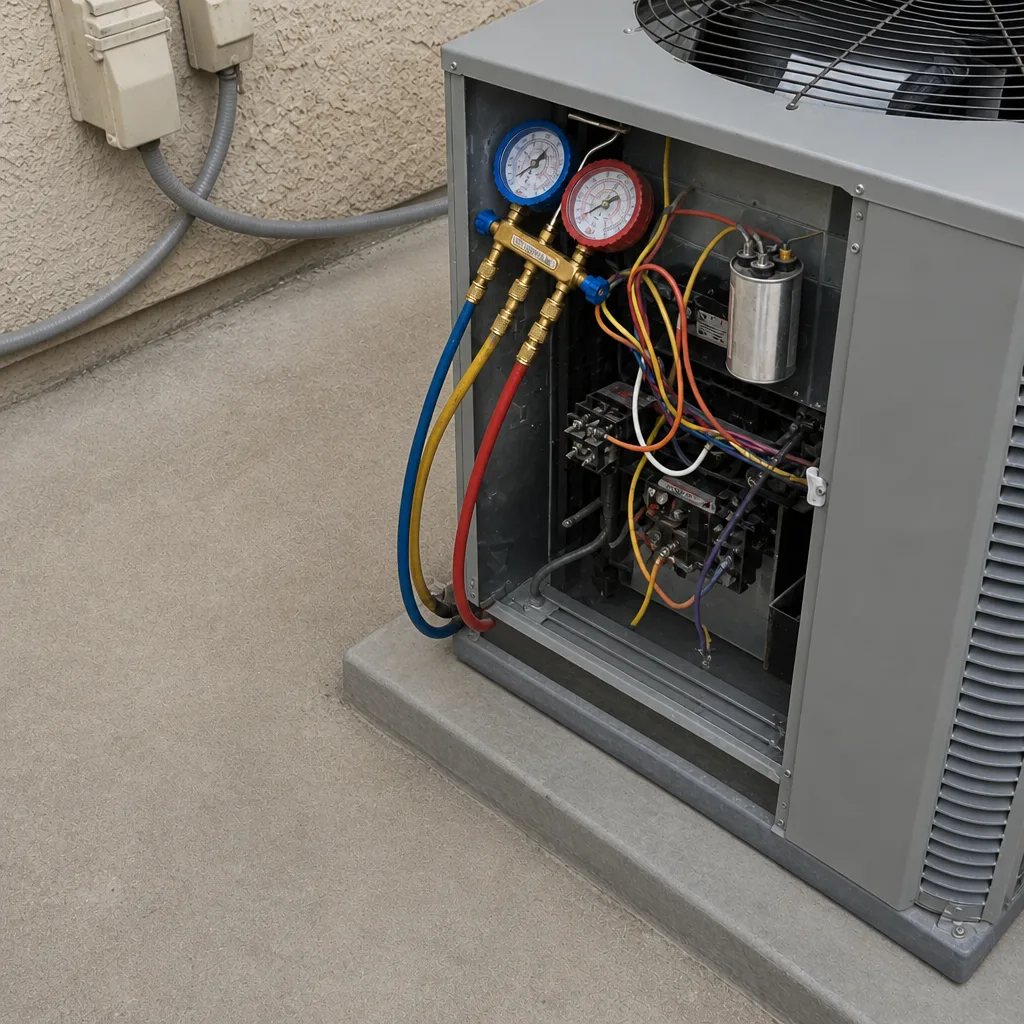
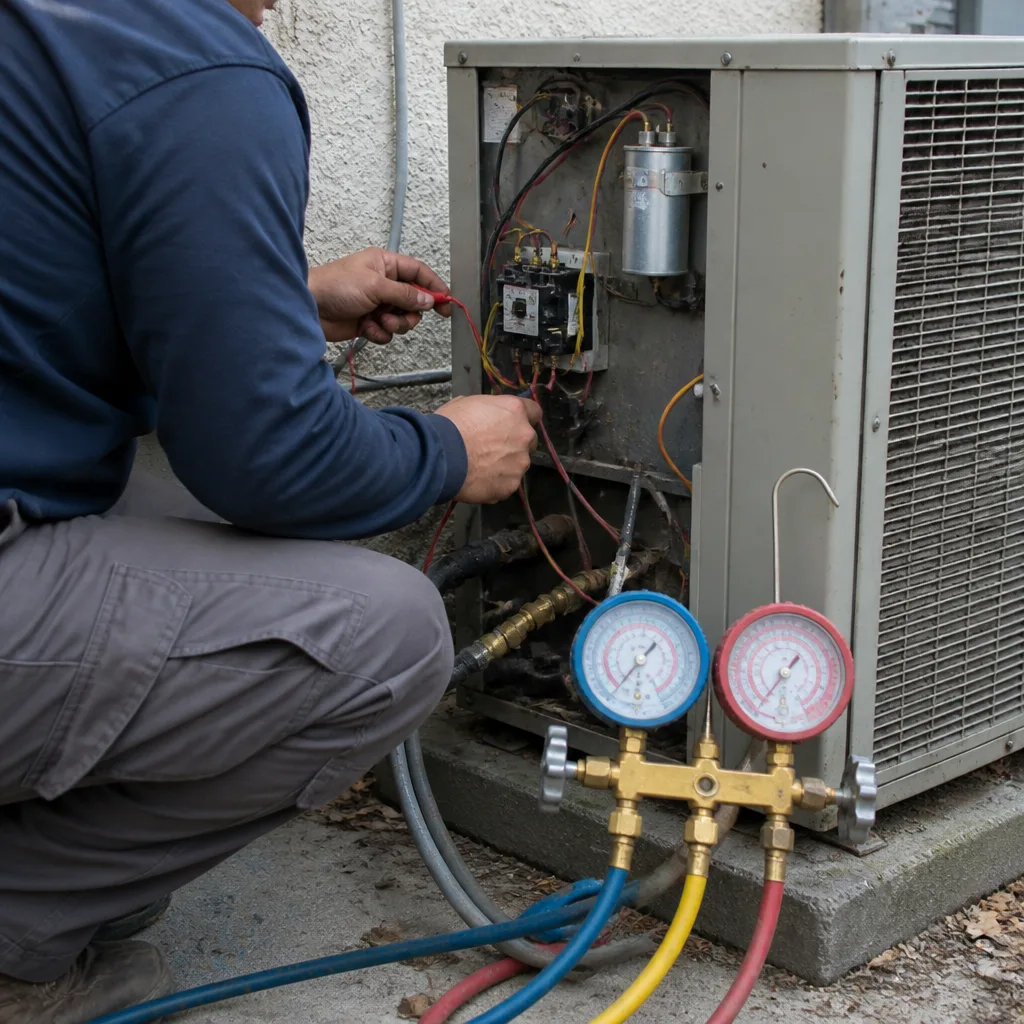
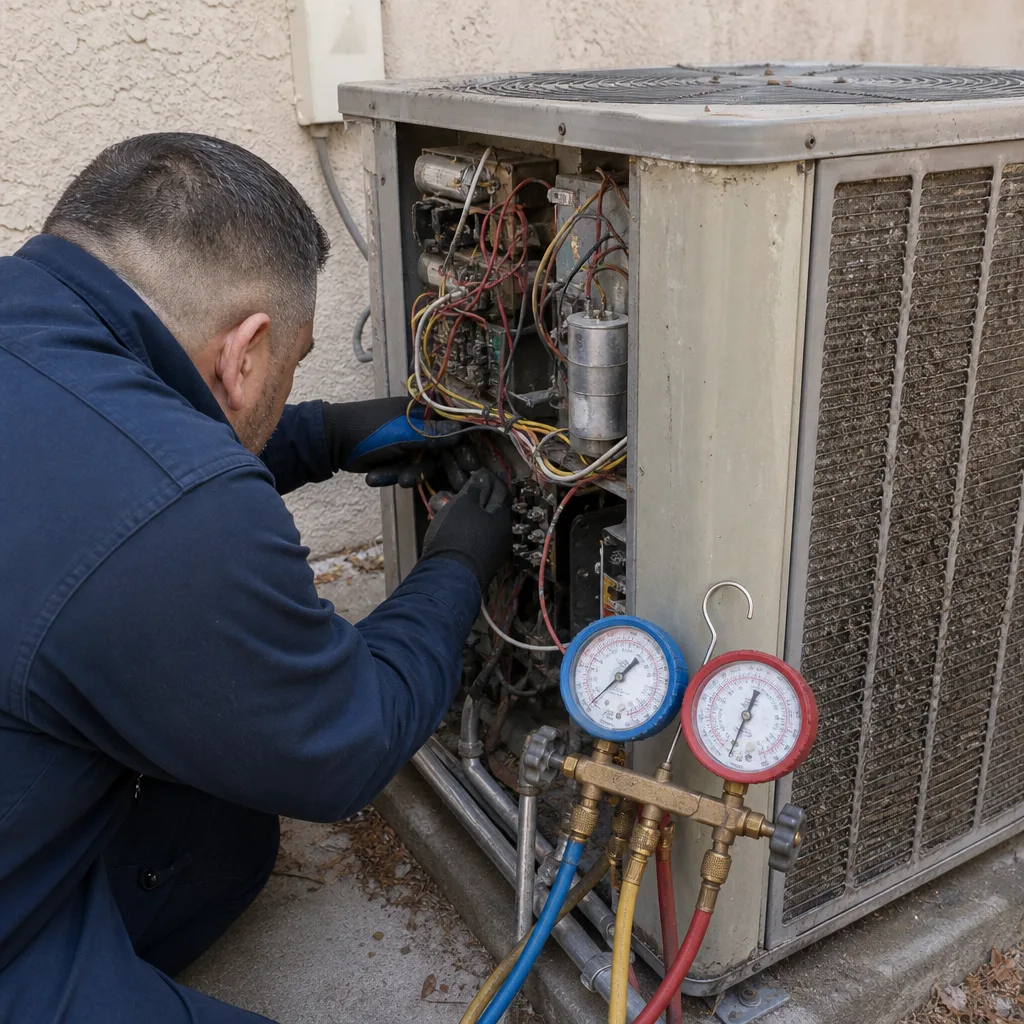
- Refrigerant pressures first. This is what rules out the frozen coil cluster and tells us whether the system is low, overcharged, or just fine.
- Coil condition (indoor and outdoor). A dirty coil explains half of the “not cooling” calls we see in North Las Vegas. Cleaning it is part of the fix, not an upsell.
- Airflow and filter condition. Weak airflow mimics a refrigerant problem and makes a coil wet. If airflow is off, everything downstream is compromised.
- Drain line and pan. Especially in the valley’s minerals. A clogged line trips the float switch and causes the shutdown-and-pooling cluster.
- Electrical connections and capacitors. The parts that fail fastest under high heat load. This is where a small repair prevents a compressor replacement.
- Outdoor unit clearances. A unit boxed in by landscaping or a shed struggles more in the heat. Often one of the simplest fixes.
You’ll get a written price before any work starts, on every visit, and the technician will explain what was found and what the repair will cost before touching anything. That’s the Cedarwell Care Promise at work: a written price on every call, not just the big ones. It covers work on your system brand whether it’s a Bryant, an American Standard, or a York, and we’re set up to handle any of the nine leading brands.
Repair or Replace? Reading the Warning Signs Backward
The warning signs you’ve been watching can also tell you whether a repair or a replacement makes more sense. The question usually isn’t “how old is the system?” – it’s “how often and how badly has it signaled this season?”
Lean toward repair when:
- You’ve had one or two repairs in three years and both were small (capacitor, contactor, clogged drain).
- The system still holds temperature reliably and your electric bills are stable.
- The clusters you’ve seen are Tier 1 and resolved quickly.
Lean toward replacement when:
- The same cluster keeps returning within a season – three coil-related calls in one summer is a pattern, not bad luck.
- You’ve had a compressor or coil replacement, and the bill spike continues afterward.
- The system runs nonstop on moderate days and the numbers still don’t hold.
For that second path, our team handles AC Installation in North Las Vegas and will walk through the sizing and load calculation so the new system fits your home, not a guess. Replacement is scheduled and load-calculated, not same-day – which is honest, if not always what people want to hear.
Common Mistakes to Avoid
- Reading a frozen coil as the whole problem. In North Las Vegas, ice on the line set is almost always a symptom of a refrigerant issue underneath. Thawing the coil and turning the system back on does nothing to fix the leak.
- Cranking the thermostat down when air is weak. Dropping the set point 10 degrees doesn’t add airflow, it just runs the compressor longer and harder. If air is weak, the thermostat is the wrong tool.
- Ignoring a single breaker trip. One trip is a warning, two is a call. Repeated trips point to electrical stress and belong in the same-day tier.
- Changing the filter, smelling the musty odor return, and stopping there. A smell that comes back within days is a wet coil or a drain problem, not a filter problem. Point the technician at the smell directly.
- Letting a drain line clog repeat. In the valley, mineral scale builds fast. Two float-switch trips within a few weeks means the line needs clearing, not a reset.
- Guessing the age of the system when talking to a technician. Exact install date and repair history save diagnostic time. If you have the service records, hand them over.
- Buying an air purifier before ruling out the AC. Dust, humidity, and musty smells often clear up once the coil is cleaned and the airflow is restored. Try the simple fix first.
See the difference
 Before
 After
 Before
 After
 Before
 After
When to Call a Professional
Call today if the breaker trips twice, if the outdoor unit hisses or bubbles, if you smell burning from the vents, or if the house loses cooling during a heat advisory. Call this week if you see ice on the lines, if the system short cycles, or if the drain keeps tripping the float switch. Schedule within the month if you’re watching bills climb or dust patterns change.
Anything involving refrigerant, compressors, capacitors, or electrical connections behind a panel is a professional repair. The refrigerant side in particular requires EPA-handled equipment and isn’t something to diagnose at home. If a task involves opening the electrical panel or handling refrigerant lines, stop and call a trained technician. It’s not a matter of difficulty, it’s a matter of danger.
Meadowsweet Heating & Air North Las Vegas offers free estimates in North Las Vegas – call (844) 320-2997 to describe what you’re seeing. We’re the local team under the Meadowsweet Heating & Air North Las Vegas home umbrella, and we handle furnace work too, so if your system is a heat pump that’s flaking out in both directions, we can take the whole picture in one visit through Furnace Repair in North Las Vegas.
Frequently Asked Questions
Ice on the refrigerant lines paired with warm air and short cycling is the most common Tier 2 cluster we see in North Las Vegas, and it almost always traces to a refrigerant problem rather than the thermostat. Turn the system off and call us at (844) 320-2997 for a free estimate.
No – a hissing or bubbling sound near the refrigerant lines is a Tier 3 safety signal, and the system should be turned off until a technician checks it. Call (844) 320-2997 right away; the sooner the leak is found, the lower the repair cost.
Uneven cooling usually points to airflow (a leaking return duct, a clogged filter, or a failing blower), not a refrigerant problem, and that’s a Tier 2 call. We’ll diagnose it and give you a written price before any work starts – call (844) 320-2997 for a free estimate.
Repair usually wins if your last few repairs were small and the system still holds temperature; replacement becomes the better call when the same cluster keeps returning within a season, especially after a compressor or coil replacement. Call (844) 320-2997 and we’ll walk through the decision with a written price either way.
Small repairs like capacitors or clogged drains typically land in the low hundreds; coil cleaning and refrigerant work run higher; compressor replacement sits at the top of the repair band. Call (844) 320-2997 for a free estimate – you’ll get a written price before any work starts.
Yes – a well-described symptom cluster lets the technician arrive prepared, which is why we ask about timing, rooms affected, sounds, smells, and bill changes before we book. Call (844) 320-2997 and we’ll get the details right the first time.
The Bottom Line
Single symptoms mislead; clusters diagnose. In North Las Vegas, extreme heat, dust, and mineral-heavy water produce recognizable patterns – ice plus short cycling means refrigerant, dust plus musty smell means airflow or a wet coil, and a repeated breaker trip or a hiss is a same-day call. Learn the three tiers, describe your symptom precisely when you call, and you’ll turn more first visits into fixes. And when the repair, install, or diagnostic is done, the house should be left cleaner than the crew found it. Live people answer our phone at (844) 320-2997 around the clock, and free estimates are the starting point.
Written by the team at Meadowsweet Heating & Air North Las Vegas.