
Last updated November 18, 2026
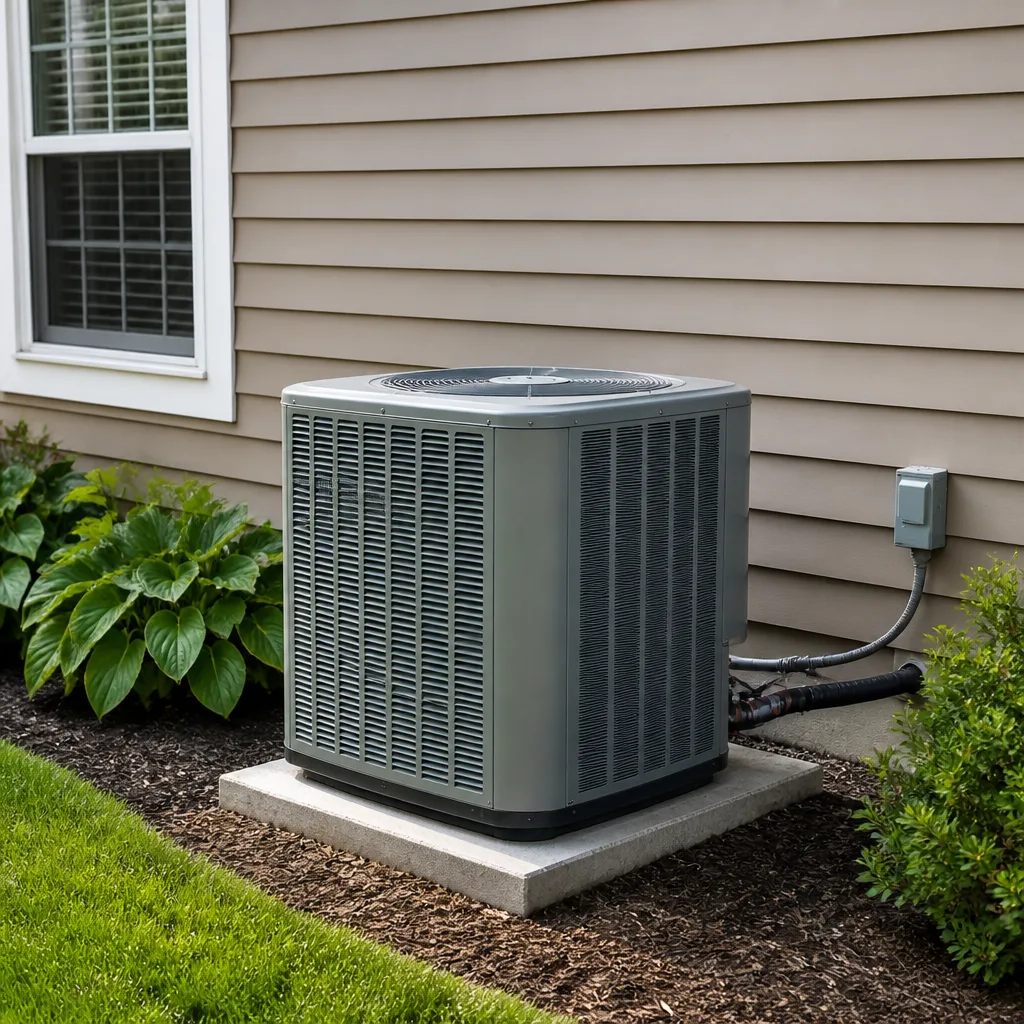 AC repair
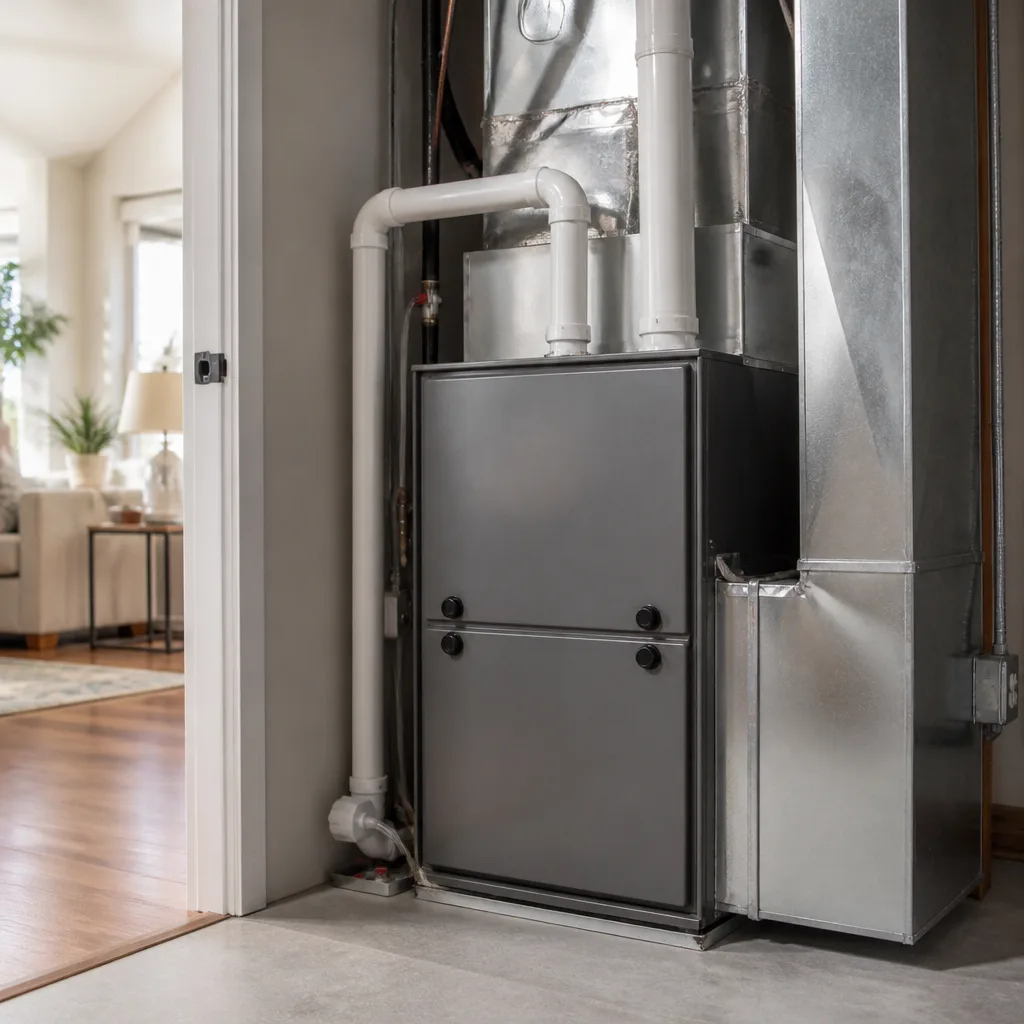 Furnace & heating
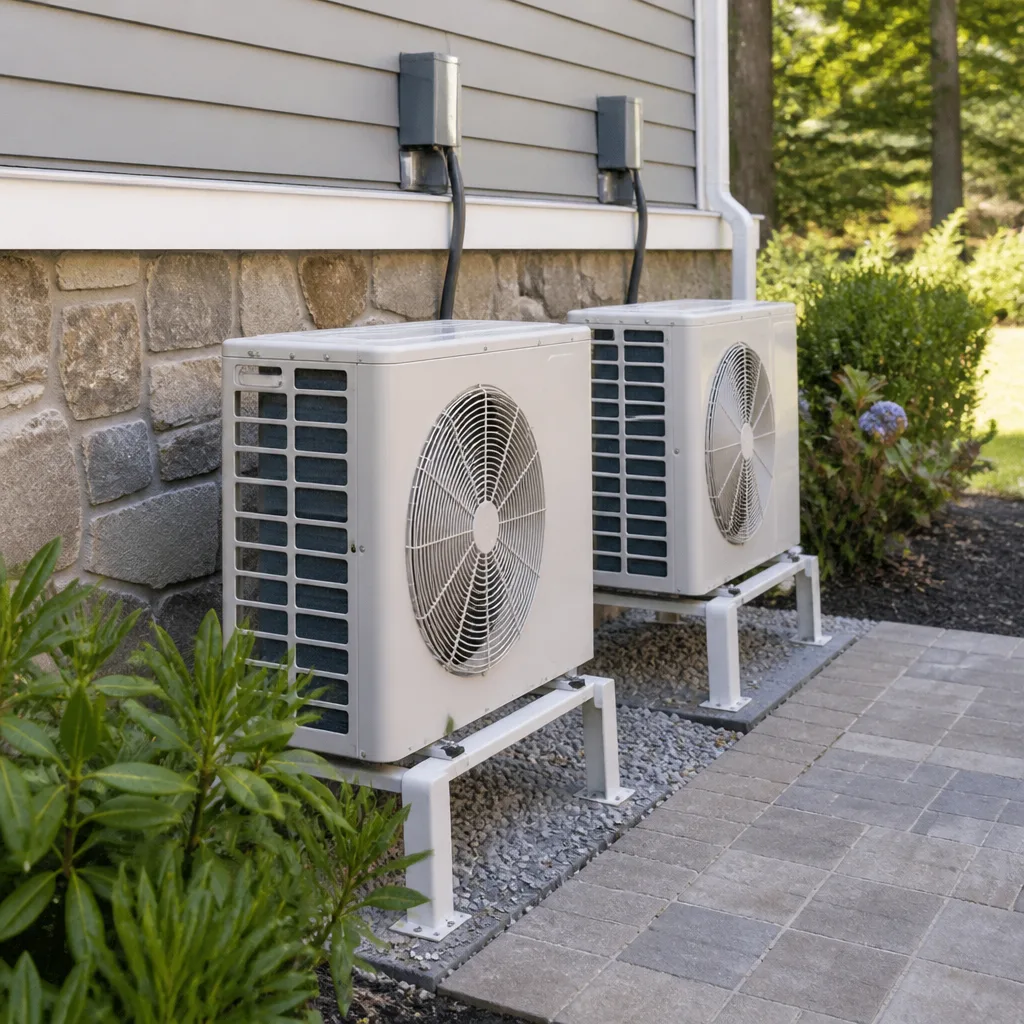 Heat pumps
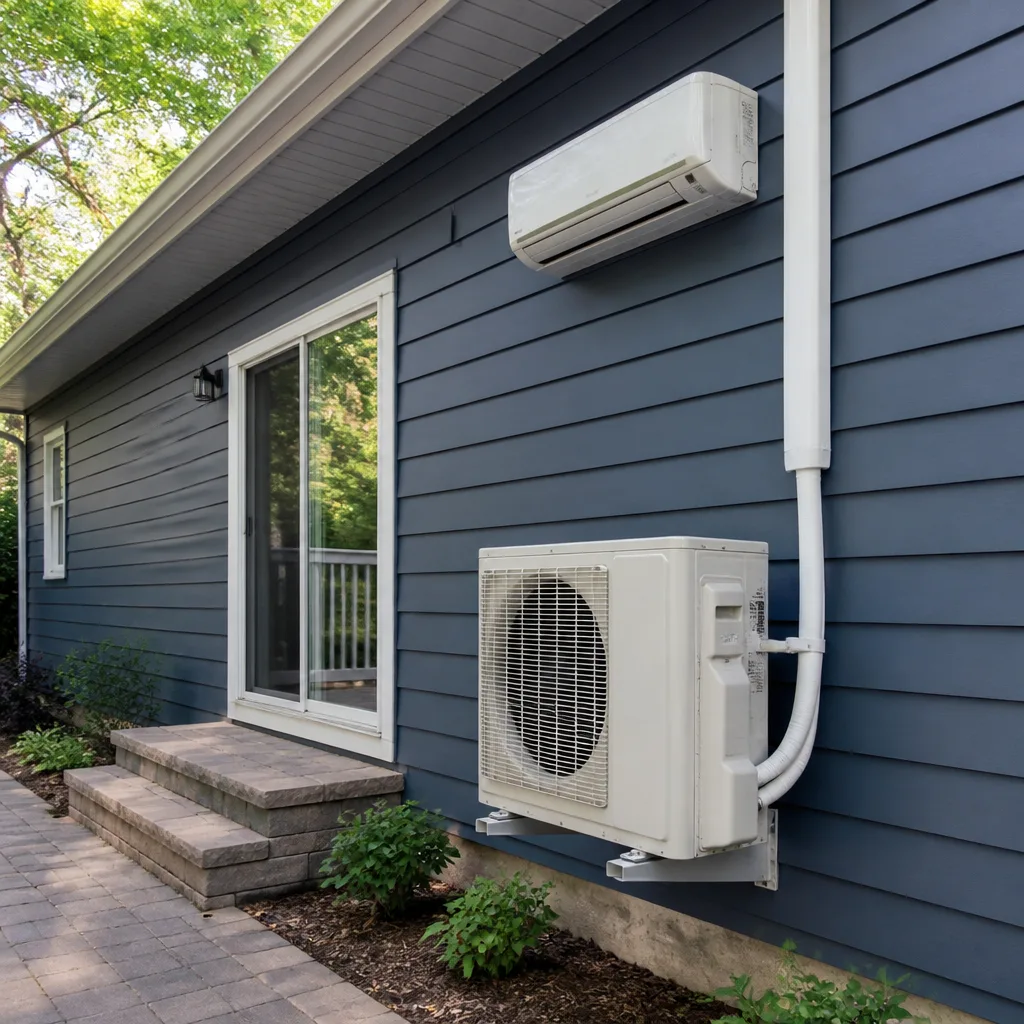 Ductless mini splits
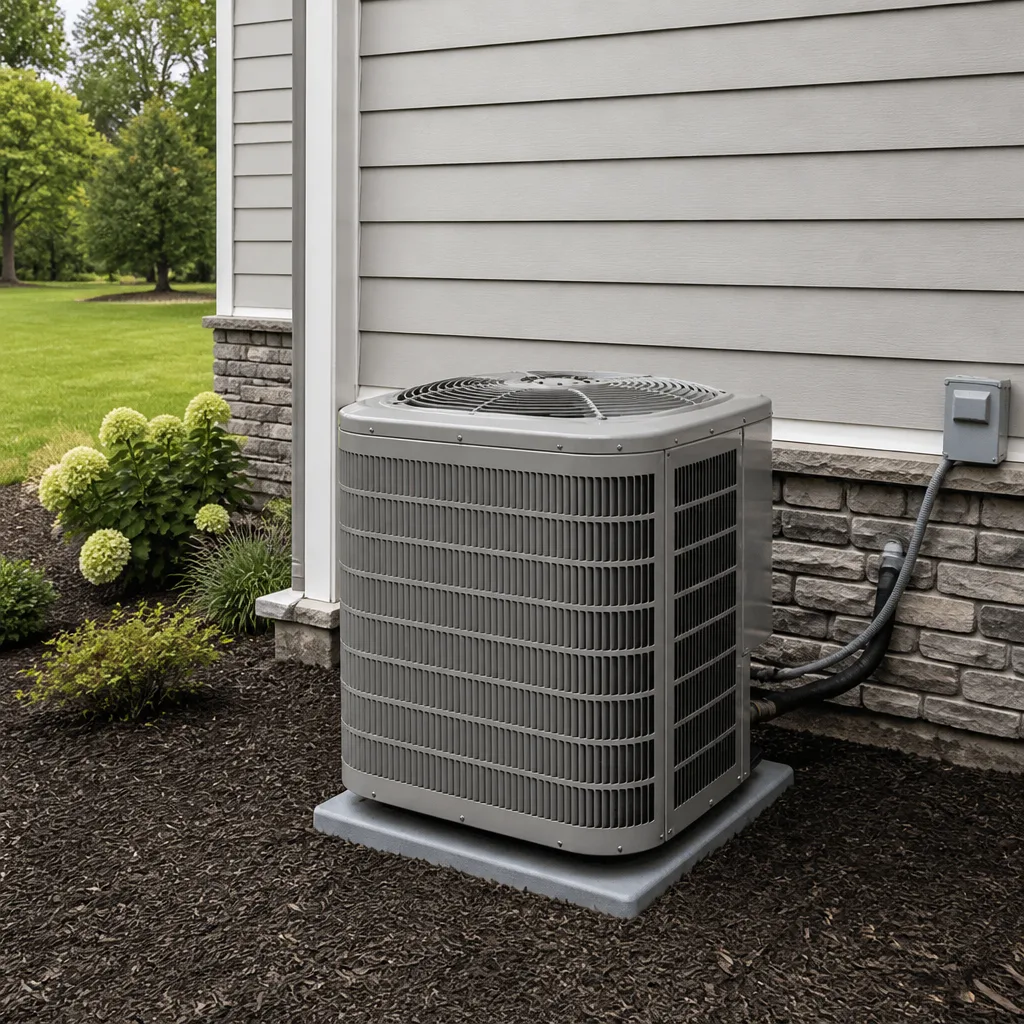 Carrier
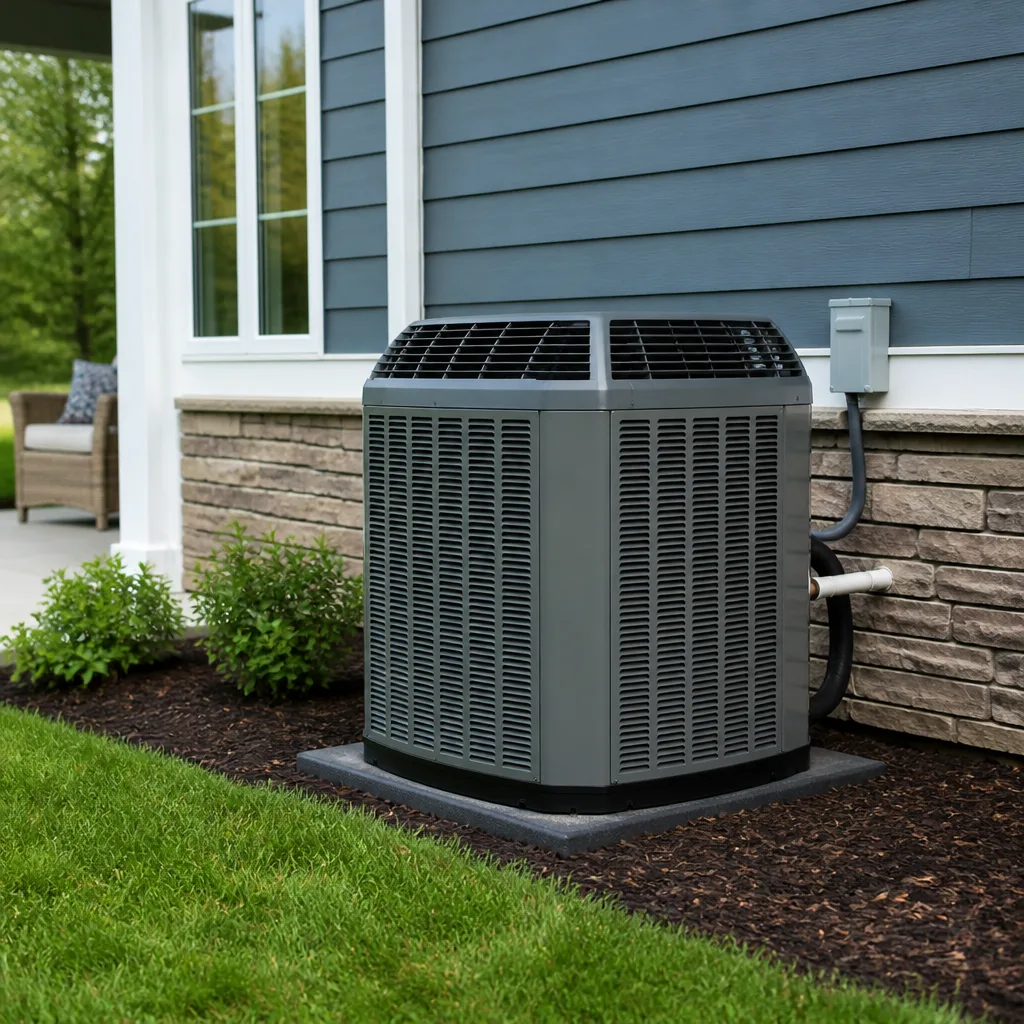 Trane
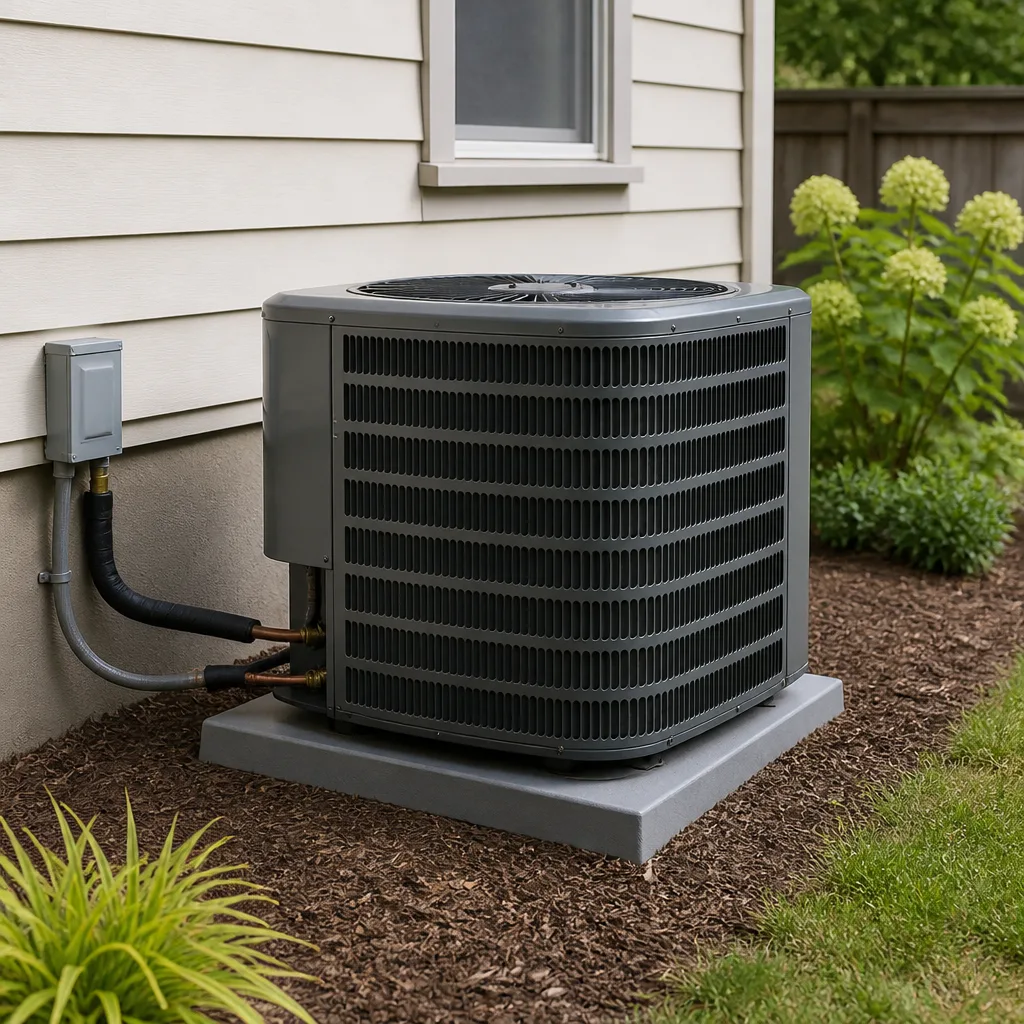 Goodman
Seasonal tune-up and full diagnostic on your Carrier, Trane, or Goodman system - readings shown to you before any repair is proposed
Diagnosis first, numbers second - you approve the repair price before a single part goes in.
Get your free estimateChoosing the Right HVAC Brand: A Buyer’s Guide for North Las Vegas
Several popular HVAC brands rate their equipment to 115°F outdoor ambient temperature. North Las Vegas hit 117°F in July 2023. That two-degree gap isn’t a marketing footnote – it’s the threshold at which some manufacturers deny warranty claims for compressor failure. Most buyer’s guides rank brands by SEER2 ratings and price tags alone. That approach can cost a North Las Vegas family thousands in denied claims and multi-day outages. This guide covers what actually matters here: temperature ceilings, local parts supply, and how to read a warranty before you sign.
Quick Answer
The best HVAC brand for a North Las Vegas home is the one rated to at least 120°F ambient, backed by same-day parts at Clark County suppliers, and sold with a warranty that doesn’t exclude desert conditions. Brand name matters less than those three factors. A mid-tier brand with a strong local supply chain will outperform a premium brand with 3-5 day parts wait times in July.
Styles & brands we work with
- AC repair
- Furnace & heating
- Heat pumps
- Ductless mini splits
- Carrier
- Trane
- Goodman
Table of Contents
- Why Outdoor Ambient Rating Matters More Than SEER2 in North Las Vegas
- Parts Availability: The Hidden Repair Timeline
- Reading the Warranty: Extreme Climate Exclusions
- The Efficiency vs. Reliability Tradeoff
- Brand Tiers by Budget Range
- Questions to Ask Before You Buy
- Common Mistakes to Avoid
- When to Call a Professional
Why Outdoor Ambient Rating Matters More Than SEER2 in North Las Vegas
Every air conditioner has a maximum outdoor ambient temperature. Above that number, the compressor runs hotter, refrigerant pressures climb, and either the unit shuts itself off to protect the compressor or it runs until something fails. In most of the country, this number never comes up. In North Las Vegas, it comes up every summer.
Manufacturers publish three common ceiling ratings: 115°F, 120°F, and 125°F. Those digits are not marketing fluff – they represent the tested limit above which the manufacturer considers performance beyond spec.
- 115°F rated: Fine for most climates. In North Las Vegas, this leaves zero margin. July 2023 peaked at 117°F. A unit rated to 115°F operating at 117°F for a week is running outside its tested envelope.
- 120°F rated: Covers the typical North Las Vegas summer peak with a small safety margin. The most common ceiling among mainstream brands sold in the valley.
- 125°F rated: Real headroom for the two or three days each summer that push past 118°F. Common among brands built for the Southwest market, including Daikin and several Rheem product lines.
What does this mean practically? A 115°F-rated unit in North Las Vegas will still cool your home on a normal 108°F day. The question is what happens during a heat wave, when everyone’s AC is working hard, the grid is strained, and the outdoor temperature is five degrees above the unit’s published ceiling. That’s when a system rated to 120°F reads as a small but real insurance policy for a family that can’t afford a mid-July compressor replacement.
When you get a quote, ask the contractor one question: “What is this condenser rated to in outdoor ambient temperature, and where is that number documented?” If they can’t answer in writing, that’s your signal to look elsewhere.
Parts Availability: The Hidden Repair Timeline
Here’s the repair timeline most homeowners never think about until their AC fails on a Friday in July. The technician diagnoses the problem in an hour. The part doesn’t exist in town. It has to ship from a regional warehouse. It arrives Tuesday. Your family spent four nights in a hot house.
In North Las Vegas, brand-to-brand parts availability is not equal. Some brands stock broad coverage at Clark County wholesale suppliers; others run thin in the local market and rely on regional shipping. We’ve seen both scenarios firsthand, and the difference between a two-hour repair and a four-day outage is often just which brand’s parts network runs deep here.
Brands with typically strong Clark County parts coverage include Rheem, Carrier, Goodman, and Lennox. In our experience, most common repair parts – capacitors, contactors, control boards, fan motors – are on the shelf at a Las Vegas supplier for those brands on the same day. Bryant and American Standard coverage is generally solid but slightly more model-dependent.
Brands where we frequently see 3-5 day wait times for specific parts include less common model families from York and some Daikin commercial-grade units. Those are still excellent brands – we service all of them – but if same-day parts on your exact model matters to you, ask about it before you buy.
- Ask the contractor: “If this unit needs a compressor or control board in July, where does the part come from?”
- Request the answer in writing.
- Ask how many days of summer outage their customers typically experience on this brand.
- Compare that number against another brand’s answer before you commit.
This is one of the reasons we carry nine different brands instead of pushing one. A North Las Vegas home deserves a practical answer, not a single-banner recommendation. If you’re comparing now, our team writes it all down on the quote – see AC Installation in North Las Vegas for how the process works.
Reading the Warranty: Extreme Climate Exclusions
Manufacturer warranties have a paragraph most homeowners never read. It usually starts with language like “damage caused by operation outside of the equipment’s rated conditions.” That sentence is the difference between a covered compressor replacement and a $2,800 bill you pay yourself.
Registering the equipment within the manufacturer’s window (usually 60 to 90 days) is the first requirement. The second is operating the equipment within its rated parameters. Third is having documented maintenance records – which usually means an annual tune-up logged with a licensed company.
What “extreme climate” exclusions actually look like varies by brand. The language usually falls into three buckets:
- Operating-temperature exclusions: Deny claims where the unit was used above its published max ambient. This is the one that catches North Las Vegas homeowners. If the unit is rated to 115°F and the recorded temperature was 117°F, some manufacturers will deny a compressor claim on that basis.
- Environmental or “acts of God” clauses: Cover damage from dust, wind, or power surges. North Las Vegas sits in a high-wind, high-dust zone during monsoon season. A compressor that fails after a wind-driven dust event may trigger this clause.
- Maintenance-conditioned coverage: Void the warranty if the annual tune-up requirement wasn’t met. This is the most common denial reason in our experience, and it’s the easiest to avoid.
Here’s what we recommend before you buy: ask the contractor to print the manufacturer’s warranty document and highlight every exclusion that mentions temperature, climate, dust, or maintenance. Then ask them to confirm in writing that your intended install meets coverage requirements. If a contractor won’t have that conversation, the price tag is telling you less than the fine print will later.
When a claim is filed, the deciding factor is often documentation. A written record of annual maintenance, plus a written note in the install file confirming the unit’s ambient rating matches your location, is the difference between a hassle-free replacement and a fight. Our technicians have up to 22 years of experience reading these documents, and we treat the paperwork as part of the job – not an afterthought.
The Efficiency vs. Reliability Tradeoff
The top of the efficiency ladder comes with a cost beyond dollars. A 20+ SEER2 unit typically uses a variable-speed inverter compressor, an electronic expansion valve, a communicating control board, and a more complex refrigerant circuit. A 16 SEER2 unit typically uses a single-stage compressor and simpler controls. In a milder climate, more complexity usually means a longer-lived, quieter, more efficient system. In North Las Vegas, the math is different.
At 117°F, every component in that inverter system is stressed. The variable-speed drive runs harder, the electronics run hotter, and each additional part is one more potential failure point. When the complex unit does fail, the replacement part is often model-specific and sits in a regional warehouse. The simpler system fails less often, and when it does, the part is usually on a local shelf.
We routinely install both. For a family with strong maintenance habits, a good extended warranty, and a preference for quiet operation, a high-efficiency variable-speed system from a brand with a strong local parts network – Carrier, Trane, or Daikin, for example – is a reasonable choice. For a family that values simple service and predictable repair costs, a 16 SEER2 single-stage system from Rheem, Goodman, or York is often the more sensible call.
The tradeoff isn’t efficiency vs. cheap. It’s efficiency vs. serviceability in a hot climate. Ask yourself: do I want the quietest system on my street, or the fastest turnaround if something fails in July? Both answers are legitimate. Just make the choice deliberately.
If you’re weighing repair against replacement on an existing system, our AC Repair in North Las Vegas page walks through the decision framework; a 22-year-old low-tier system at 6 SEER2 usually costs more in the third year of repairs than the difference in a new install.
Brand Tiers by Budget Range
For a typical North Las Vegas home – around 1,800 to 2,400 square feet, single-story or two-story with a single-zone split system – the practical install ranges land in two buckets. Here’s how we think about each one.
The $6,000 – $8,000 Install Range
This range covers most 16 SEER2 single-stage systems, typically a 3-ton or 4-ton condenser with matching air handler, new line set, pad, disconnect, and permit. It’s the workhorse of North Las Vegas residential replacement.
- Rheem – The Rheem Classic Plus or Achiever series offer solid mid-tier reliability at this price. Rheem parts are widely stocked in Clark County.
- Goodman – Goodman GSX16 or similar models deliver strong price-to-spec value. Parts coverage in Las Vegas is very good, which shortens repair time significantly.
- York – York LX or YC series fit this tier, though model-specific parts availability can run a day or two longer than Rheem or Goodman.
In our experience, this range covers the majority of North Las Vegas installations. A well-installed 16 SEER2 system with annual maintenance typically runs 12 to 18 years here.
The $9,000 – $12,000 Install Range
This range covers two-story homes, larger square footage, or 17 to 20 SEER2 systems with variable-speed or two-stage compressors.
- Carrier – The Carrier Performance or Infinity series fit this range. Carrier parts are deeply stocked locally.
- Trane – The Trane XR or XR variable-speed systems deliver strong reliability and quiet operation, with parts generally available same-day.
- Bryant – Bryant (Carrier’s sister brand) offers similar engineering with slightly lower pricing tiers, so the Legacy or Preferred series often fit here.
- Lennox – Lennox Merit or Elite series land in this range, with good parts availability in Clark County.
- Daikin – Daikin’s Fit or DX series systems offer 120°F or 125°F rated equipment and are increasingly common in North Las Vegas because of that ceiling margin.
- American Standard – American Standard Silver or Gold series are typically in this tier; model-specific parts can add a day or two to repair timelines.
The $9,000-$12,000 range is also where extended labor warranties become standard and where careful sizing matters most. A two-stage or variable-speed system that’s oversized for a North Las Vegas home runs short cycles, which drives humidity issues and shortens the compressor’s life. Load calculation – not brand – protects that investment.
Questions to Ask Before You Buy
Take this list to every HVAC quote you receive. The contractor’s answers, in writing, tell you more than the brand brochure will.
- What is the unit’s max ambient temperature rating, and where does the documentation say that? Get the page or the spec sheet.
- If the compressor fails in July, where does the part ship from, and how long does it usually take? A number of days is the answer you want, not “we’ll take care of you.”
- Does the manufacturer warranty exclude damage from operation above rated conditions? Ask them to print the exact clause. If they say “that never comes up,” push back.
- What does the annual maintenance requirement look like, and what happens to the warranty if I miss a year? Some brands void coverage entirely; others only void it for the missed period.
- What is the load calculation, and can I see it? Manual J is the industry standard. A North Las Vegas home with west-facing windows and no shade loads differently than one with an east-facing patio.
- Is the permit being pulled, and by whom? Clark County and the City of North Las Vegas both require permits for system replacement. A quote without a permit is a quote with an open liability.
- What is the total installed price, in writing, before any work starts? Not a range. Not “starting at.” A number on paper with a signature line.
That last one is a standard at Meadowsweet Heating & Air. A written price is provided before any work starts – on every visit, every time. It’s part of the Cedarwell Care Promise we stand behind as part of the Cedarwell family of HVAC companies, founded in 2004. No surprise line items, no “we’ll see what it takes” answers.
Common Mistakes to Avoid
- Choosing brand before choosing the installer. A premium brand installed by a careless crew will underperform a mid-tier brand installed correctly. In North Las Vegas, improper charge, undersized return ductwork, or a shortcut on the line set will cost more than the brand premium. Pick the installer first, then the brand.
- Ignoring the ambient rating. A 115°F-rated unit installed in a North Las Vegas home is technically within spec for 90% of summer days – and outside it for the other 10%. The homeowner who never saw the spec sheet is often the one with a denied compressor claim.
- Skipping the permit. Unpermitted installs in North Las Vegas can become a problem at resale and may void portions of the manufacturer warranty. The permit also triggers inspection, which catches shortcuts.
- Buying the highest efficiency for its own sake. A 20 SEER2 system in a home with leaky ducts and a west-facing wall of glass will not achieve 20 SEER2 performance. Fix the envelope or accept a lower real-world number.
- Not registering the warranty within the window. Most manufacturers give 60 to 90 days. Missing that window usually converts a 10-year compressor warranty into a 5-year one.
- Skipping the annual tune-up. This is the single most common warranty-denial cause. A $150-$200 annual maintenance visit protects a multi-thousand-dollar compressor claim.
- Hiring a contractor who won’t put the price in writing first. A verbal estimate becomes a moving target once the disconnect is turned off. If the contractor won’t write it down, don’t sign.
See the difference
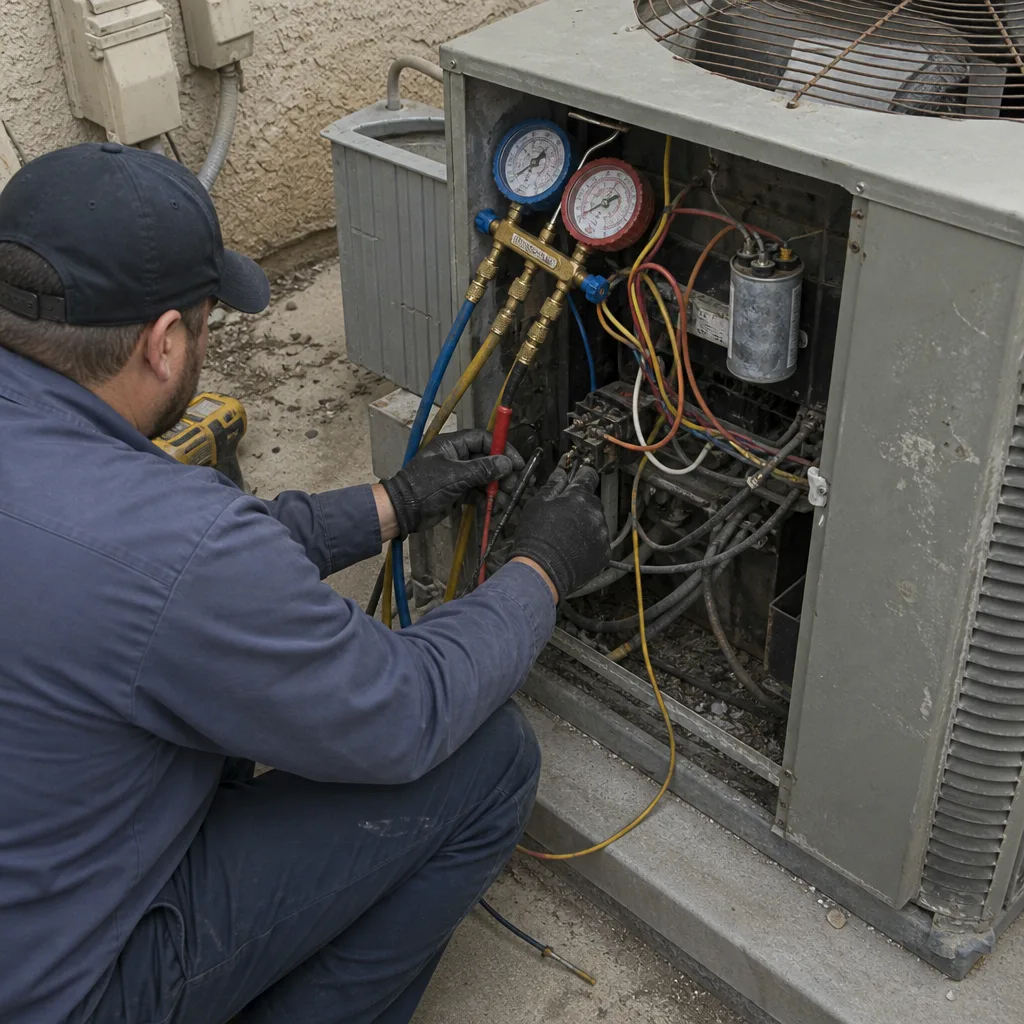 Before
 After
 Before
 After
 Before
 After
When to Call a Professional
Some things you can handle yourself. Brand selection, warranty interpretation, and compressor replacement aren’t on the list. High-voltage capacitor and contactor work, refrigerant charging, and system-level diagnosis all require tools and training that no homeowner should attempt – the electrical shock and burn risk alone makes DIY a bad trade. If your existing system hits 15 years and you’re facing a $900 repair in North Las Vegas, the call is worth making before you spend on the fix.
If you’re getting bids on a new system, want help reading a warranty clause before you sign, or need an honest take on whether an existing unit is worth another summer, Meadowsweet Heating & Air North Las Vegas offers free estimates in North Las Vegas – call (844) 320-2997. Live person answers, 24/7, no voicemail.
Frequently Asked Questions
The best brand is one rated to at least 120°F ambient with strong local parts coverage – Carrier, Trane, Rheem, and Daikin all fit that description for most North Las Vegas homes. Brand name matters, but the ambient ceiling, local parts availability, and warranty terms matter more. Start with those three, then compare brands within the range that fits your budget.
North Las Vegas hit 117°F in July 2023, and typical summer peaking runs 110 to 115°F. Anything above a unit’s rated ambient ceiling triggers stress on the compressor and can void warranty claims for units rated to 115°F. Yes, the temperature genuinely affects brand choice – it’s one of the few places in the country where a 115°F-rated unit is meaningfully different from a 120°F one.
Yes. Rheem, Goodman, Carrier, and Lennox typically have most common repair parts on the shelf at Las Vegas wholesale suppliers. Some model families from York and Daikin can require 3-5 day shipping on specific parts. In July, that’s the difference between a same-day repair and a four-night hotel stay. Ask your contractor directly.
A 16 SEER2 single-stage system is often the more sensible choice for North Las Vegas because it has fewer components to fail and easier local parts availability. A 20 SEER2 system makes sense if you’re willing to keep up with annual maintenance, want the quietest operation, and can accept the longer repair timeline when a model-specific part fails. Neither answer is wrong – the decision depends on your priorities.
Only if the unit was operated within its rated outdoor ambient temperature, the equipment was registered within the manufacturer’s window, and annual maintenance records exist. Heat alone is not usually a covered cause – “operation above rated conditions” is a common exclusion. Get the exact warranty language in writing before you buy.
A typical North Las Vegas home lands in one of two ranges: $6,000-$8,000 for a 16 SEER2 single-stage system (Rheem, Goodman, York fit here), or $9,000-$12,000 for a two-stage or variable-speed system in a larger or two-story home (Carrier, Trane, Bryant, Lennox, Daikin, American Standard). The range depends on square footage, ductwork condition, and permit requirements – a written quote after a load calculation is the only reliable number.
The Bottom Line
The best HVAC brand for a North Las Vegas home is the one rated to at least 120°F outdoor ambient, backed by same-day parts at Clark County suppliers, and sold with a warranty that doesn’t exclude desert conditions in the fine print. Brand name matters less than those three factors. Pick your installer first, verify the ambient rating and warranty in writing, and size the system with a load calculation – not a rule of thumb. Get a written price before any work starts, register the warranty the week the install completes, and keep up with annual maintenance. That combination, more than any single brand, keeps a North Las Vegas family cool through the next 117°F afternoon. When you’re ready to compare quotes, our team at Meadowsweet Heating & Air North Las Vegas will walk you through all of it in plain language and put every number in writing. Call (844) 320-2997 for a free estimate – a live person answers 24/7, no voicemail.
Written by the team at Meadowsweet Heating & Air North Las Vegas.